SART Whole-Body Spinal Alignment, Chuna Therapy & International Patient Concierge
30+ Years Clinical Experience
en-US


Korean Medicine Guide
Can You Really Fix a Slipped Disc Without Injections?
Banpo Newborn Korean Medicine Clinic offers personalized traditional treatments for pain, posture, TMJ disorders, and holistic wellness care in Seoul.
Schedule a ConsultationCan You Really Fix a Slipped Disc Without Injections?

If you’ve been told you have a slipped disc—also known as a herniated or bulging disc—you may have already heard a familiar set of recommendations: painkillers, steroid injections, or “wait and see.” For many patients, especially those who have been living with pain for months or even years, injections can feel like the inevitable next step.
But here’s an important question we hear almost every week at Banpo Newborn Korean Medicine Clinic:
“Is it really possible to recover from a slipped disc without injections or surgery?”
The honest answer is yes—often, it is possible. But the how matters just as much as the whether. To understand why non-injection treatment can work, we first need to rethink what a slipped disc actually is, and what the body truly needs in order to heal.
What Is a Slipped Disc, Really?
Despite the name, a disc doesn’t actually “slip” out of place. The spine is made up of vertebrae stacked like blocks, with soft, shock-absorbing discs in between. These discs have a tough outer layer and a gel-like center.
When we say “slipped disc,” we’re usually describing one of two things:
Disc bulge – the disc protrudes outward but remains intact
Disc herniation – the inner material pushes through a tear in the outer layer
Either way, the real problem isn’t just the disc itself. Pain occurs when the disc irritates or compresses nearby nerves, leading to symptoms like:
Lower back or neck pain
Sciatic pain radiating down the leg
Numbness or tingling in the arms or legs
Muscle weakness
Pain that worsens when sitting or bending
What many people don’t realize is that disc problems rarely happen in isolation. They are usually the result of long-standing spinal imbalance, posture issues, or uneven mechanical stress.
Why Injections Are So Commonly Recommended
From a conventional medical perspective, injections—especially epidural steroid injections—are used to:
Reduce inflammation around the nerve
Temporarily block pain signals
Allow short-term symptom relief
And to be clear, injections can be helpful in certain acute cases.
However, injections do not correct spinal alignment, improve posture, or address why the disc was overloaded in the first place. In our clinical experience, many patients feel relief for a few weeks or months, only for the pain to return—sometimes worse than before.
This leads to a frustrating cycle:
Pain → Injection → Temporary relief → Pain returns → Another injection
Over time, repeated injections can also weaken surrounding tissues and reduce the body’s own healing response.
The Key Question: What Does a Disc Need to Heal?
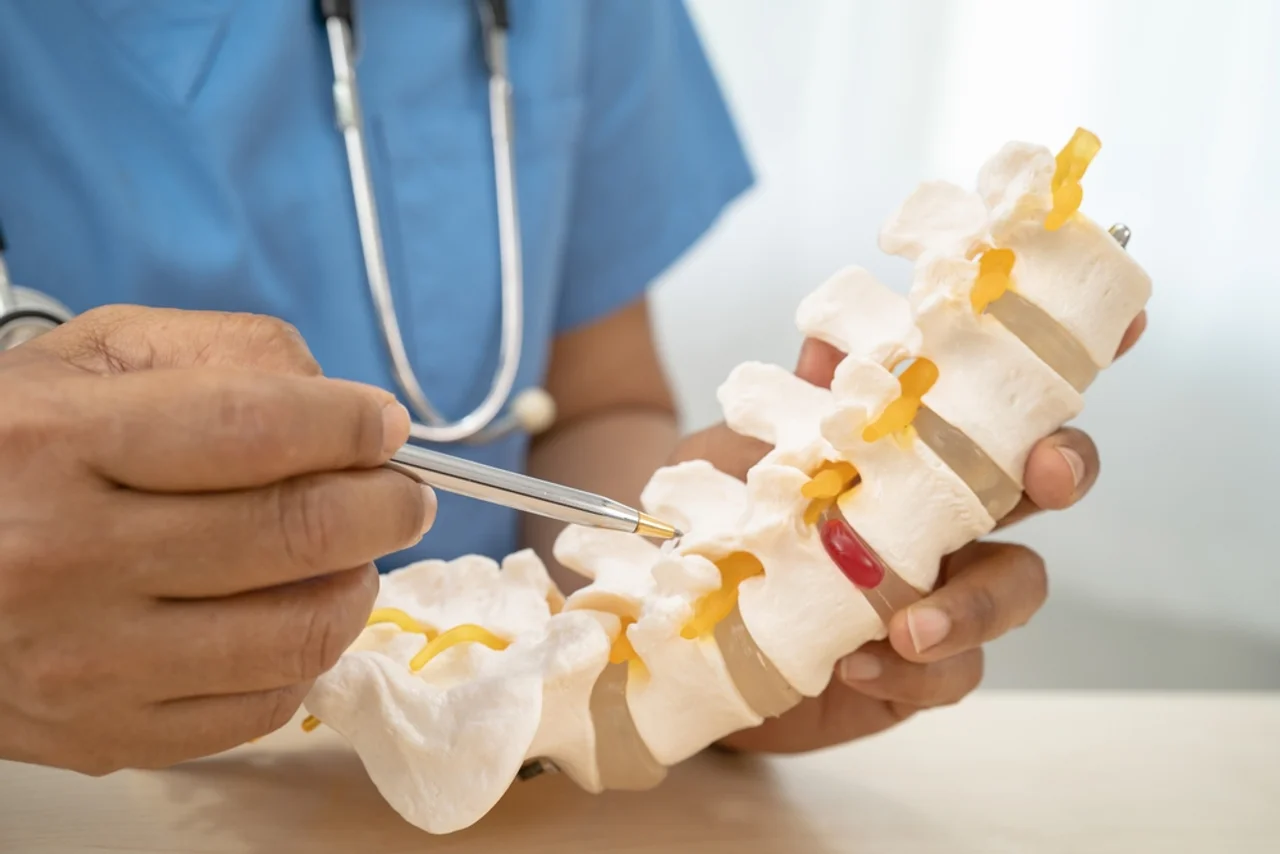
To answer whether a slipped disc can heal without injections, we need to understand how discs recover.
Unlike muscles, discs have very limited blood supply. They rely on:
Proper spinal alignment
Balanced mechanical loading
Gentle, precise movement
Reduced nerve compression
If the spine is misaligned—even slightly—certain discs are forced to bear more pressure than they were designed to handle. Over months or years, this excess pressure contributes to disc bulging, dehydration, and herniation.
In other words:
If the pressure stays the same, the disc cannot heal—no matter how many injections you receive.
A Different Approach: Treating the Cause, Not Just the Pain
At Banpo Newborn Korean Medicine Clinic, our philosophy is simple but deeply intentional:
Pain is a signal, not the disease.
Under the guidance of Dr. Ungjin Im, who has over 30 years of experience in non-surgical spinal care, we focus on restoring balance to the spine so the body can do what it is naturally designed to do—heal.
One of the core methods we use is Spinal Alignment Restoration Therapy (SART), a specialized, non-invasive approach developed through decades of clinical practice.
How Spinal Alignment Restoration Therapy (SART) Helps Disc Recovery
1. Correcting Micro-Misalignment
Many slipped discs occur not because of one dramatic injury, but due to small, repeated misalignments—from sitting too long, poor posture, uneven walking patterns, or old injuries.
SART focuses on:
Identifying subtle asymmetries in spinal position
Gently correcting them without forceful manipulation
Redistributing pressure evenly across the spine
When pressure is normalized, the disc is no longer constantly irritated.
2. Reducing Nerve Compression Naturally
Pain from a slipped disc is often nerve-related. Instead of numbing the nerve (as injections do), precise spinal correction aims to create space—reducing mechanical compression on the nerve itself.
Many patients report:
Reduced radiating pain
Improved sensation
Better muscle control
This change doesn’t happen overnight, but it is structural, not temporary.
3. Supporting the Body’s Self-Healing Ability
In Korean medicine, we place great importance on the body’s innate capacity to restore balance when obstacles are removed.
Once alignment improves:
Blood and fluid exchange around the disc improves
Inflammation naturally decreases
Muscles guarding the injured area can finally relax
To be honest, many people are surprised to learn that disc tissue can partially reabsorb over time when conditions are right. This has been observed repeatedly in clinical practice.
What About Chuna Therapy?

Another cornerstone of non-injection care at our clinic is Chuna therapy, a traditional Korean manual therapy that focuses on the relationship between joints, muscles, and the nervous system.
Unlike aggressive chiropractic adjustments, Chuna is:
Precise
Gentle
Customized to the patient’s body and condition
For slipped disc patients, Chuna therapy helps:
Release tension in overworked muscles
Improve joint mobility without stressing the disc
Reinforce proper spinal movement patterns
When combined with SART, it creates a comprehensive environment for recovery.
Realistic Expectations: What Non-Injection Healing Looks Like
It’s important to be honest and medically responsible.
Non-injection treatment is not a quick fix.
But it is a sustainable one.
Most patients notice:
Gradual reduction in pain over weeks
Improved posture and mobility
Fewer flare-ups over time
Increased confidence in daily movement
Healing speed depends on:
Severity of the disc condition
Duration of symptoms
Age and overall health
Consistency of treatment
Patients who have had pain for years often tell us:
“I wish I had started this before trying injections.”
When Injections May Still Be Necessary
While we strongly believe in conservative, non-invasive care, there are cases where injections or surgery may be required—such as severe neurological deficits or emergency situations.
Our role is not to reject modern medicine, but to help patients avoid unnecessary invasive procedures whenever possible.
A thorough evaluation always comes first.
A Common Patient Story (Anonymized)
One patient in her early 40s came to us with a lumbar disc herniation and persistent sciatica. She had been advised to receive her second steroid injection.
Instead, she chose a structured program of spinal alignment correction and Chuna therapy.
After three months:
Her leg pain reduced significantly
She returned to walking comfortably
Sitting no longer triggered sharp pain
Most importantly, she felt in control of her body again—without relying on repeated injections.
Why This Approach Fits Modern Life in Korea
In Korea, many people:
Sit for long hours at desks
Use smartphones extensively
Experience high stress levels
These factors quietly contribute to spinal imbalance.
Non-surgical spinal correction aligns well with Korean cultural values:
Holistic care
Long-term wellness
Minimal invasiveness
It’s not about enduring pain or pushing through it—it’s about correcting the foundation.
So, Can You Really Fix a Slipped Disc Without Injections?
For many patients, the answer is yes—when treatment focuses on:
Correcting spinal alignment
Reducing mechanical pressure
Supporting the body’s natural healing process
Addressing the root cause, not just symptoms
Injections may silence pain temporarily.
Alignment-based care aims to resolve why the pain exists at all.
Considering Your Next Step?
If you’ve been living with disc-related pain and feel uncertain about injections or surgery, a comprehensive spinal evaluation may give you clarity.
At Banpo Newborn Korean Medicine Clinic, we offer:
Detailed posture and spinal assessments
One-on-one, personalized care
Non-invasive treatments grounded in decades of experience
Healing doesn’t always require stronger interventions—sometimes, it requires smarter ones.
If you’ve been feeling stuck, know this:
You are not out of options, and your body may be more capable of healing than you’ve been led to believe.
More Medical Articles
Continue reading clinical insights from Banpo Newborn Korean Medicine Clinic.

Why Seoul is the Global Hub for Minimally Invasive Vertigo Treatment
Dizziness and vertigo are among the most common reasons for hospital visits in South Korea, affecting nearly 16.7% of the adult population annually according to the Korea National Health and Nutrition Examination Survey (KNHANES).
Learn More

Tinnitus Relief in Seoul: Multidisciplinary Upper Cervical Care
For many, the sound of silence is replaced by a persistent ringing, buzzing, or hissing. In South Korea, this is more than an individual annoyance; it is a significant public health trend.
Learn More

Success Rates of SART for OPLL Compared to Standard Laminectomy in Korea
The prevalence of Ossification of the Posterior Longitudinal Ligament (OPLL) in East Asian populations, particularly in South Korea, is significantly higher than in Western countries, affecting approximately 2% to 4% of the population according to nationwide...
Learn More