SART Whole-Body Spinal Alignment, Chuna Therapy & International Patient Concierge
30+ Years Clinical Experience
en-US


Korean Medicine Guide
Why Seoul is the Global Hub for Minimally Invasive Vertigo Treatment
Dizziness and vertigo are among the most common reasons for hospital visits in South Korea, affecting nearly 16.7% of the adult population annually according to the Korea National Health and Nutrition Examination Survey (KNHANES).
Schedule a ConsultationDizziness and vertigo are among the most common reasons for hospital visits in South Korea, affecting nearly 16.7% of the adult population annually according to the Korea National Health and Nutrition Examination Survey (KNHANES). For many, these symptoms are not merely temporary inconveniences but chronic burdens that disrupt daily life. As South Korea's regenerative medicine market continues its rapid expansion—projected to grow at an 18% CAGR to reach $1.28 billion by 2030—Seoul has emerged as a global center for high-precision, non-surgical interventions that address the structural root causes of vestibular dysfunction.
At Banpo Newborn Korean Medicine Clinic, we see a growing number of international and local patients seeking alternatives to long-term medication. This shift is driven by a sophisticated medical infrastructure and a unique focus on "root-cause" structural correction. By moving beyond symptomatic "noise" suppression, the Korean medical landscape is redefining how chronic vertigo is managed, prioritizing long-term functional recovery over temporary relief.
Chronic Vertigo in Korea: Costs, Prevalence, and Common Challenges

Dizziness is more than a sensation; it is a significant economic and social burden. Data from the Health Insurance Review and Assessment Service (HIRA) indicates that in 2022 alone, over 1.8 million Koreans sought hospital care for vestibular disorders, with total healthcare expenditures for the six major vertigo-related conditions exceeding ₩547.8 billion (approx. $406.5 million).
Current Standard Approaches & Limitations
Conventional treatments in Korea and abroad typically follow a standard ladder of care:
Pharmacotherapy: Vestibular suppressants or anti-emetics to manage acute episodes.
- Limitation: Often leads to drowsiness and does not address the underlying structural trigger.
Vestibular Rehabilitation Therapy (VRT): Exercises designed to promote brain compensation.
- Limitation: May take months to show results and can be ineffective if the structural alignment of the neck or jaw is compromised.
Interventional Injections: Nerve blocks or trigger point injections.
- Benchmark: While effective for immediate pain, Korean medical data shows that the cost of these procedures is often 1.5 to 2 times lower in Seoul than in Japan, yet the need for repeat sessions can drive up long-term costs.
| Approach | Typical Goal | Common Patient Pain Points |
|---|---|---|
| Medication | Symptom suppression | Side effects (lethargy), temporary relief only |
| Traditional VRT | Neural compensation | Slow progress, requires high patient compliance |
| Standard Injections | Nerve desensitization | High re-intervention rates, local soreness |
Why "SART" (Spatial Alignment & Relaxation Therapy) is the New Benchmark
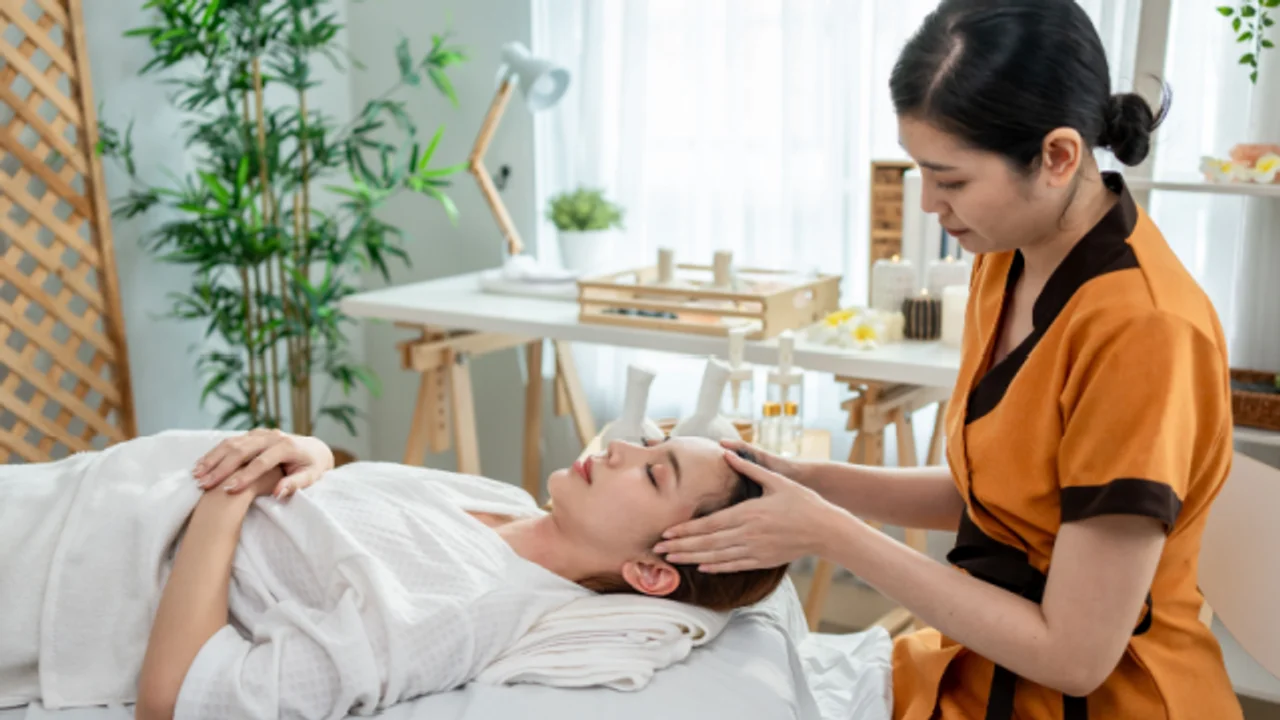
As patients seek more durable outcomes, the focus in Seoul has shifted toward Spatial Alignment & Relaxation Therapy (SART). This advanced, non-surgical approach is built on the principle that many "unexplained" cases of vertigo are actually driven by subtle misalignments in the cranio-cervical junction and the TMJ (jaw).
How the SART Protocol Works
SART functions by identifying the "spatial driver" of a patient's dizziness. It is a high-precision, multi-phase protocol that focuses on:
- Cranio-Cervical Realignment: Re-centering the upper neck to reduce pressure on the vestibular nerves.
- Neuromuscular De-bracing: Using gentle manual techniques to "teach" the brain to stop the chronic muscle guarding that often accompanies chronic dizziness.
- Pelvic-Spinal Balance: Ensuring the foundation of the spine supports a neutral head position, preventing the recurrence of vestibular "noise."
Is SART in Korea worth the cost?
Answer: For patients with chronic, recurrent vertigo, SART offers a high value-to-cost ratio. By addressing the structural root cause in a structured, 10-session protocol, it aims to reduce the lifetime dependency on daily medications and emergency room visits, which currently cost the Korean healthcare system over $400 million annually.
Data & Outcomes: Comparing the Paths to Recovery
The choice between conventional symptom management and advanced structural protocols like SART often comes down to the "cost of recurrence."
- Conventional Path: Frequent hospital visits (mean cost per visit approx. ₩96,524) with a focus on suppressing symptoms as they arise.
- SART Path: A front-loaded investment in structural correction designed to achieve "durable change" and reduce the frequency of future flare-ups.
Comparative Comparison of Treatment Approaches
| Feature | Conventional Care | SART (Advanced Path) |
|---|---|---|
| Primary Focus | Symptom suppression | Structural root-cause correction |
| Invasiveness | Low (Pills/Injections) | Non-invasive (Manual/Biomechanical) |
| Typical Session Count | Indefinite / As needed | Structured (Avg. 10 sessions) |
| Recovery Mechanism | Chemical/Compensation | Biomechanical Realignment |
| Long-term Goal | Manage episodes | Prevent recurrence by "unloading" nerves |
Local Korea Insights: The "High-Tech, Fast-Results" Expectation
Korean patients are known for demanding high-efficiency and high-tech solutions. This cultural drive has pushed Seoul clinics to integrate advanced imaging and digital postural mapping into every consultation. Furthermore, the Special Act on Regenerative Medicine in Korea has fostered an environment where clinics can safely innovate within a strict regulatory framework, ensuring that "minimally invasive" doesn't mean "minimally effective."
The rise of medical tourism in Seocho-gu and the surrounding Banpo area is a testament to this. Patients from across Asia and the West now travel to Seoul not just for the competitive pricing—where nerve blocks can be significantly more affordable than in Japan or the US—but for the unique integration of Traditional Korean Medicine (TKM) with modern biomechanical science.
Where Banpo Newborn Korean Medicine Clinic Fits in Vertigo Care
Banpo Newborn Korean Medicine Clinic stands at the intersection of decades of experience and modern postural science. We specialize in treating complex, chronic vertigo that has failed to respond to traditional ENT or neurology protocols.
- Expertise: Led by Dr. Ungjin Im, a Korean Medicine Doctor with over 30 years of clinical experience and a founding member of the Spatial Spinal Alignment Association.
- The Protocol: We utilize the SART (Spatial Alignment & Relaxation Therapy) protocol to deliver high-precision, one-on-one care tailored to each patient's unique postural "signature."
- Holistic Integration: Our approach may include specialized herbal acupuncture and TMJ correction, as we recognize the jaw and spine as the "keystone" for neurological health.
Dr. Im and his team focus on "downshifting" the nervous system, helping patients who have lived in a state of constant "bracing" to finally find balance.
Conclusion
With nearly 5% of the Korean population suffering from chronic dizziness lasting more than three months, the need for effective, long-term solutions is critical. While conventional medication provides a necessary safety net for acute episodes, the future of vertigo care lies in minimally invasive, structural realignment. Advanced protocols like SART at Banpo Newborn Korean Medicine Clinic represent this shift, offering a data-backed pathway toward reclaiming quality of life.
Patients considering SART for chronic vertigo in Korea can schedule a consultation to discuss whether this structural realignment approach may be suitable for their specific condition and long-term recovery goals.
More Medical Articles
Continue reading clinical insights from Banpo Newborn Korean Medicine Clinic.
Why Seoul is the Global Hub for Minimally Invasive Vertigo Treatment
Dizziness and vertigo are among the most common reasons for hospital visits in South Korea, affecting nearly 16.7% of the adult population annually according to the Korea National Health and Nutrition Examination Survey (KNHANES).
Learn More

Tinnitus Relief in Seoul: Multidisciplinary Upper Cervical Care
For many, the sound of silence is replaced by a persistent ringing, buzzing, or hissing. In South Korea, this is more than an individual annoyance; it is a significant public health trend.
Learn More

Success Rates of SART for OPLL Compared to Standard Laminectomy in Korea
The prevalence of Ossification of the Posterior Longitudinal Ligament (OPLL) in East Asian populations, particularly in South Korea, is significantly higher than in Western countries, affecting approximately 2% to 4% of the population according to nationwide...
Learn More