SART Whole-Body Spinal Alignment, Chuna Therapy & International Patient Concierge
30+ Years Clinical Experience
en-US

Korean Medicine Guide
Cervical Spine Correction and Decline in Brain Function & Neurodegenerative Diseases
Improve Brain Function Decline and Neurodegenerative Diseases through Cervical Spine Correction!
Schedule a Consultation
The brain-spinal nervous system, the central organ of life and biological regulation, consists of the rational brain (human brain) of the cerebral cortex system that evolved most recently, the emotional brain (mammalian brain) of the limbic system and internal organ system, and the life brain (reptilian brain) composed of the diencephalon, thalamus, hypothalamus, pituitary gland, midbrain, cerebellum, pons, medulla oblongata, and spinal cord—making up the left and right central nervous systems (左右中樞神經系).
The rational brain is the area where advanced intelligence and voluntary physical movement develop,
The emotional brain is the area that feels emotions such as pleasure,
The life brain is responsible for maintaining survival conditions such as appetite, thirst, sexual desire, aggression control, temperature regulation, heartbeat, autonomic nervous system control, endocrine hormone control, and metabolism regulation. It is the foundation for all regulatory functions necessary for sustaining life and bodily functions, which are unconsciously dependent.
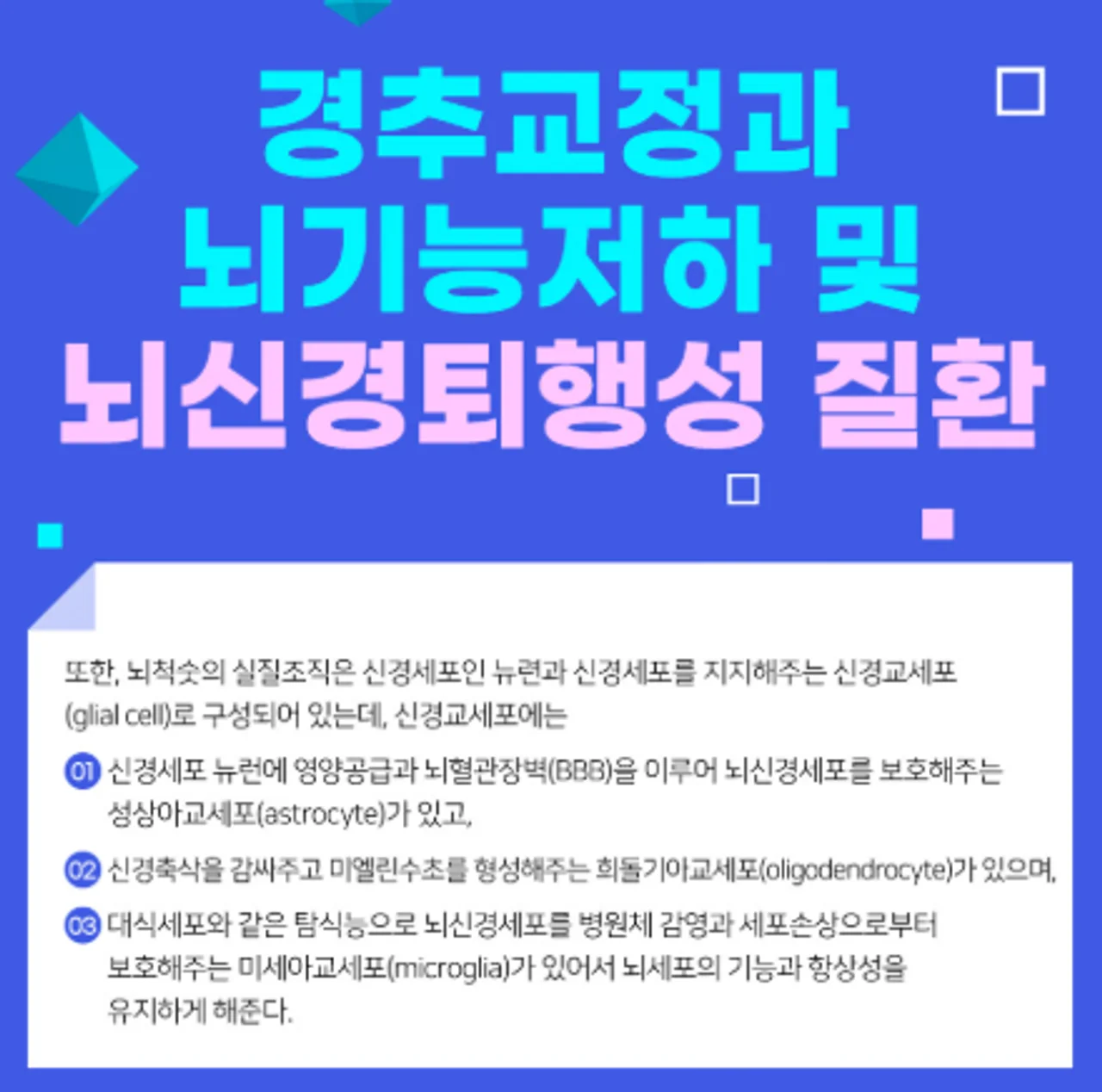
In addition, the nervous tissue of the brain and spinal cord is composed of neurons (nerve cells) and glial cells that support them.
Glial cells include: Astrocytes, which nourish neurons and form the blood-brain barrier (BBB) to protect brain nerve cells, Oligodendrocytes, which wrap nerve signals and form myelin sheaths, Microglia, which protect brain nerve cells from pathogens and cell damage through phagocytosis like macrophages, thus maintaining the function and homeostasis of brain cells.
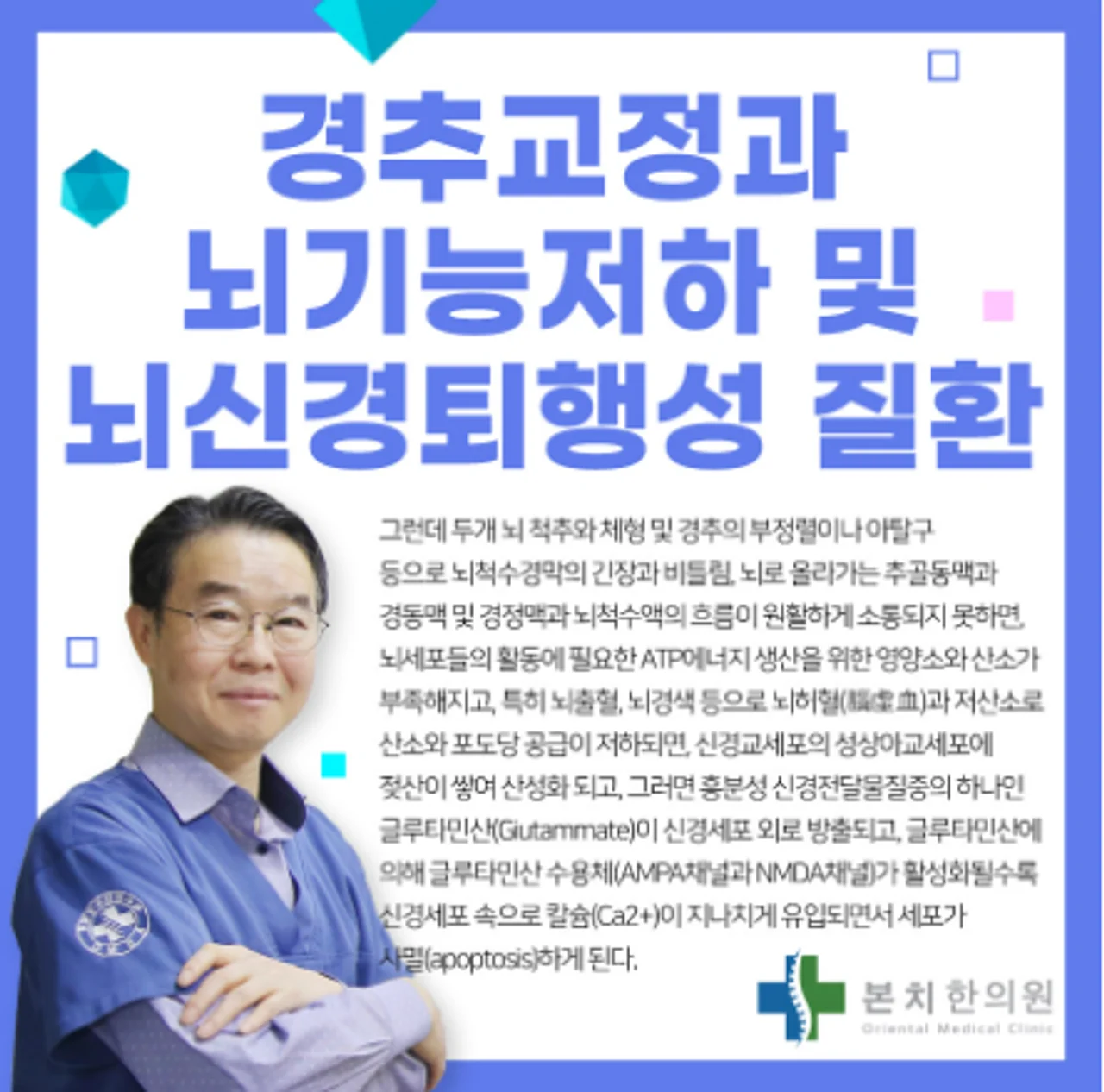
However, if the skull-spine, body shape, and cervical vertebrae are misaligned or subluxated, leading to tension and twisting of the meninges, and if the flow of vertebral arteries, carotid arteries, jugular veins, and cerebrospinal fluid to the brain is not smooth,
then there will be a shortage of nutrients and oxygen necessary for ATP energy production for brain cells.
Especially, in the case of cerebral hemorrhage or cerebral infarction, when oxygen and glucose supply is reduced due to cerebrovascular issues and hypoxia,
astrocytes suffer long-term oxidative damage, and excitatory neurotransmitters like glutamate are released outside of nerve cells.
Glutamate activates glutamate receptors (AMPA receptors and NMDA channels), causing excessive influx of calcium ions (Ca²⁺) into nerve cells, leading to cell death (apoptosis).
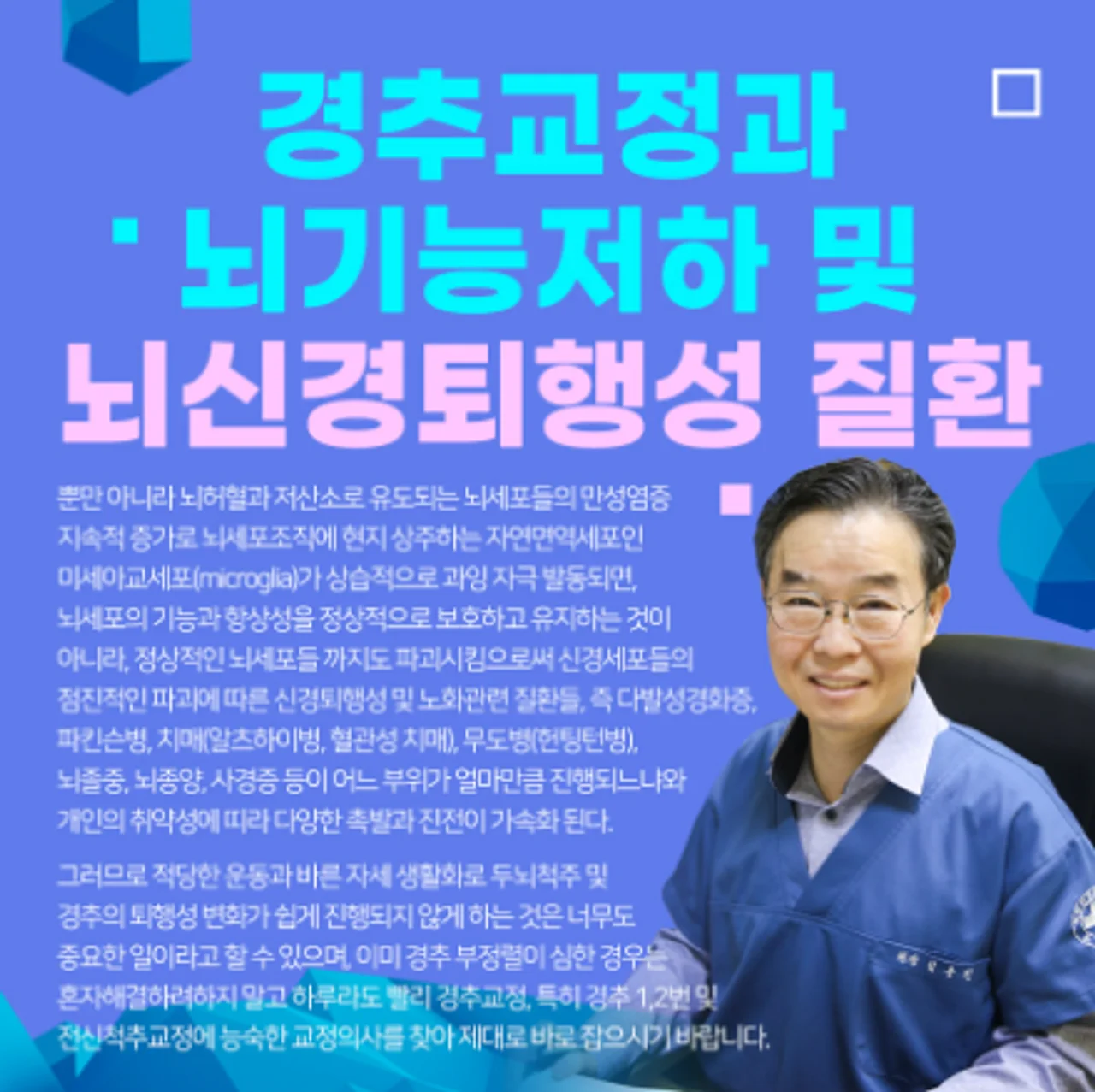
In addition, when microglia, which are natural immune cells residing in the brain tissue, are habitually overstimulated due to the continuous increase in chronic inflammation of brain cells induced by cerebral ischemia and hypoxia, rather than protecting and maintaining the function and homeostasis of brain cells normally, they destroy even normal brain cells, thereby causing neurodegenerative and age-related diseases due to the gradual destruction of nerve cells, such as multiple sclerosis, Parkinson's disease, dementia (Alzheimer's disease, vascular dementia), chorea (Huntington's disease), stroke, brain tumor, torticollis, etc., the triggering and progression of various diseases are accelerated depending on which part and how far it progresses and the individual's vulnerability. Therefore, it is very important to prevent degenerative changes in the brain and spinal cord and cervical spine from progressing easily through appropriate exercise and maintaining good posture. If the cervical misalignment is already severe, do not try to solve it on your own. Instead, find an orthodontist skilled in cervical correction, especially cervical 1 and 2 and full-body correction, as soon as possible to properly correct it.
More Medical Articles
Continue reading clinical insights from Banpo Newborn Korean Medicine Clinic.

Why Seoul is the Global Hub for Minimally Invasive Vertigo Treatment
Dizziness and vertigo are among the most common reasons for hospital visits in South Korea, affecting nearly 16.7% of the adult population annually according to the Korea National Health and Nutrition Examination Survey (KNHANES).
Learn More

Tinnitus Relief in Seoul: Multidisciplinary Upper Cervical Care
For many, the sound of silence is replaced by a persistent ringing, buzzing, or hissing. In South Korea, this is more than an individual annoyance; it is a significant public health trend.
Learn More

Success Rates of SART for OPLL Compared to Standard Laminectomy in Korea
The prevalence of Ossification of the Posterior Longitudinal Ligament (OPLL) in East Asian populations, particularly in South Korea, is significantly higher than in Western countries, affecting approximately 2% to 4% of the population according to nationwide...
Learn More