SART Whole-Body Spinal Alignment, Chuna Therapy & International Patient Concierge
30+ Years Clinical Experience
en-US


Korean Medicine Guide
Chronic Headaches? How Korean Medicine Finds and Fixes the Root Cause
Chronic headaches solved through Korean medicine. Learn how root-cause diagnosis and natural therapies relieve persistent, stress-related head pain.
Schedule a ConsultationChronic Headaches? How Korean Medicine Finds and Fixes the Root Cause

Have you been living with headaches for months or even years? Many of our patients at Banpo Newborn Korean Medicine Clinic tell us a similar story: “I thought it was just stress,” or “I assumed it was because I wasn’t sleeping well,” or even “I learned to live with it because no medication really solved it.”
To be honest, chronic headaches are one of the most misunderstood conditions we see. People often believe headaches begin in the head—when in reality, the root cause is often hiding somewhere completely different: in the spine, jaw, posture, or even the body’s internal energy pathways. And until these underlying imbalances are corrected, the headaches continue to return, no matter how many painkillers or massages one tries.
For over 30 years, our clinic in Banpo has specialized in spinal correction, TMJ care, Chuna therapy, and holistic rehabilitation. In that time, we’ve seen how deeply chronic headaches affect daily life—your concentration, your mood, your energy, your work, even your relationships. But we’ve also seen how effectively headaches can be relieved when we correct the body’s underlying structural and functional issues.
This article will explain what truly causes chronic headaches, why Korean medicine takes a different approach, and how our non-invasive methods help patients finally break free from their pain.
Understanding Chronic Headaches: More Than a Brain Issue
When patients visit us for chronic headaches, they’re often surprised when our first diagnostic step isn’t examining the head but rather the neck, spine, jaw, and posture.
Why? Because the head is rarely the true source of the problem.
1. Cervicogenic Factors — When the Neck Causes Head Pain
One of the most common hidden causes of headaches is cervical misalignment. If your neck joints are even slightly out of their optimal position, the surrounding muscles tighten, nerves become irritated, and blood flow decreases. This can lead to headaches that feel like:
A tight band around the head
Pain radiating behind the eyes
A dull ache starting from the neck and moving upward
A headache that worsens after long hours at a desk
Modern lifestyles—smartphones, laptops, long commutes—only make this worse. Many Korean office workers experience chronic headaches rooted in forward head posture or rounded shoulders, conditions we diagnose daily at Banpo Newborn.
2. TMJ Imbalance — The Jaw’s Secret Influence on Headaches
Another major overlooked cause is the temporomandibular joint (TMJ). When your jaw is misaligned or tense, it can trigger headaches through:
Pressured facial muscles
Strained ligaments connected to the skull
Irritation of trigeminal nerves
Poor occlusion affecting neck posture
Patients often don’t realize their headaches are connected to habits like clenching their teeth, grinding while sleeping, or even subtle asymmetries in chewing patterns. But once we correct the TMJ, the headaches often resolve with surprising speed.
3. Postural Collapse — The Whole Body Matters
Think of your body like the foundation of a house. If the lower floors tilt, the upper floors must compensate. Similarly, pelvic misalignment, scoliosis, or uneven muscle tension can force the neck into an unnatural position, leading to persistent headaches.
In Korean medicine, this whole-body perspective is essential. We examine:
How you walk
How your pelvis sits
Whether your rib cage is rotated
How your spine adapts to stress
How your breathing patterns affect neck tension
Many patients feel relief simply because their body is finally balanced for the first time in years.
4. Circulatory and Energetic Factors
Korean medicine also considers qi and blood stagnation, patterns that describe poor circulation, tension, and internal imbalance.
When circulation is restricted—especially in the upper body—patients experience headaches, dizziness, or brain fog. Herbal prescriptions, acupuncture, and manual therapies aim to restore smooth flow, naturally relieving pressure in the head.
Why Painkillers Don’t Solve Chronic Headaches

Painkillers may provide momentary relief, but they don’t address the structural or functional issues underneath the pain. Over time, many patients find that:
Their headaches return more frequently
They need higher doses for the same effect
The underlying tension continues to worsen
One of our long-term patients, a 42-year-old office worker, said something we hear often:
“Medication helped me survive work, but it never actually fixed anything.”
At Banpo Newborn, our goal is not temporary relief—it’s to restore alignment and function so the headaches stop occurring in the first place.
The Korean Medicine Approach: Treating the Root, Not the Symptom
Korean medicine has always emphasized treating the whole person, not just the painful area. Headaches serve as a signal that something deeper is out of balance. Our diagnostic process looks at:
Postural misalignment
Joint mobility
Muscle tension patterns
TMJ balance
Lifestyle habits
Stress and sleep patterns
Internal organ health
Circulatory function
Because headaches can stem from multiple interconnected causes, our treatments integrate various techniques for comprehensive healing.
How Banpo Newborn Korean Medicine Clinic Treats Chronic Headaches
Our clinic uses a unique combination of spinal alignment, TMJ correction, Chuna manual therapy, acupuncture, and herbal medicine. But the heart of our approach lies in two of Dr. Ungjin Im’s most refined methods:
1. Spinal Alignment Restoration Therapy (SART)
Developed over decades of clinical experience, SART aims to restore the natural curvature and alignment of the spine using gentle, precise adjustments.
For chronic headache patients, SART works by:
Releasing tension in cervical and upper thoracic joints
Improving blood and lymph circulation to the head
Reducing nerve irritation
Allowing the neck muscles to relax and rebalance
To be honest, many patients are shocked by how different their head feels after their neck alignment is restored—even after the first few sessions.
2. Spatial Spinal Correction — Understanding the Body in 3D
Unlike conventional treatments that view posture in a flat, two-dimensional way, spatial spinal correction considers three-dimensional alignment, including rotational and diagonal imbalances.
Why this matters:
Even a subtle twist in the spine can force the neck into compensatory patterns that trigger headaches. Once we correct these rotational distortions, patients often report:
Improved breathing
Reduced eye strain
Clearer thinking
A lighter, more open feeling in the head
3. TMJ Balancing Techniques for Headache Relief
Because jaw tension is a major contributor to chronic headaches, we assess and correct:
Lateral jaw asymmetry
Clenching patterns
Nighttime grinding
Functional imbalance between left and right masseter muscles
By releasing deep muscular tension and guiding the jaw back into a healthier position, we often see headache frequency drop dramatically.
4. Chuna Therapy — Traditional Manual Healing, Modern Precision
Chuna therapy aligns joints and soft tissues through hands-on techniques. It’s particularly effective for headaches rooted in:
Cervical joint fixation
Shoulder and trapezius tension
Pelvic imbalance affecting upper body posture
Patients often describe Chuna as a therapy that makes their head feel “lighter” and their body “more connected.”
5. Acupuncture for Relaxation and Neurological Balance
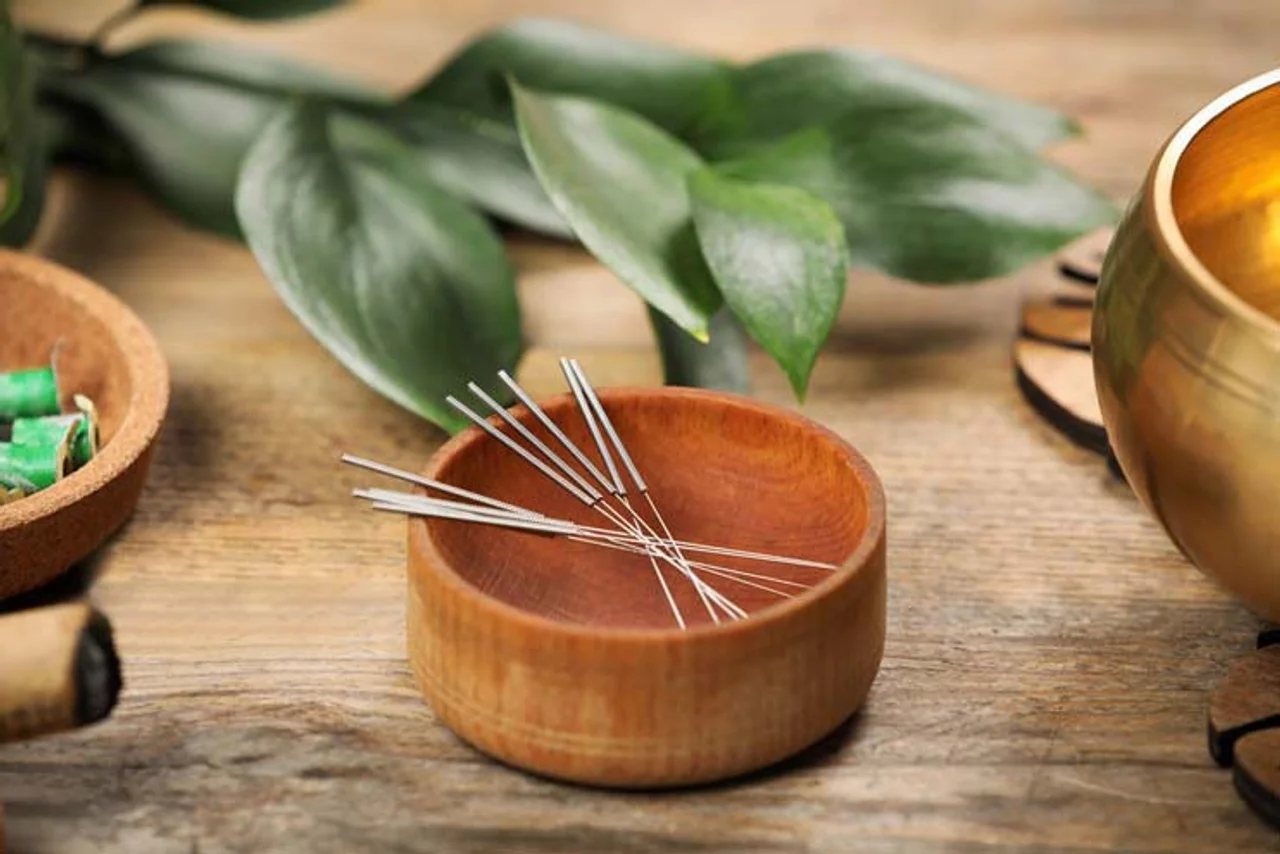
Acupuncture releases muscular tension, improves circulation, and calms the nervous system. For chronic headaches, acupuncture helps:
Reduce overactive pain pathways
Relax tight neck muscles
Improve blood flow to the brain
Alleviate stress-driven headaches
Some patients feel relief within minutes; others see steady improvement over several sessions.
6. Herbal Medicine to Support Long-Term Healing
Depending on the patient’s constitution, herbs may be recommended to address:
Poor circulation
Stress and anxiety
Hormonal imbalance
Fatigue
Digestive issues that contribute to headache patterns
Herbal therapy strengthens the body from within, creating an internal environment where headaches naturally become less frequent.
Real Story: “I Didn’t Know My Headache Was Coming From My Neck.”
A patient in her mid-30s visited us after years of chronic tension headaches. She had tried everything—neurologist visits, MRI scans, pain medications, even physical therapy—but the headaches persisted.
During our evaluation, we found:
Severe forward head posture
Cervical misalignment affecting C2–C3
Chronic jaw clenching
Pelvic tilt contributing to upper body imbalance
After four weeks of SART, TMJ balancing, and Chuna therapy:
Her headache frequency dropped from daily to once every two weeks
Her neck range of motion improved
Her jaw tension decreased
She reported better sleep and mental clarity
Stories like this are common, not because headaches are simple, but because the body responds remarkably well when its underlying structure is corrected.
Why Korean Medicine Is Especially Effective for Chronic Headaches
More Medical Articles
Continue reading clinical insights from Banpo Newborn Korean Medicine Clinic.

Why Seoul is the Global Hub for Minimally Invasive Vertigo Treatment
Dizziness and vertigo are among the most common reasons for hospital visits in South Korea, affecting nearly 16.7% of the adult population annually according to the Korea National Health and Nutrition Examination Survey (KNHANES).
Learn More

Tinnitus Relief in Seoul: Multidisciplinary Upper Cervical Care
For many, the sound of silence is replaced by a persistent ringing, buzzing, or hissing. In South Korea, this is more than an individual annoyance; it is a significant public health trend.
Learn More

Success Rates of SART for OPLL Compared to Standard Laminectomy in Korea
The prevalence of Ossification of the Posterior Longitudinal Ligament (OPLL) in East Asian populations, particularly in South Korea, is significantly higher than in Western countries, affecting approximately 2% to 4% of the population according to nationwide...
Learn More