SART Whole-Body Spinal Alignment, Chuna Therapy & International Patient Concierge
30+ Years Clinical Experience
en-US

Korean Medicine Guide
Constant Neck Ache? What It Could Mean and How to Treat It Naturally
Learn what constant neck ache means and explore natural, effective treatments to ease pain, reduce stiffness, and improve daily comfort.
Schedule a ConsultationConstant Neck Ache? What It Could Mean and How to Treat It Naturally
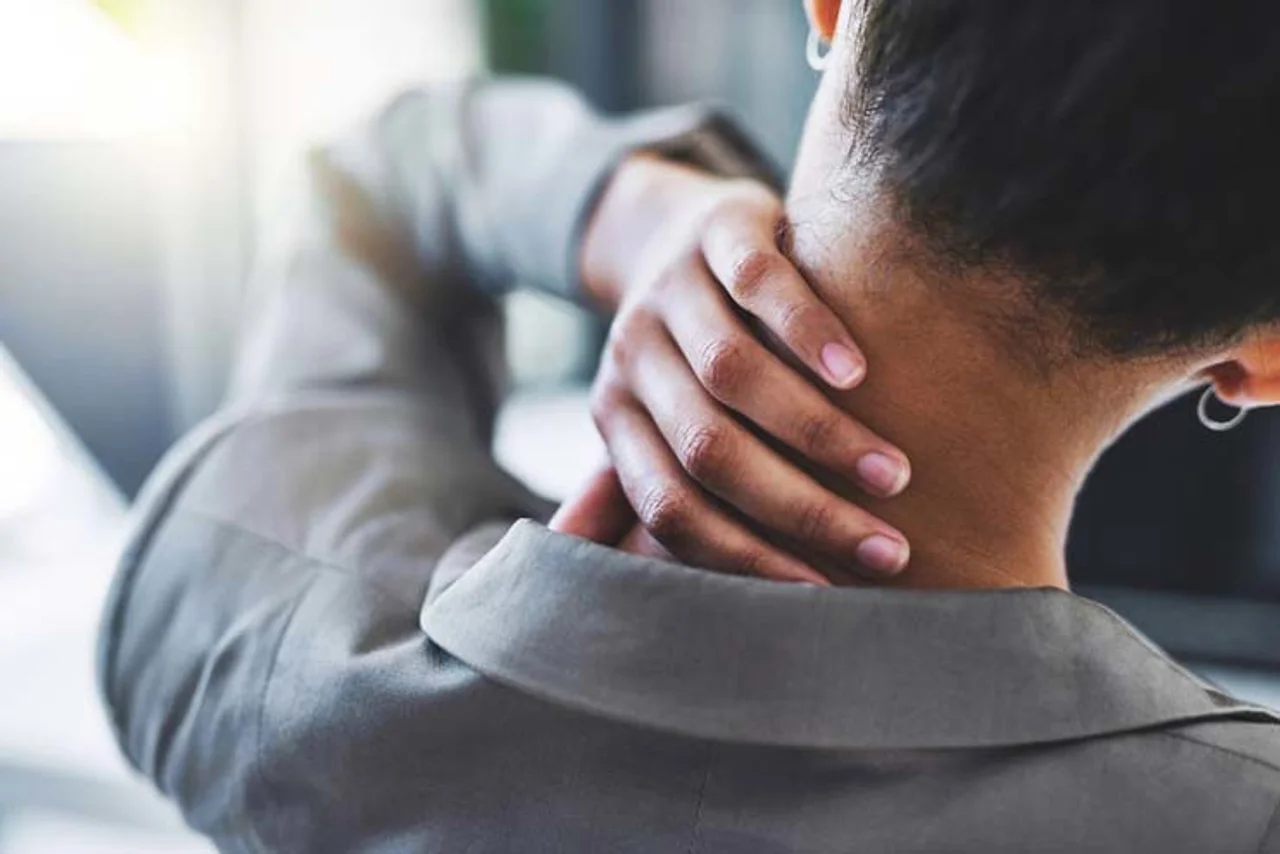
Have you ever woken up with a stiff neck that seemed to linger the entire day? Or perhaps you’ve noticed a dull ache that returns every evening after work. If so, you’re not alone. At Banpo Newborn Korean Medicine Clinic, we’ve met countless patients who lived with chronic neck discomfort for years—some so long that the pain started to feel “normal.” But to be honest, neck pain is never something you simply have to live with. It’s your body’s way of asking for help.
Neck ache can feel deceptively simple—just tight muscles or a poor night’s sleep, right? Yet for many people, that persistent discomfort is actually rooted in deeper structural or neurological issues. Understanding what your pain means is the first step to long-term relief, and thankfully, natural and non-invasive approaches can often resolve the problem more effectively than medication alone.
Drawing on our clinic’s 30 years of experience in spinal correction, TMJ care, and holistic rehabilitation, let’s explore why neck pain happens and what you can do to treat it naturally and safely.
Why Does Constant Neck Pain Happen?
Neck pain rarely appears out of nowhere. In Korean medicine, we view it as the result of accumulated imbalances—misalignments, weakened structures, lifestyle habits, and stress patterns that eventually overload the cervical spine. Here are the most common causes we see at Banpo Newborn.
1. Forward Head Posture (Text Neck)
It’s no secret: Korea is one of the most digitally connected countries in the world. People often spend hours hunched over phones, laptops, and tablets. Over time, the head begins to shift forward relative to the spine, placing up to four times the normal stress on the neck.
A helpful way to visualize this: think of your head like a bowling ball. Held directly above the spine, it’s easy to support. But when tilted even a few centimeters forward, the neck must strain all day just to keep it lifted. Eventually, muscles fatigue, joints stiffen, and chronic pain develops.
2. Cervical Misalignment or Loss of Curve
One of the most surprising findings for many patients is how subtle changes in cervical alignment can create widespread symptoms. At our clinic, we often explain it using the metaphor of a house foundation: if the base tilts even slightly, the entire structure starts to shift. The neck works much the same way.
Loss of the natural C-curve—something we commonly identify through digital posture analysis—can lead to:
Persistent stiffness
Burning or tingling sensations
Headaches
Shoulder tension
Even dizziness or fatigue
When the cervical curve collapses, pressure builds on nerves and blood vessels, disrupting normal function. Many patients describe feeling “foggy” or constantly tired without knowing why. Often, the spine is the missing piece.
3. TMJ Dysfunction
You might not expect jaw issues to cause neck pain, but they frequently do. The jaw and the upper cervical vertebrae are closely linked both mechanically and neurologically. If the TMJ is misaligned, the surrounding muscles compensate by tightening—and the neck is the first to bear that burden.
Some signs your jaw may be the hidden cause:
You clench your teeth when concentrating
Your jaw clicks when you chew
You wake up with tension in the temples or face
Your neck feels tight even when you’re resting
At Banpo Newborn, TMJ-related neck pain is so common that we routinely assess the jaw during spinal examinations.
4. Poor Breathing Patterns and Stress
This is an insight that surprises many patients: how you breathe affects your neck. When we experience stress—emotional, work-related, or physical—we unconsciously switch to shallow chest breathing. This activates accessory breathing muscles in the neck (like the scalenes and sternocleidomastoid), forcing them to work overtime.
A patient recently said, “I thought I was just stressed, not injuring my neck.”
But chronic tension is an injury in slow motion.
5. Old Injuries That Never Fully Healed
Whiplash from a car accident, a sports fall, or even a childhood trauma can create long-lasting micro-instabilities in the cervical spine. Years later, the person may only remember the stiffness—not the original cause.
One of Dr. Ungjin Im’s long-held clinical observations is this:
“Unresolved past injuries often become today’s chronic pain.”
Through careful palpation and alignment testing, these hidden patterns often reveal themselves.
What Constant Neck Pain May Be Telling You

Neck pain is a symptom—not a diagnosis. It may signal:
Nerve compression
Joint inflammation
Muscle imbalance
Postural collapse
Spinal alignment issues
TMJ dysfunction
Stress-driven neuromuscular tension
Ignoring these signs can lead to more severe issues such as cervical disc degeneration, headaches, numbness in the hands, or chronic fatigue. But the good news is that the body responds remarkably well to gentle, targeted correction—especially when addressed early.
Natural and Non-Invasive Ways to Treat Chronic Neck Pain
At Banpo Newborn Korean Medicine Clinic, our approach is rooted in the understanding that the body prefers alignment, balance, and gentle restoration over forceful intervention. Below are the most effective natural methods, based on our clinical experience and patient outcomes.
1. Spinal Alignment Restoration Therapy (SART)
This is one of our clinic’s signature treatments, developed through decades of research into spatial biomechanics.
SART focuses on restoring the three-dimensional structure of the spine by:
Realigning cervical vertebrae
Rebalancing muscle tension patterns
Recovering the natural C-curve
Improving nerve flow and blood circulation
Unlike aggressive manipulation, SART uses precise, gentle directional mobilization based on each patient’s unique posture. Many patients describe it as “finally unlocking the tightness I didn’t even know I had.”
One of Dr. Im’s insights that patients often appreciate is this:
“Pain reduces when structure is restored. The body already knows how to heal—we just guide it back into the right position.”
2. Chuna Manual Therapy
Chuna is a traditional Korean medical technique, refined over centuries and now supported by modern biomechanical research. At Banpo Newborn, we incorporate both classic and contemporary Chuna methods, including mobilization, muscle release, and joint balancing.
Chuna is particularly effective for:
Forward head posture
TMJ-related neck pain
Tension headaches
Neck and shoulder stiffness
Restricted mobility
It helps patients feel lighter, more open, and more naturally upright—without forceful cracking or abrupt thrust techniques.
3. Targeted TMJ Correction
When the jaw is misaligned, neck correction alone is not enough. We assess the jaw joint, bite pattern, facial symmetry, and associated muscle tension.
Natural TMJ correction may include:
Gentle mobilization of the jaw
Release of masseter and temporalis tension
Alignment of C1 and C2 vertebrae
Breathing retraining
Habit correction (e.g., clenching, chewing patterns)
Patients are often surprised to find that after releasing tension in the jaw, the neck begins to relax on its own.
4. Deep Muscle Balancing and Myofascial Release

Repeated stress causes certain muscles to overwork while others weaken. This imbalance locks the neck into a dysfunctional pattern.
Our therapists focus on:
Releasing deep cervical muscles
Balancing the anterior and posterior chain
Restoring scapular stability
Improving fascial glide and fluidity
Many patients describe immediate relief, especially those whose pain stems from long sitting hours.
5. Korean Medicine Treatment (Acupuncture, Herbal Relief, Moxibustion)
Korean medicine provides powerful tools to reduce inflammation, improve circulation, and relax neuromuscular tension.
For chronic neck pain, we often use:
Acupuncture to release trigger points and restore nerve flow
Pharmacopuncture (using herbal extracts) to target stubborn inflammation
Herbal formulas to strengthen weakened structures
Moxibustion to warm and relax deeply contracted tissues
Acupuncture, in particular, improves blood flow to the cervical region—a key factor in recovery, as many chronic pain patients have restricted microcirculation.
6. Postural Retraining and Daily Habits
Lasting recovery requires changing the habits that caused the problem.
We coach patients on:
Neck-Friendly Breathing
Deep diaphragmatic breathing reduces neck muscle overactivation instantly.
Workstation Alignment
Small changes—monitor height, chair position, and arm support—make a huge difference.
Sleep Positioning
Many patients unknowingly worsen their pain with overly high pillows or stomach sleeping.
Gentle Home Exercises
Rather than “stretch everything,” we provide specific mobility and strengthening routines, like:
Upper thoracic extension
Chin tucks (done correctly—not aggressively)
Scapular retraction
Suboccipital release techniques
These reinforce the corrections made in the clinic.
7. Stress Regulation and Nervous System Reset
Chronic pain is as much a neurological issue as a structural one. When the nervous system stays in a stressed state, tension accumulates endlessly.
We guide patients through:
Relaxation breathing
Slow-paced walking
Mind-body connection restoration
Stress-aware habit building
More Medical Articles
Continue reading clinical insights from Banpo Newborn Korean Medicine Clinic.

Why Seoul is the Global Hub for Minimally Invasive Vertigo Treatment
Dizziness and vertigo are among the most common reasons for hospital visits in South Korea, affecting nearly 16.7% of the adult population annually according to the Korea National Health and Nutrition Examination Survey (KNHANES).
Learn More

Tinnitus Relief in Seoul: Multidisciplinary Upper Cervical Care
For many, the sound of silence is replaced by a persistent ringing, buzzing, or hissing. In South Korea, this is more than an individual annoyance; it is a significant public health trend.
Learn More

Success Rates of SART for OPLL Compared to Standard Laminectomy in Korea
The prevalence of Ossification of the Posterior Longitudinal Ligament (OPLL) in East Asian populations, particularly in South Korea, is significantly higher than in Western countries, affecting approximately 2% to 4% of the population according to nationwide...
Learn More