SART Whole-Body Spinal Alignment, Chuna Therapy & International Patient Concierge
30+ Years Clinical Experience
en-US

Korean Medicine Guide
Disc Herniation and Leg Pain? The Connection Explained
Disc herniation can trigger leg pain through nerve compression. Learn the causes, symptoms, and effective treatment options in this clear, expert guide.
Schedule a ConsultationDisc Herniation and Leg Pain? The Connection Explained
Written from the perspective of Banpo Newborn Korean Medicine Clinic — Banpo, Seoul
Have you been living with sharp leg pain that shoots down from your hip to your calf or even your foot? Or perhaps you feel numbness, tingling, or weakness in one side of your leg that never seems to go away. Many patients come to Banpo Newborn Korean Medicine Clinic thinking they simply “pulled a muscle,” when the underlying cause is far more complex — and surprisingly common.
To be honest, most people don’t realize just how closely their spinal health is connected to what they feel in their legs. Leg pain is not always a leg problem. In a large majority of cases, the real culprit is the spine, especially a condition we see every day in the clinic: disc herniation.
With more than 30 years of experience in Korean medicine, spinal alignment, and non-surgical rehabilitation, our team — led by Dr. Ungjin Im — has treated countless patients who walked in with severe leg discomfort but walked out finally understanding the root cause of their pain. In this article, we’ll explain in clear, compassionate terms how disc herniation triggers leg pain, why it happens, and what you can do about it.
What Exactly Is a Disc Herniation?
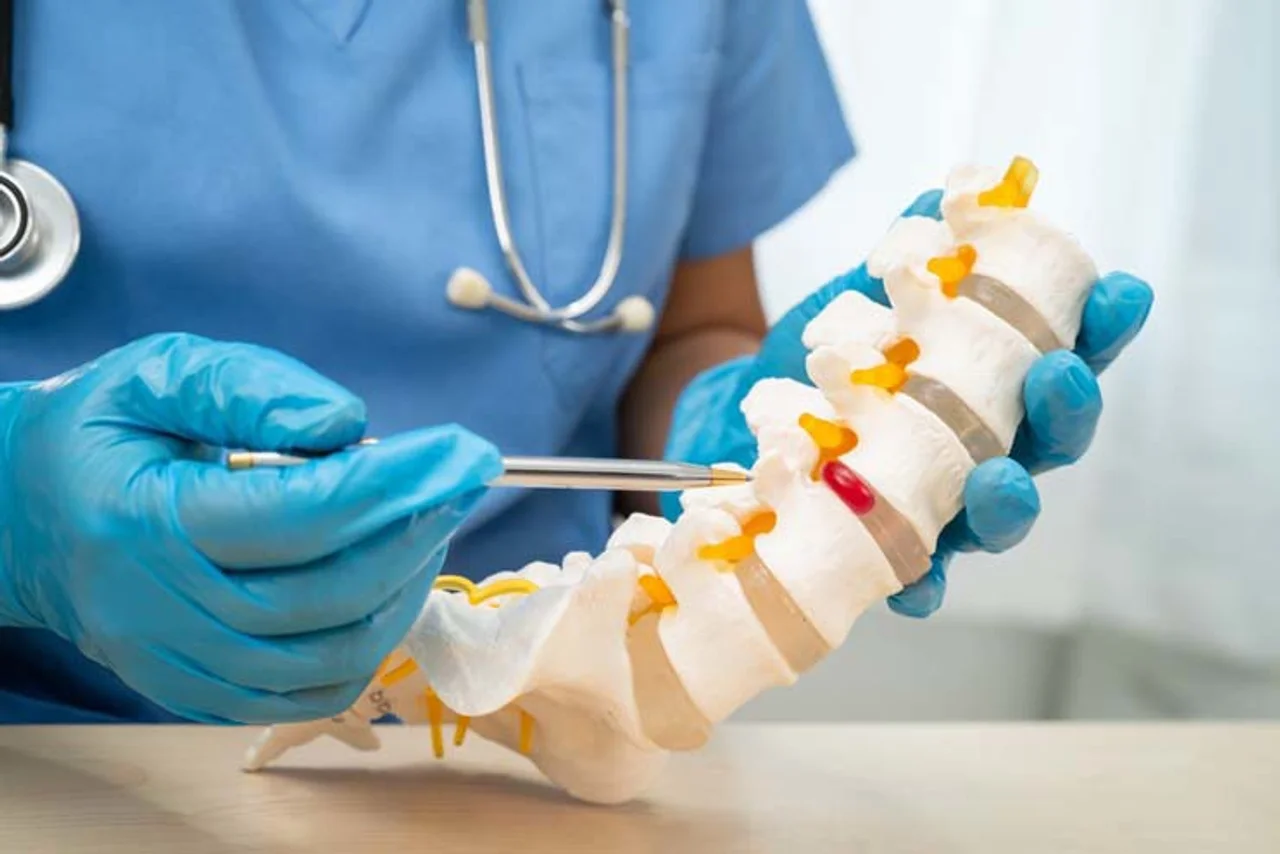
Your spine is made up of vertebrae stacked neatly like building blocks. Between each vertebra sits a soft, gel-like disc that acts like a cushion or shock absorber. When everything is aligned well, the discs distribute pressure evenly and keep your movements smooth and pain-free.
However, due to poor posture, aging, repetitive strain, or sudden injury, the inner gel of a disc can push outward. When it breaks through the outer ring, we call this a disc herniation.
Think of a disc like a water balloon: if you squeeze one side too hard for too long, the other side bulges. When that bulge presses on a nerve root — especially in the lower back — the result can be severe, radiating leg pain.
This is why patients are often confused. They expect back pain but instead feel the worst pain in their leg. That disconnect makes disc herniation one of the most misunderstood spinal conditions.
Why Does a Herniated Disc Cause Leg Pain?

1. The Sciatic Nerve Pathway
Most leg pain caused by disc herniation arises from compression of the sciatic nerve, the longest and largest nerve in the body. It begins in the lower spine (L4–S3), then travels through the hips, down the thigh, and all the way to the foot.
When a disc herniates in the lumbar region, it can irritate or compress one of the nerve roots forming the sciatic nerve. This creates a predictable pain pathway — one of the reasons doctors can often identify the specific spinal level involved just by understanding where a patient feels pain.
Many of our patients describe it like this:
“The pain shoots like electricity down one side of my leg.”
“My calf feels numb, and my foot tingles.”
“Sitting makes it worse; standing helps — but only for a while.”
These aren’t just anecdotes; they reflect the behavior of the sciatic nerve under pressure.
2. Nerve Sensitivity and Inflammation
Even a small disc bulge can create significant inflammation around the nerve. When the nerve becomes inflamed, it becomes hypersensitive. This explains why some patients with mild physical compression feel intense pain, while others with a large herniation feel little at all. The nerve’s inflammatory response matters just as much as the physical structure.
3. Biomechanical Strain
One of the often-forgotten aspects — and something we emphasize heavily at Banpo Newborn — is that spinal alignment influences the tension on the disc. When your pelvis tilts, your spine twists, or your weight shifts primarily to one side, certain discs take on more pressure than they are designed to handle. Over time, those overloaded discs are the ones that degenerate, bulge, or herniate.
Dr. Im often explains it this way:
"A misaligned spine changes the way your body absorbs force. The disc suffers long before the pain appears."
In this sense, disc herniation is rarely an isolated event. It is usually the result of years of small mechanical imbalances.
Common Symptoms of Leg Pain from a Disc Herniation
While symptoms vary from person to person, most patients with disc-related leg pain experience some combination of the following:
• Radiating pain
A sharp or burning sensation that travels from the lower back or hip down to the thigh, calf, or foot.
• Numbness or tingling
Many patients describe it as “ants crawling” or “pins and needles” along a specific part of the leg.
• Muscle weakness
Difficulty lifting the foot (foot drop), trouble climbing stairs, or feeling that the leg “gives out.”
• Worsening of pain with sitting
Sitting increases pressure inside the spine, which compresses the nerve even more.
• Relief when lying down
Because the spine decompresses, symptoms often improve.
If you are experiencing these symptoms, especially on one side of the body, there is a high chance that a lumbar disc herniation is the source.
Why Disc Herniation Happens: The Hidden Factors
1. Poor Posture (especially common in Korea’s work culture)
Many of our patients work long hours at desks, often hunched over a computer. This creates continuous pressure on the lumbar discs — especially L4–L5 and L5–S1.
2. Sedentary lifestyle
The longer you sit, the more your hip flexors tighten, your pelvis tilts forward, and your spinal load increases. Simply put: sitting may be convenient, but it is the enemy of your discs.
3. Weak core and back muscles
Without strong support, your spine collapses into poor alignment.
4. Previous injuries
Even small accidents, such as slipping on stairs, can begin a cascade of imbalance that later results in disc herniation.
5. Aging
Discs lose water content with age. This degeneration increases the risk of bulging or rupture.
6. Structural imbalances
Pelvic torsion, scoliosis, and leg-length discrepancies — which we evaluate carefully at Banpo Newborn — all create uneven disc loading.
Understanding these root causes is essential because healing is not just about fixing the disc; it is about correcting the system that caused the disc to fail.
How We Diagnose Disc-Related Leg Pain at Banpo Newborn
Many clinics rely solely on MRI results. While imaging is helpful, it does not tell the full story.
At Banpo Newborn, we combine:
Radiological evaluation (MRI/X-ray when needed)
Detailed spinal alignment assessment
Functional movement testing
Palpation-based diagnosis rooted in Korean medicine
Neurological tests to check nerve tension and muscle strength
It is surprisingly common for patients to have an MRI showing a herniated disc, but their actual symptoms come from muscular tension, pelvic distortion, or nerve entrapment. Similarly, some have severe pain despite only a small disc bulge.
The truth is: pain does not always match the MRI — which is why precise, hands-on diagnosis is essential for effective treatment.
The Banpo Newborn Treatment Approach: Non-Surgical, Precise, and Holistic
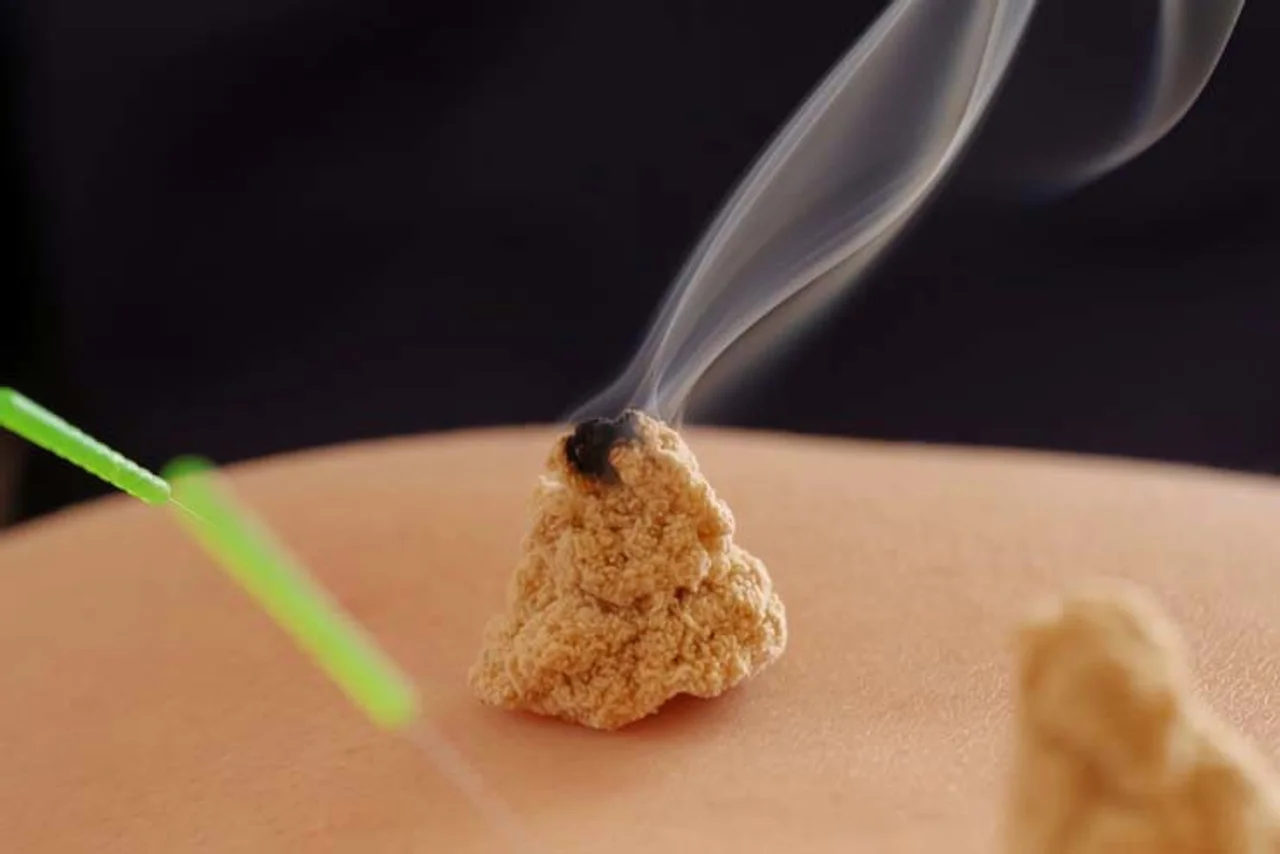
Patients often visit us because they want to avoid surgery. And the good news is this: the vast majority of disc herniation cases do not require surgical intervention.
At Banpo Newborn Korean Medicine Clinic, we focus on restoring both disc comfort and whole-body balance through non-invasive methods.
1. Spinal Alignment Restoration Therapy (SART)
Developed through decades of clinical experience, SART is our signature treatment method. It targets:
Disc pressure reduction
Pelvic balance
Neurological comfort
Functional alignment
Through gentle, precise corrective techniques, we help realign the spine in a way that reduces mechanical stress on the affected disc. Many patients notice reduced leg pain even after one session as nerve pressure decreases.
2. Spatial Spinal Correction
This method corrects 3D distortions of the spine — rotational, vertical, and lateral imbalances. Disc herniation rarely occurs in a straight line; it is almost always part of a larger pattern of misalignment. Spatial correction addresses that pattern in a holistic, patient-specific manner.
3. Chuna Manual Therapy
Chuna therapy is a cornerstone of Korean medicine and has been scientifically shown to improve lumbar disc herniation. Our clinic uses specialized Chuna techniques to:
Relax deep spinal muscles
Release tension around nerve roots
Improve joint motion
Stabilize the pelvic foundation
Many patients describe Chuna as the moment their body “finally feels like it can move again.”
4. Herbal Medicine & Inflammation Control
Korean herbal formulations help reduce inflammation around the nerve, promote disc healing, and restore circulation. This internal support is crucial for long-term recovery.
5. Neuromuscular Rehabilitation
To prevent recurrence, we guide patients through tailored exercises to improve:
Core stability
Gluteal activation
Pelvic alignment
Functional movement patterns
Strengthening the right muscles ensures the spine stays aligned — and that the disc remains protected.
A Real Story from Our Clinic
One of our patients, a 41-year-old office worker from Seocho, came to us barely able to sit through meetings. He had been suffering from shooting pain down his right leg for six months, and MRI confirmed an L5–S1 herniation.
He had tried painkillers, physical therapy, and even considered surgery, but nothing brought lasting relief.
During his first evaluation at Banpo Newborn, we discovered:
Severe pelvic rotation
Extremely tight hip flexors
Weak gluteal support
A compensatory spinal twist that overloaded the disc
More Medical Articles
Continue reading clinical insights from Banpo Newborn Korean Medicine Clinic.

Why Seoul is the Global Hub for Minimally Invasive Vertigo Treatment
Dizziness and vertigo are among the most common reasons for hospital visits in South Korea, affecting nearly 16.7% of the adult population annually according to the Korea National Health and Nutrition Examination Survey (KNHANES).
Learn More

Tinnitus Relief in Seoul: Multidisciplinary Upper Cervical Care
For many, the sound of silence is replaced by a persistent ringing, buzzing, or hissing. In South Korea, this is more than an individual annoyance; it is a significant public health trend.
Learn More

Success Rates of SART for OPLL Compared to Standard Laminectomy in Korea
The prevalence of Ossification of the Posterior Longitudinal Ligament (OPLL) in East Asian populations, particularly in South Korea, is significantly higher than in Western countries, affecting approximately 2% to 4% of the population according to nationwide...
Learn More