SART Whole-Body Spinal Alignment, Chuna Therapy & International Patient Concierge
30+ Years Clinical Experience
en-US


Korean Medicine Guide
Don’t Let a Slipped Disc Control Your Life – Natural Recovery Is Possible
Natural recovery for slipped disc is possible. Learn non-surgical treatments, pain relief options, and how to regain mobility safely.
Schedule a ConsultationDon’t Let a Slipped Disc Control Your Life – Natural Recovery Is Possible

Have you ever woken up in the morning and felt a sharp, unfamiliar pain in your lower back that shoots down your leg? Or maybe you’ve been living for months—sometimes years—with a dull ache in your neck or waist, quietly adjusting your posture, your sleep, even your daily plans around that pain. Many patients who walk into Banpo Newborn Korean Medicine Clinic tell us the same thing:
“I was told I have a slipped disc, and I feel like my life has been put on hold.”
To be honest, this fear is understandable. A slipped disc—also known as a herniated or protruded disc—sounds serious, and conventional advice often jumps quickly to injections, long-term medication, or even surgery. But here is the truth we have seen repeatedly over more than 30 years of clinical practice in Seoul:
A slipped disc does not have to control your life. In many cases, natural, non-surgical recovery is not only possible—it is the most sensible path forward.
What Is a Slipped Disc, Really?
Despite its name, a disc does not actually “slip” out of place. Your spine is made up of vertebrae stacked like building blocks, with soft discs in between acting as shock absorbers. Each disc has a gel-like center and a tougher outer layer.
When the outer layer weakens or tears, the inner material can bulge or protrude outward. This bulge may press on nearby nerves, leading to symptoms such as:
Lower back pain
Neck stiffness
Sciatic pain radiating down the leg
Numbness or tingling in the arms or legs
Muscle weakness
What many people don’t realize is that the disc problem itself is often only part of the story. The deeper issue is usually spinal imbalance—how your spine has adapted over years of poor posture, stress, repetitive movement, or unresolved injuries.
Why So Many People Feel “Stuck” After Diagnosis
In Korea, as in many other countries, patients are often told one of two things:
“Rest and take painkillers.”
“If it gets worse, surgery may be needed.”
Neither option truly addresses why the disc was overloaded in the first place. Pain medication may reduce inflammation temporarily, but it does not correct spinal misalignment. Surgery may remove pressure on a nerve, but if overall posture and biomechanics remain unbalanced, new problems often appear elsewhere.
At Banpo Newborn, we often compare this to fixing a cracked wall without addressing the crooked foundation beneath it. The wall may look better for a while, but the stress hasn’t disappeared—it has simply shifted.
The Spine as the Center of Whole-Body Health
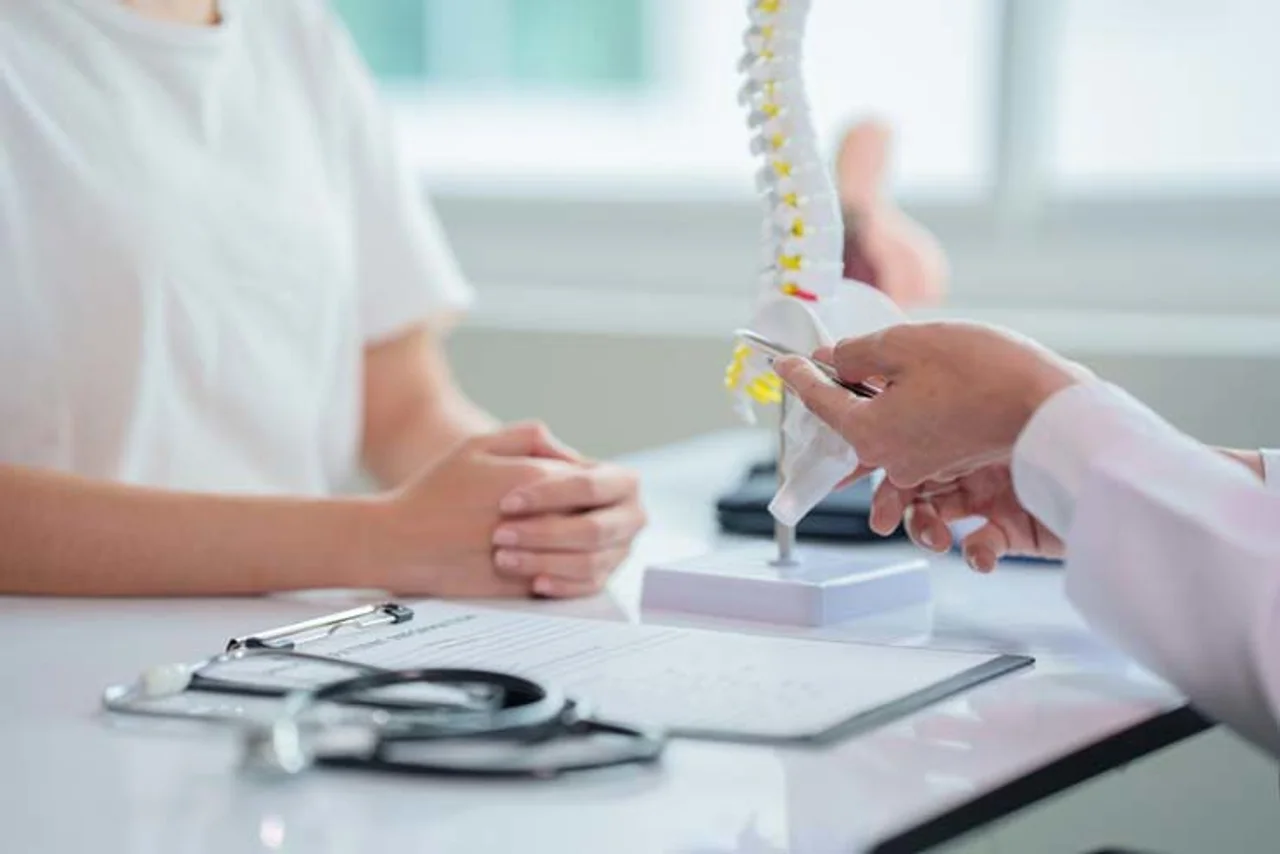
From a Korean medicine perspective, the spine is not just a column of bones—it is the central axis of movement, nerve flow, and structural balance. When one segment becomes unstable, the rest of the body compensates.
For example:
A tilted pelvis can overload the lumbar discs.
Forward head posture increases pressure on cervical discs.
Long hours of sitting compress the spine unevenly, especially when core support is weak.
Over time, these compensations accumulate. A slipped disc is often the final signal that the body can no longer adapt quietly.
Why Natural Recovery Is Often Overlooked
Many patients are surprised to learn that discs have the ability to heal. With proper conditions—reduced pressure, improved alignment, and restored movement—bulging discs can gradually retract, and inflammation around nerves can calm down.
So why is natural recovery overlooked?
It requires time and precision, not quick fixes.
It demands a whole-body approach, not just treating the painful area.
It must be personalized, because no two spines are the same.
This is where specialized Korean medicine approaches, such as Chuna therapy and advanced spinal correction techniques, play a crucial role.
Our Clinical Approach at Banpo Newborn Korean Medicine Clinic
For over three decades, our clinic has focused on non-surgical solutions for spinal and disc-related conditions. Under the leadership of Dr. Ungjin Im, we have refined a treatment philosophy centered on one key idea:
“The spine heals best when alignment, movement, and the nervous system are restored together.”
1. Precise Spinal Assessment
Before any treatment begins, we conduct a detailed evaluation of posture, spinal curves, pelvic balance, and movement patterns. Disc symptoms rarely exist in isolation, and understanding the full picture is essential.
Many patients discover for the first time that their disc issue is connected to old ankle injuries, asymmetrical sitting habits, or years of desk work.
2. Spinal Alignment Restoration Therapy (SART)
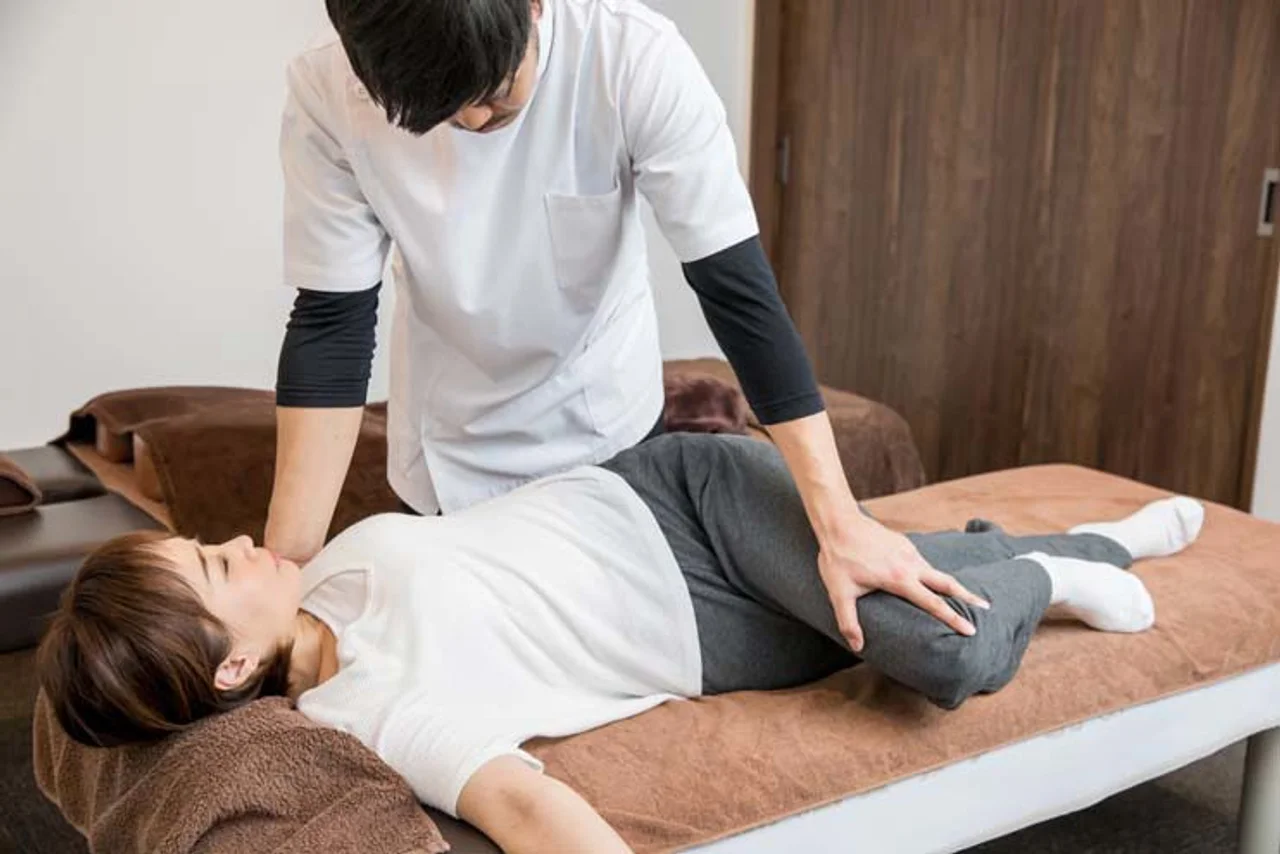
One of Banpo Newborn’s signature approaches, Spinal Alignment Restoration Therapy, focuses on gently correcting spatial imbalances in the spine. Rather than forceful manipulation, this method emphasizes precision and safety—especially important for patients with disc protrusions.
By restoring proper alignment, pressure on the affected disc is reduced naturally, giving the body a chance to recover.
3. Chuna Manual Therapy
Chuna therapy is a recognized form of Korean manual medicine that combines biomechanical understanding with traditional principles. For slipped disc patients, Chuna is applied carefully to:
Improve joint mobility
Reduce muscular tension
Restore balanced load distribution along the spine
Patients often report not just pain relief, but a sense that their body is “moving correctly” again.
4. Supporting the Body’s Healing Capacity
Natural recovery is not passive. In addition to manual therapy, treatment may include acupuncture, herbal support when appropriate, and personalized lifestyle guidance.
Simple adjustments—such as how you sit, sleep, or lift objects—can dramatically influence disc pressure. We believe education is part of treatment, not an afterthought.
Realistic Expectations: Healing Is a Process
One of the most important conversations we have with patients is about time. Natural recovery does not mean overnight miracles. But it does mean sustainable improvement without unnecessary risk.
In our experience:
Acute disc pain often improves within weeks when alignment is corrected.
Chronic cases may take longer, especially if compensation patterns are deeply ingrained.
Consistency matters more than intensity.
We often tell patients, “Your spine learned these patterns over years. Let’s give it the time and guidance to unlearn them.”
Common Myths About Slipped Discs
“If I move, it will get worse.”
In reality, appropriate movement is essential for disc health. Avoiding all activity can weaken supportive muscles and slow recovery.
“Surgery is inevitable.”
Most disc cases do not require surgery. Non-surgical care should be fully explored before considering invasive options, unless there are severe neurological deficits.
“Pain means damage.”
Pain often reflects inflammation or nerve sensitivity—not ongoing harm. Understanding this can reduce fear, which itself plays a role in chronic pain.
A Message to Those Living With Chronic Disc Pain
If you have been living cautiously—avoiding travel, exercise, or even social plans because of your back or neck—you are not weak, and you are not alone. Many of our patients come to us after feeling dismissed or rushed elsewhere.
What they often rediscover is confidence in their body. As alignment improves and pain decreases, daily activities feel less threatening. Sleep improves. Mood lifts. Life gradually opens up again.
When Should You Seek a Proper Evaluation?
Consider a comprehensive spinal assessment if you:
Have been diagnosed with a slipped or herniated disc
Experience recurring back or neck pain despite rest
Feel numbness, tingling, or weakness in your limbs
Want to avoid surgery and long-term medication
At Banpo Newborn Korean Medicine Clinic, we believe that informed patients make better decisions. Even if you are unsure about treatment, understanding the true condition of your spine is a powerful first step.
Natural Recovery Is Not Giving Up—It’s Choosing Wisely
Choosing a natural, non-surgical path does not mean ignoring your condition. On the contrary, it means addressing it more deeply—with respect for the body’s design and its ability to heal when properly supported.
A slipped disc may have interrupted your routine, but it does not define your future. With precise care, patient guidance, and a holistic approach, recovery is not just possible—it is realistic.
If you are considering a spinal check-up or want to explore safe, evidence-based Korean medicine treatments for disc pain, Banpo Newborn Korean Medicine Clinic is here to walk that path with you—step by step, spine by spine, life by life.
More Medical Articles
Continue reading clinical insights from Banpo Newborn Korean Medicine Clinic.

Why Seoul is the Global Hub for Minimally Invasive Vertigo Treatment
Dizziness and vertigo are among the most common reasons for hospital visits in South Korea, affecting nearly 16.7% of the adult population annually according to the Korea National Health and Nutrition Examination Survey (KNHANES).
Learn More

Tinnitus Relief in Seoul: Multidisciplinary Upper Cervical Care
For many, the sound of silence is replaced by a persistent ringing, buzzing, or hissing. In South Korea, this is more than an individual annoyance; it is a significant public health trend.
Learn More

Success Rates of SART for OPLL Compared to Standard Laminectomy in Korea
The prevalence of Ossification of the Posterior Longitudinal Ligament (OPLL) in East Asian populations, particularly in South Korea, is significantly higher than in Western countries, affecting approximately 2% to 4% of the population according to nationwide...
Learn More