SART Whole-Body Spinal Alignment, Chuna Therapy & International Patient Concierge
30+ Years Clinical Experience
en-US


Korean Medicine Guide
Everything You Need to Know About Korean Medicine for TMJ Syndrome
Discover how Korean medicine treats TMJ syndrome with acupuncture, herbal therapy, and holistic care to relieve jaw pain and restore balance.
Schedule a ConsultationEverything You Need to Know About Korean Medicine for TMJ Syndrome

Have you ever felt pain in front of your ears when chewing, noticed clicking sounds in your jaw, or woken up with headaches and neck stiffness that don’t seem to have a clear cause?
For many people, these symptoms are eventually traced back to TMJ syndrome, a condition that affects the temporomandibular joint—the complex joint that connects your jaw to your skull.
To be honest, TMJ syndrome is often misunderstood. Some patients are told it’s “just stress,” others are advised to live with it, and many undergo fragmented treatments that address symptoms but not the root cause. At Banpo Newborn Korean Medicine Clinic, we’ve spent more than 30 years working with patients who have struggled with chronic jaw pain, facial tension, and whole-body imbalance caused by TMJ disorders.
In this article, we’ll walk you through what TMJ syndrome really is, why it affects more than just your jaw, and how Korean medicine approaches TMJ treatment differently—with a focus on safe, non-surgical, and holistic healing.
What Is TMJ Syndrome?
The temporomandibular joint (TMJ) is one of the most frequently used joints in the body. You use it when you talk, eat, yawn, swallow, and even when you hold tension unconsciously. Because of its complexity—combining hinge and sliding movements—it is especially vulnerable to imbalance.
TMJ syndrome is a broad term that refers to dysfunction or pain involving:
The jaw joint itself
The surrounding muscles
The ligaments and connective tissues
The nervous system pathways connected to the jaw
Common Symptoms of TMJ Syndrome
TMJ symptoms vary widely from person to person, which is why many patients go undiagnosed for years. Common signs include:
Jaw pain or stiffness
Clicking, popping, or grinding sounds when opening the mouth
Difficulty opening the mouth fully
Facial pain or pressure
Headaches or migraines
Neck and shoulder tension
Ear pain, tinnitus, or a feeling of fullness in the ear
Dizziness or balance issues
One of the most important things to understand is this: TMJ syndrome is rarely an isolated jaw problem.
Why TMJ Syndrome Is a Whole-Body Issue
In Korean medicine, the body is never viewed as a collection of separate parts. The jaw is deeply connected to:
The cervical spine (neck)
Overall postural alignment
The nervous system
Breathing patterns
Emotional and stress responses
From a clinical perspective, we often explain TMJ like the hinge of a door installed on a crooked frame. Even a perfectly designed hinge won’t function smoothly if the frame itself is twisted. Similarly, if the spine, pelvis, or head position is misaligned, the jaw is forced to compensate.
At Banpo Newborn, many TMJ patients also show:
Forward head posture
Cervical spine misalignment
Uneven shoulder height
Pelvic imbalance
Chronic muscular tension patterns
This is why purely local treatments—such as bite splints or painkillers—often provide only temporary relief.
How Korean Medicine Understands TMJ Syndrome

Korean medicine takes a functional and integrative approach to TMJ disorders. Instead of asking only “Where does it hurt?”, we ask:
Why did this imbalance develop?
How is the spine influencing jaw mechanics?
What role does muscle tension, circulation, and nervous regulation play?
How is stress being stored in the body?
Key Korean Medicine Perspectives on TMJ
Structural Balance
The jaw does not float independently. It responds to head position, spinal curvature, and muscular chains throughout the body.Qi and Blood Circulation
Restricted circulation can lead to muscle stiffness, inflammation, and delayed healing around the jaw joint.Muscle-Fascia Connectivity
Tightness in the neck, shoulders, and upper back directly influences jaw tension.Stress and Autonomic Nervous System
Chronic stress often manifests as jaw clenching, teeth grinding, and facial tension—even during sleep.
Korean Medicine Treatments for TMJ Syndrome
At Banpo Newborn Korean Medicine Clinic, TMJ treatment is never one-size-fits-all. Each patient receives a thorough structural and functional evaluation before treatment begins.
1. Spinal Alignment Restoration Therapy (SART)
One of the most overlooked contributors to TMJ syndrome is spinal misalignment, especially in the cervical region.
Dr. Ungjin Im’s Spinal Alignment Restoration Therapy (SART) focuses on:
Correcting subtle misalignments in the spine
Restoring natural head and neck positioning
Reducing compensatory muscle tension affecting the jaw
Many TMJ patients are surprised to find that jaw pain improves significantly once cervical alignment is corrected. This is because proper spinal alignment reduces abnormal stress on the jaw joint and surrounding muscles.
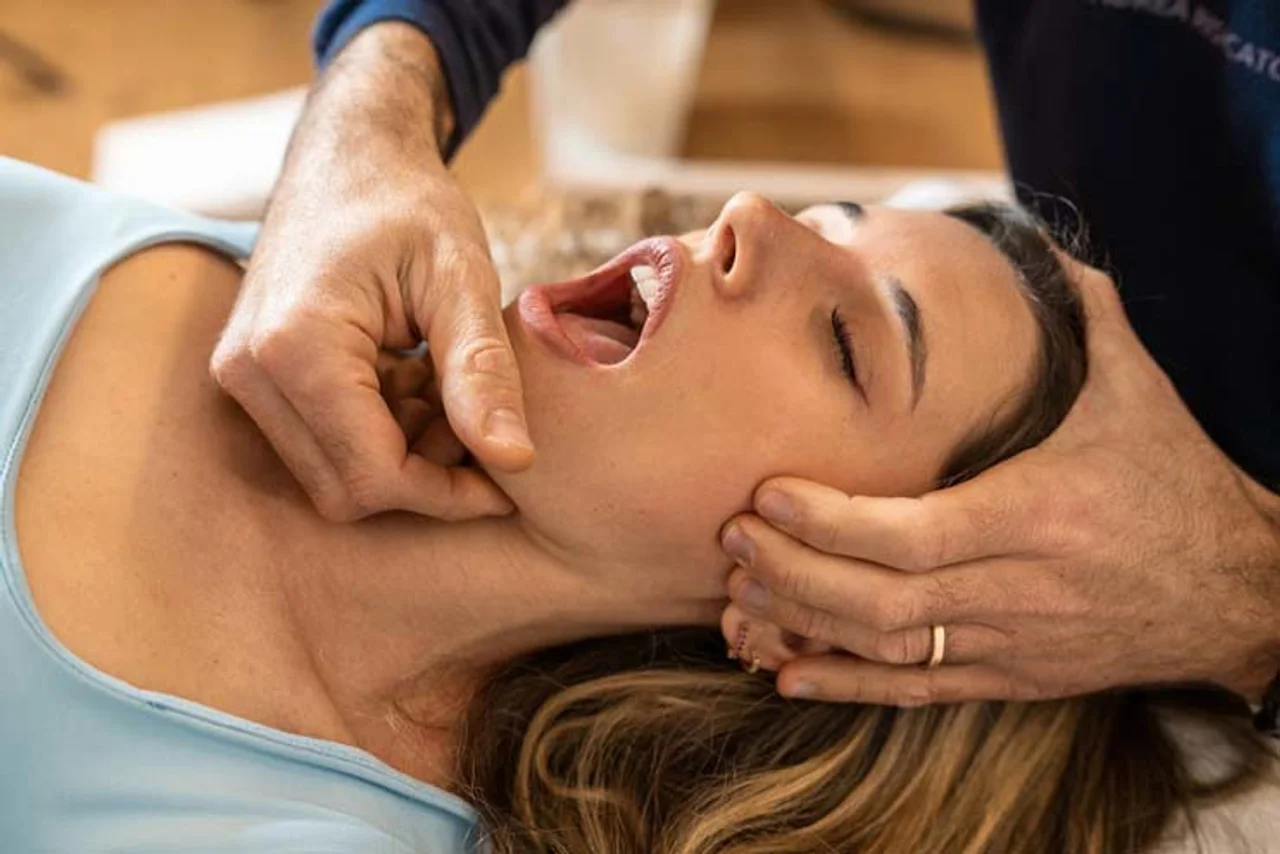
2. Chuna Manual Therapy for TMJ
Chuna therapy is a hands-on Korean manual treatment that gently adjusts joints and relaxes muscles.
For TMJ syndrome, Chuna may involve:
Jaw joint mobilization
Cervical spine adjustments
Shoulder and upper thoracic release
Facial and intraoral muscle relaxation (when appropriate)
Unlike aggressive manipulations, Chuna is precise, controlled, and patient-responsive, making it suitable even for chronic or sensitive cases.
3. Acupuncture for Jaw Pain and Muscle Tension
Acupuncture plays an important supportive role in TMJ treatment.
Benefits include:
Reducing inflammation around the TMJ
Relaxing overactive jaw and neck muscles
Improving local blood flow
Calming the nervous system
From our experience, acupuncture is particularly effective for patients who experience:
Jaw clenching due to stress
Headaches related to TMJ
Facial pain with no clear structural damage
4. Herbal Medicine (When Appropriate)
In selected cases, customized herbal medicine may be prescribed to:
Reduce chronic inflammation
Improve circulation
Support nerve recovery
Regulate stress and sleep patterns
Herbal prescriptions are always individualized and adjusted based on the patient’s constitution and symptom pattern.
What Makes Korean Medicine TMJ Treatment Different?
Many patients come to us after trying dental appliances, medications, or isolated therapies with limited success. Korean medicine offers a different perspective:
Root-Cause Focus
Instead of masking pain, treatment aims to correct the underlying imbalance that caused TMJ dysfunction in the first place.
Non-Surgical and Conservative
Korean medicine emphasizes safety and long-term sustainability, especially for patients hoping to avoid surgery.
Whole-Body Integration
Jaw treatment is integrated with:
Posture correction
Spinal alignment
Stress regulation
Muscular balance
Personalized Care
At Banpo Newborn, treatments are delivered one-on-one, allowing for continuous assessment and adjustment.
Real-World Patient Experience
We often meet patients who say, “I never thought my jaw pain was connected to my posture.”
One patient, a woman in her 30s working long hours at a desk, came to us with chronic jaw clicking and migraines. She had tried mouth guards and physical therapy with limited results. After a detailed assessment, we found significant forward head posture and cervical imbalance. As spinal alignment improved through SART and Chuna therapy, her jaw symptoms gradually decreased—without invasive procedures.
Stories like this are not uncommon. They remind us that healing often begins where people least expect it.
How Long Does TMJ Treatment Take?
Recovery timelines vary depending on:
Duration of symptoms
Structural severity
Stress levels
Consistency of treatment
Some patients experience noticeable improvement within weeks, while chronic cases may require several months of structured care. The key is gradual, stable correction rather than quick fixes.
When Should You Seek Korean Medicine Treatment for TMJ?
You may want to consider a Korean medicine evaluation if:
Jaw pain persists despite conventional treatments
Symptoms include headaches, neck pain, or dizziness
You want a non-surgical approach
Stress seems to worsen your symptoms
TMJ symptoms keep returning after temporary relief
Final Thoughts: TMJ Healing Is Possible
Living with TMJ syndrome can be exhausting—physically and emotionally. But it’s important to know that chronic jaw pain is not something you simply have to endure.
At Banpo Newborn Korean Medicine Clinic, we believe TMJ recovery is most effective when the body is treated as a connected system, not a collection of isolated symptoms. Through precise spinal alignment, gentle manual therapy, and holistic care, many patients rediscover comfort, balance, and confidence in daily life.
If you’ve been living with TMJ symptoms for years, it might feel like you’re stuck. But you’re not alone—and with the right approach, healing is absolutely possible.
More Medical Articles
Continue reading clinical insights from Banpo Newborn Korean Medicine Clinic.

Why Seoul is the Global Hub for Minimally Invasive Vertigo Treatment
Dizziness and vertigo are among the most common reasons for hospital visits in South Korea, affecting nearly 16.7% of the adult population annually according to the Korea National Health and Nutrition Examination Survey (KNHANES).
Learn More

Tinnitus Relief in Seoul: Multidisciplinary Upper Cervical Care
For many, the sound of silence is replaced by a persistent ringing, buzzing, or hissing. In South Korea, this is more than an individual annoyance; it is a significant public health trend.
Learn More

Success Rates of SART for OPLL Compared to Standard Laminectomy in Korea
The prevalence of Ossification of the Posterior Longitudinal Ligament (OPLL) in East Asian populations, particularly in South Korea, is significantly higher than in Western countries, affecting approximately 2% to 4% of the population according to nationwide...
Learn More