SART Whole-Body Spinal Alignment, Chuna Therapy & International Patient Concierge
30+ Years Clinical Experience
en-US


Korean Medicine Guide
From Hip Pain to Herniated Disc Diagnosis — A Real Case Study
Discover how hip pain revealed a hidden herniated disc. A real case study with insights into symptoms, diagnosis, and treatment options.
Schedule a Consultation
If you live with hip pain, pelvic discomfort, or a stubborn lower back pain that flares after sitting or long walks along the Han River, you’re not alone. To be honest, many people don’t realize how often hip or pelvic symptoms trace back to a spinal source—sometimes a Herniated Disc, also called Disc Herniation or Slipped Disc. At Banpo Newborn Oriental Medical Clinic in Banpo, Seoul, we see this pattern every week. This real case study shows how a patient’s “hip problem” turned out to be a lumbar disc issue—and how non-surgical spinal care led to steady, lasting relief.
For more than 30 years, Dr. Ungjin Im has specialized in precise, gentle, and evidence-based Korean medicine approaches to complex musculoskeletal pain. His methods—including Spinal Alignment Restoration Therapy (SART) and spatial spinal correction—are built on one core belief: when the spine returns to balance, the whole body can heal.
The patient: “It started as a dull ache in my hip”
Profile: Ms. K, 48, office manager in Seocho
Primary complaints: Deep hip pain on the right side, intermittent pelvic pain, and waves of lumbar pain after commuting. She also reported occasional backache, tight hamstrings, and sleep-disturbing lower back pain. On stressful weeks, she noticed a mild neck ache and shoulder stiffness.
History:
Tried stretching apps and foam rolling for months.
Short-term relief from massage; pain always returned.
X-rays (from another clinic) were “normal,” so she assumed it was just overuse.
First visit observations at Banpo Newborn:
Subtle right pelvic elevation and external rotation of the hip.
Guarded gait and shortened stride on the right.
Lumbar extension produced a familiar “pinch.”
Sensory changes along the L5 dermatome and weakness in right hip abduction.
Provisional impression: Even though the primary symptom sounded like a hip problem, the signs pointed toward an L4–L5 Herniated Disc with mild Lumbar Spinal Stenosis—a classic example of how the spine can “refer” pain to the hip and pelvis.
“When a patient leads with hip pain, we never assume it’s only the hip,” explains Dr. Im Ungjin. “We ask the spine first. Misalignment or disc irritation can create signals that the body interprets elsewhere—like the hip, knee, or even the jaw.”
Why hip pain can come from your spine
Imagine your spine as the foundation of a house. If the foundation tilts a few degrees, doors stick, windows rattle, and the floor creaks. Similarly, a rotated pelvis or a compressed lumbar segment overloads the muscles and nerves that travel to the hip, pelvis, and leg. Irritated nerve roots from a Herniated Disc can send pain, tingling, or weakness away from the back, often confusing patients (and sometimes providers).
Common clues your hip pain may be spinal in origin:
Pain worsens with sitting, prolonged standing, or bending.
Relief when lying down with knees slightly bent.
Numbness/tingling down the leg; weakness during single-leg stance.
Co-existing back pain or backache, even if mild.
One side of the pelvis appears higher in photos or mirrors.
The Banpo Newborn difference: Precision first, procedure second
At Banpo Newborn Oriental Medical Clinic, diagnosis is personal and layered. Dr. Ungjin Im combines:
Postural & movement analysis — Assessing standing alignment, gait, pelvic tilt, and spinal curves, including hidden compensations from Scoliosis or leg-length asymmetry.
Orthopedic & neurologic tests — Determining whether symptoms reflect Disc Herniation, Spinal Stenosis, joint restriction, or myofascial referral.
Korean medicine palpation & fascia mapping — Locating tension tracks that link the lumbar spine to the hip and pelvic floor.
Targeted imaging referrals (when needed) — To confirm disc level, canal diameter, or foraminal compromise before initiating care.
This step-by-step process ensures we treat the right problem—often revealing when “hip pain” is really a Herniated Disc or early Lumbar Spinal Stenosis.
Specialty name: How Banpo Newborn Oriental Medical Clinic Treats Spinal Stenosis Without Surgery
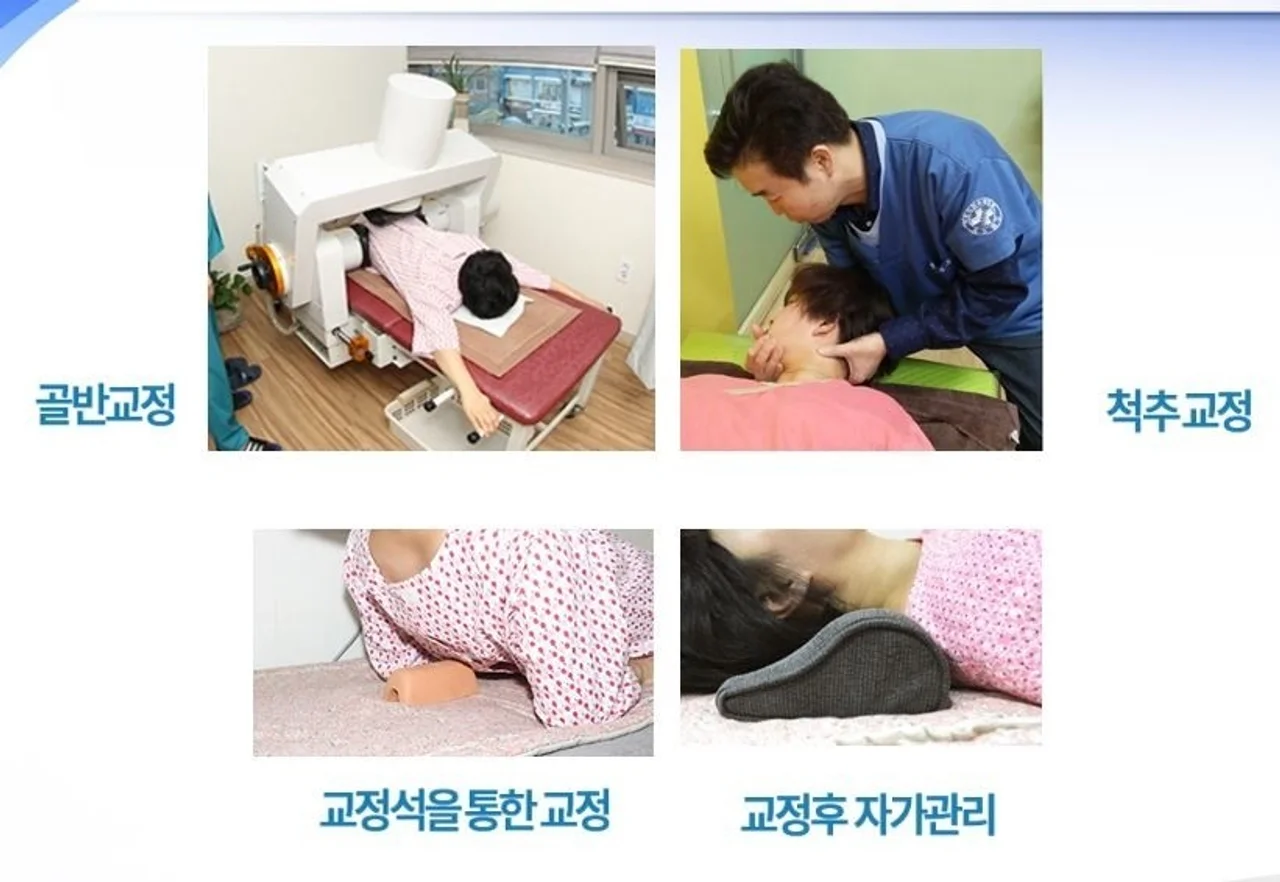
Non-surgical care is not about “doing nothing.” It’s about doing precisely what your body needs—in the right sequence. Our specialty approach focuses on creating space, stability, and symmetry.
1) Spinal Alignment Restoration Therapy (SART)
SART is Dr. Im Ungjin’s structured framework for restoring spinal mechanics:
Spatial spinal correction: Gentle, segment-specific adjustments and mobilizations tailored to your unique curve and rotation patterns.
Directional decompression: Positioning and traction strategies that momentarily “open” narrowed canals in Spinal Stenosis and unload herniated segments.
Neuromyofascial balancing: Correcting tight chains in the psoas, QL, hamstrings, and glutes to reduce asymmetrical pull on the lumbar spine and pelvis.
Stability coding: Progressively training deep stabilizers (multifidus, transverse abdominis, diaphragm-pelvic floor synergy) without provoking pain.
2) Chuna therapy (Korean manual medicine)
Chuna uses precise, minimal-force techniques to unlock restricted joints, reset soft tissue tone, and guide the spine back toward midline. For sensitive Herniated Disc cases, we employ low-amplitude methods that encourage motion without strain.
3) Integrative Korean medicine
Herbal support (as appropriate) for inflammation modulation and tissue recovery.
Acupuncture for radicular pain, paraspinal spasm, and autonomic down-regulation—often helpful for patients also struggling with Headache, Chronic Headache, or Tinnitus.
Lifestyle prescriptions: Micro-break schedules for desk workers, sleep positioning to avoid extension-based stenosis flare-ups, and walking progressions that respect neural tolerance.
4) TMJ-spine axis care (when indicated)
Postural chains link the Temporomandibular Joint (TMJ) to cervical and thoracic alignment. In select patients with TMJ Disorder, TMJ Syndrome, or bruxism-related tension, we integrate jaw and upper-cervical balancing to reduce compensations that can perpetuate neck pain, neck stiffness, or even shoulder loading.
“The body heals in 3D. When we restore space—between vertebrae, within the diaphragm, across the pelvic floor—the nervous system calms and movement becomes resilient,” says Dr. Ungjin Im.
The treatment plan: Week-by-week progress
Weeks 1–2:
SART-based decompression postures, spatial spinal correction, gentle Chuna for sacroiliac mobility.
Targeted acupuncture to ease radicular tension and calm paraspinals.
Micro-dose exercises: supine marching, 90–90 breathing, and isometric hip abduction to recruit stabilizers without aggravation.
Outcome: Ms. K’s “hot” hip pain softened by ~30%. Walking felt less guarded.
Weeks 3–4:
Introduced anti-rotation core drills, neural-glide variations, and progressive hip hinge mechanics.
Short home sessions (8–10 minutes) instead of long workouts—frequency over intensity.
Outcome: Lower back pain decreased in frequency; pelvic discomfort reduced during commutes; stride length normalized.
Weeks 5–8:
Graduated loading with split-stance hinges and supported carries (as tolerated).
Maintenance Chuna and spatial correction every 1–2 weeks; acupuncture as needed.
Outcome: No sharp episodes for 3 consecutive weeks. She returned to weekend hikes without next-day flare-ups.
By week 10:
- Ms. K reported occasional stiffness after long meetings, but hip pain had largely resolved. Functional tests (single-leg stance, step-down control) improved, and lumbar extension no longer reproduced symptoms.
Realistic note: Pain relief timelines vary. Some Spinal Stenosis cases respond quickly; others need a steadier pace. The key is precision, patience, and protecting progress between visits.
Why non-surgical spinal care works for stenosis and herniation
Space creation: Even small improvements in segmental spacing or pelvic alignment can ease nerve root irritation.
Load redistribution: When the deep core and hips share work properly, the lumbar spine stops overworking.
Neurocalming: Targeted manual therapy and acupuncture reduce muscle guarding and sympathetic overdrive.
Habit re-coding: Daily posture and movement behaviors—how you sit, lift, breathe—either reinforce or relieve stenosis mechanics.
Surgery is essential in some cases (e.g., severe neurological deficits), but many patients with Lumbar Spinal Stenosis or Herniated Disc prefer to start with non-invasive care. Our specialty name approach—How Banpo Newborn Korean Medicine Clinic Treats Spinal Stenosis Without Surgery—offers a structured, monitored pathway that respects your body’s pacing.
Conditions we commonly treat (and how they connect)
People rarely have just one complaint. That’s why our evaluation considers the entire kinetic chain and nervous system:
More Medical Articles
Continue reading clinical insights from Banpo Newborn Korean Medicine Clinic.

Why Seoul is the Global Hub for Minimally Invasive Vertigo Treatment
Dizziness and vertigo are among the most common reasons for hospital visits in South Korea, affecting nearly 16.7% of the adult population annually according to the Korea National Health and Nutrition Examination Survey (KNHANES).
Learn More

Tinnitus Relief in Seoul: Multidisciplinary Upper Cervical Care
For many, the sound of silence is replaced by a persistent ringing, buzzing, or hissing. In South Korea, this is more than an individual annoyance; it is a significant public health trend.
Learn More

Success Rates of SART for OPLL Compared to Standard Laminectomy in Korea
The prevalence of Ossification of the Posterior Longitudinal Ligament (OPLL) in East Asian populations, particularly in South Korea, is significantly higher than in Western countries, affecting approximately 2% to 4% of the population according to nationwide...
Learn More