SART Whole-Body Spinal Alignment, Chuna Therapy & International Patient Concierge
30+ Years Clinical Experience
en-US


Korean Medicine Guide
Headaches Every Morning? It Could Be Linked to TMJ Dysfunction
Morning headaches every day? TMJ dysfunction may be the cause. Learn symptoms, jaw-related triggers, and effective TMJ treatment options.
Schedule a ConsultationHeadaches Every Morning? It Could Be Linked to TMJ Dysfunction

Have you ever woken up with a headache that seems to greet you before you even open your eyes? For many people, morning headaches become such a regular
part of life that they’re brushed off as stress, poor sleep, or simply “getting older.” To be honest, that resignation is understandable—but it’s also unfortunate. Because in a surprising number of cases, persistent morning headaches are not just about your head. They may be coming from your jaw.
At Banpo Newborn Korean Medicine Clinic, we often meet patients who have spent years treating headaches with painkillers, migraine medications, or sleep aids, without ever being told to check their temporomandibular joint—commonly known as the TMJ. When we finally evaluate their jaw alignment, bite balance, and cervical spine, many experience a moment of clarity: “So this is where it’s been coming from.”
This article explores why morning headaches are so often linked to TMJ dysfunction, how the jaw, spine, and nervous system interact, and what a holistic, non-invasive approach can do to address the root cause rather than just the pain.
What Is TMJ Dysfunction, Really?
The temporomandibular joints are the two small but incredibly complex joints located just in front of your ears. They connect your lower jaw (mandible) to your skull and allow you to speak, chew, yawn, and swallow. Unlike simpler hinge joints, the TMJ must glide, rotate, and stabilize simultaneously—making it highly sensitive to imbalance.
TMJ dysfunction (TMD) occurs when this system is disrupted. That disruption can come from:
Jaw misalignment or asymmetry
Poor bite balance (malocclusion)
Teeth grinding or clenching (bruxism), often during sleep
Chronic stress causing muscle tension
Cervical spine or postural imbalance
What many people don’t realize is that the TMJ does not operate in isolation. It is deeply connected to the muscles of the neck, the alignment of the upper spine, and the cranial nerves that regulate pain, sensation, and even sleep quality.
When something goes wrong here, headaches are often one of the first warning signs.
Why TMJ-Related Headaches Are Often Worst in the Morning
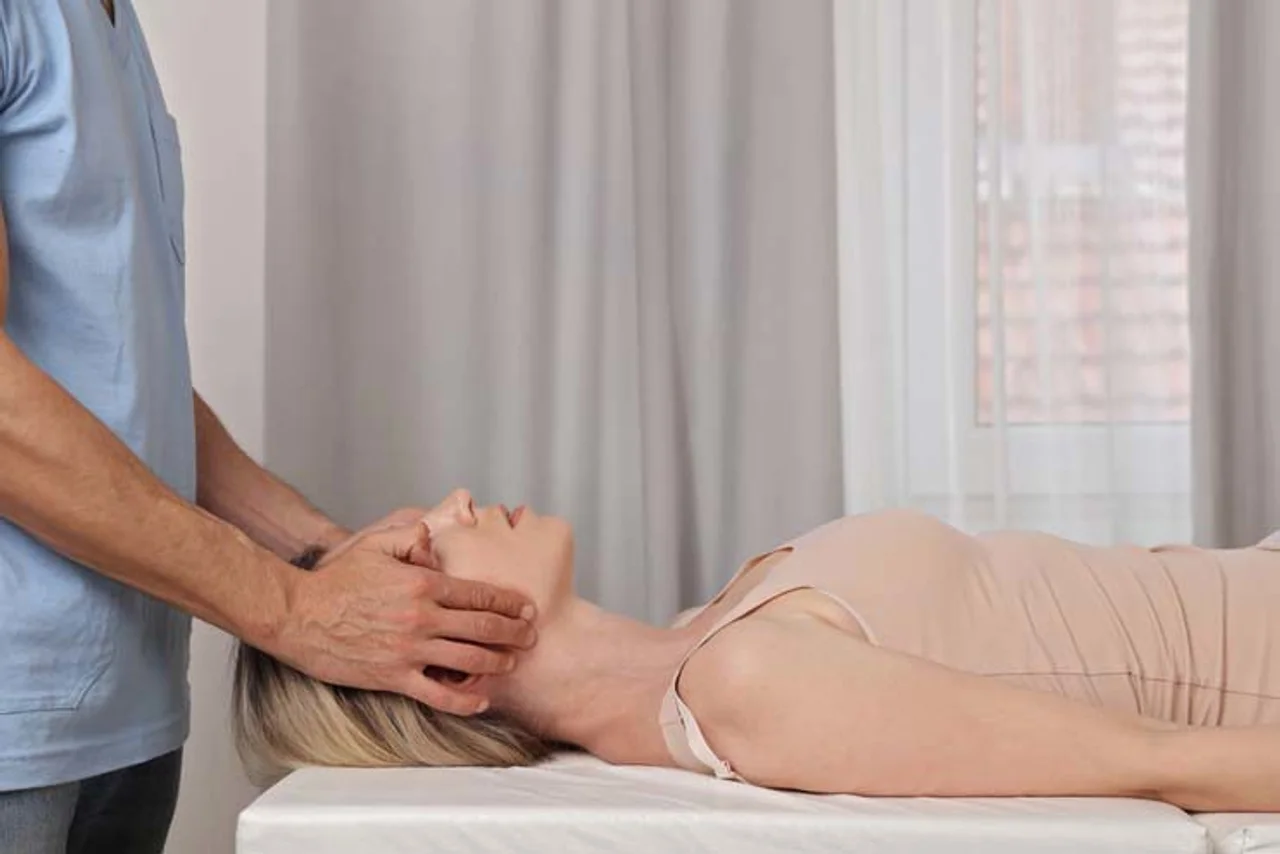
Morning headaches have a unique pattern. Unlike tension headaches that build throughout the day, TMJ-related headaches often peak upon waking and may gradually ease as the day goes on. This timing is not a coincidence.
1. Nighttime Clenching and Grinding
Many people clench or grind their teeth unconsciously while sleeping, especially during periods of stress. This repetitive force places enormous strain on the TMJ and surrounding muscles for hours at a time.
By morning, the jaw muscles are fatigued, inflamed, and tight—much like sore legs after an intense workout. Except in this case, the tension radiates upward into the temples, forehead, and even behind the eyes.
Patients often describe it as:
A dull, heavy pressure around the temples
A band-like ache across the forehead
Pain that feels similar to a migraine but doesn’t respond well to migraine medication
2. Jaw Position and Sleep Posture
Your sleeping position matters more than you might think. Side sleeping with poor pillow support, stomach sleeping, or resting the jaw unevenly can subtly pull the mandible out of alignment for hours.
When the jaw is held in an imbalanced position overnight, it strains not only the TMJ but also the upper cervical spine (C1–C3)—a region closely associated with headache pathways.
At Banpo Newborn, we often explain this with a simple analogy: If the foundation of a house shifts overnight, the cracks show up by morning.
The Jaw–Neck–Head Connection
One of the most overlooked aspects of chronic headaches is the functional relationship between the TMJ and the spine.
The jaw is suspended and supported by muscles that extend into the neck and shoulders. When the TMJ is misaligned:
Neck muscles compensate
Head posture shifts forward or tilts subtly
Nerve pathways become irritated
Over time, this creates a chain reaction. The body adapts, but at a cost—often paid in daily pain.
Dr. Ungjin Im, director of Banpo Newborn Korean Medicine Clinic, often emphasizes that TMJ dysfunction is rarely “just a jaw problem.” In his clinical experience, most TMJ patients show signs of spatial spinal imbalance, particularly in the cervical region.
This is why treating only the jaw—or only the head—often fails.
How TMJ Dysfunction Triggers Headaches Neurologically
Beyond muscles and joints, TMJ dysfunction affects the nervous system.
The trigeminal nerve, one of the main cranial nerves responsible for facial sensation and pain, passes directly through the TMJ region. When the joint or surrounding tissues are inflamed or compressed, this nerve can become hypersensitive.
The result?
Referred pain into the temples and forehead
Headaches that mimic migraines
Sensitivity to light or sound in some patients
Because the trigeminal nerve is also involved in sleep regulation and facial muscle tone, irritation during the night can easily manifest as headaches upon waking.
Signs Your Morning Headaches May Be TMJ-Related
Not all headaches are caused by TMJ dysfunction—but certain clues strongly suggest a connection.
You may want to consider a TMJ evaluation if your morning headaches are accompanied by:
Jaw clicking, popping, or stiffness
Pain when chewing or yawning
Facial or ear pain without infection
Neck and shoulder tension
A feeling that your bite is “off”
Headaches that improve slightly as the day goes on
Many patients tell us, “I never thought my jaw had anything to do with my headaches.” That realization alone can be a turning point.
Why Painkillers and Night Guards Often Aren’t Enough
Conventional approaches to morning headaches often focus on symptom management:
Analgesics or anti-inflammatory medications
Muscle relaxants
Dental night guards
While these can provide temporary relief, they rarely address why the jaw is under stress in the first place.
A night guard, for example, may protect the teeth—but it does not correct jaw alignment, spinal imbalance, or neuromuscular dysfunction. In some cases, an ill-fitted guard can even worsen symptoms.
At Banpo Newborn, we believe lasting relief comes from restoring balance, not just blocking pain.
A Holistic Korean Medicine Approach to TMJ-Related Headaches
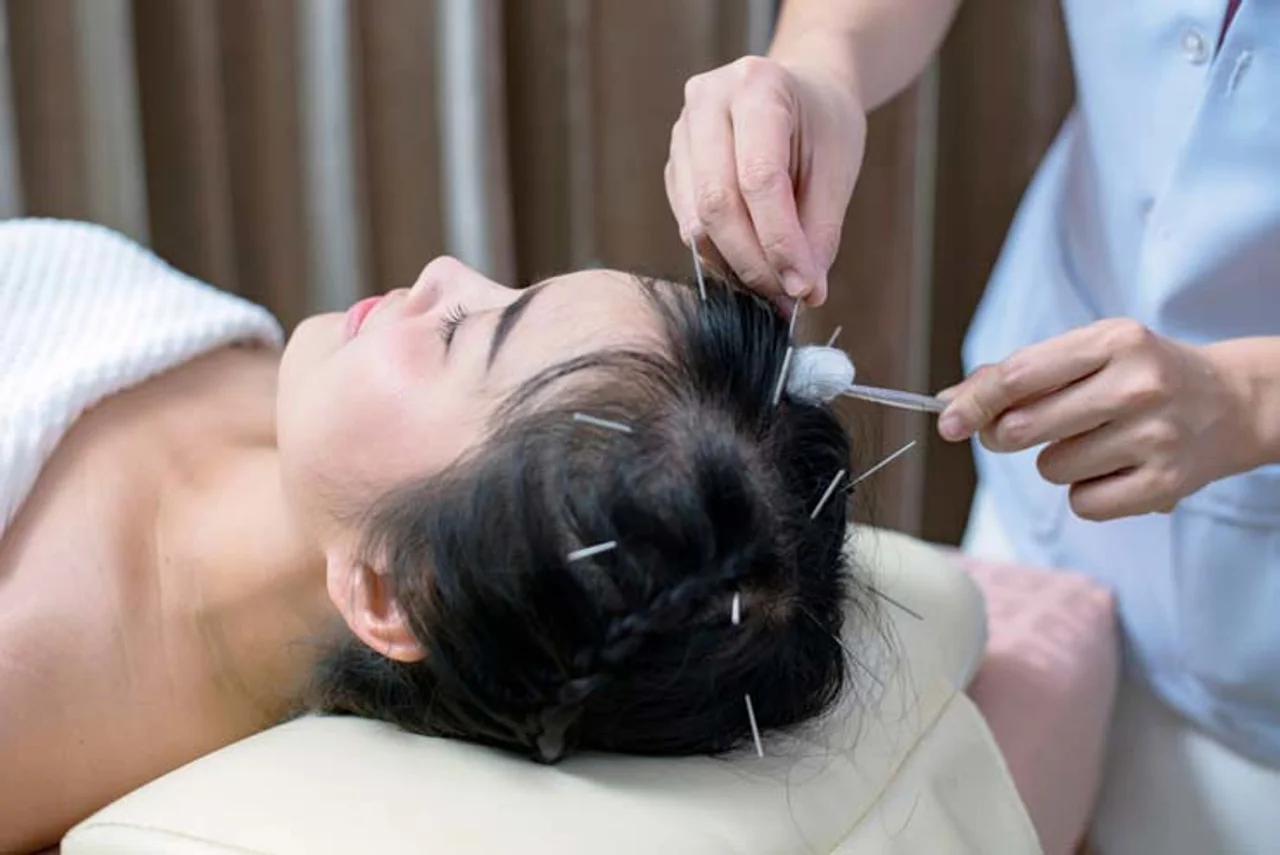
Korean medicine views the body as an interconnected system. From this perspective, TMJ dysfunction is not an isolated mechanical issue—it is a reflection of imbalance across muscles, joints, nerves, and posture.
1. Precise TMJ and Spinal Assessment
Every patient at Banpo Newborn undergoes a comprehensive evaluation, including:
Jaw alignment and range of motion
Bite balance and facial symmetry
Cervical spine alignment
Postural analysis
This allows us to identify how the jaw and spine are influencing each other.
2. Spinal Alignment Restoration Therapy (SART)
One of the clinic’s signature approaches, SART, focuses on restoring spatial balance to the spine—particularly the cervical region that directly affects the TMJ.
By gently correcting misalignments:
Muscle tension decreases
Nerve irritation is reduced
The jaw can return to a more natural resting position
Patients often report not only fewer headaches, but also better sleep and improved concentration.
3. TMJ-Focused Chuna Manual Therapy
Chuna therapy, a specialized form of Korean manual medicine, is used to address:
Jaw joint mobility
Muscular imbalances
Cervical and upper thoracic tension
Unlike forceful manipulations, this approach is precise, controlled, and tailored to each patient’s condition.
4. Whole-Body Regulation
Depending on the individual, treatment may also include:
Acupuncture to calm the nervous system
Herbal support for muscle relaxation and circulation
Lifestyle guidance to reduce clenching triggers
The goal is not just headache relief, but long-term stability.
Real-Life Improvement: What Patients Often Notice First
Interestingly, many TMJ patients notice changes beyond headaches once treatment begins.
Common early improvements include:
Less jaw stiffness in the morning
Deeper, more restful sleep
Reduced neck and shoulder tightness
A sense of lightness or clarity upon waking
Headaches often decrease gradually, as the body relearns balance. This slow, steady improvement is a sign that the root cause is being addressed.
When Should You Seek Help?
If you’ve been waking up with headaches for weeks, months, or even years, it may be time to look beyond your head.
Especially consider a TMJ and spinal evaluation if:
Headaches persist despite medication
Imaging tests show “nothing wrong”
You have concurrent jaw or neck symptoms
Stress seems to worsen your pain
Chronic pain has a way of making people feel stuck. But from our clinical experience, many of these cases are not hopeless—they’re simply misdirected.
A Final Thought from Banpo Newborn
Morning headaches are not something you should have to accept as normal. They are your body’s way of signaling that something is out of balance.
At Banpo Newborn Korean Medicine Clinic, we’ve spent over 30 years helping patients uncover the hidden connections between the jaw, spine, and nervous system. Under the guidance of Dr. Ungjin Im, our approach remains grounded in precision, safety, and genuine care.
If you’ve been waking up in pain and wondering why, it may be time to ask a different question—not “What pill should I take?” but “What is my body trying to tell me?”
Healing often begins there.
More Medical Articles
Continue reading clinical insights from Banpo Newborn Korean Medicine Clinic.

Why Seoul is the Global Hub for Minimally Invasive Vertigo Treatment
Dizziness and vertigo are among the most common reasons for hospital visits in South Korea, affecting nearly 16.7% of the adult population annually according to the Korea National Health and Nutrition Examination Survey (KNHANES).
Learn More

Tinnitus Relief in Seoul: Multidisciplinary Upper Cervical Care
For many, the sound of silence is replaced by a persistent ringing, buzzing, or hissing. In South Korea, this is more than an individual annoyance; it is a significant public health trend.
Learn More

Success Rates of SART for OPLL Compared to Standard Laminectomy in Korea
The prevalence of Ossification of the Posterior Longitudinal Ligament (OPLL) in East Asian populations, particularly in South Korea, is significantly higher than in Western countries, affecting approximately 2% to 4% of the population according to nationwide...
Learn More