SART Whole-Body Spinal Alignment, Chuna Therapy & International Patient Concierge
30+ Years Clinical Experience
en-US


Korean Medicine Guide
How Korean Medicine Can Reverse Early-Stage Spinal Stenosis
Explore how Korean medicine treats early-stage spinal stenosis with natural therapies, improving mobility, reducing pain, and preventing surgery.
Schedule a Consultation
If walking a few blocks leaves your legs heavy, your Lower back pain spikes when you stand upright, or you feel better leaning over a cart at the grocery store, you might be facing early-stage Spinal Stenosis—often specifically Lumbar Spinal Stenosis. The word “stenosis” can sound final, as if decline is inevitable. It isn’t. When caught early, the right non-surgical plan can reverse the symptoms and functional losses that make your world smaller—sometimes quickly, often steadily.
At Banpo Newborn Oriental Medical Clinic in Banpo, Seoul, we specialize in conservative, precision care that blends traditional Korean medicine with modern biomechanics. Guided by Dr. Ungjin Im, our approach helps many patients expand their walking time, sit and stand more comfortably, and shed the fear that every step will “pinch.” This article explains what early stenosis really means, how Korean medicine works to decompress and rebalance your spine, and the exact steps we use to help you feel—and move—like yourself again.
What “early-stage” stenosis really means (and why that matters)
Spinal Stenosis describes a narrowing of the spaces where nerves travel. In the lower back, this may be central canal, lateral recess, or foraminal narrowing. In the early stages:
Pain or heaviness builds with standing and upright walking.
Leaning forward (on a railing or shopping cart) eases symptoms—classic “shopping-cart relief.”
You might notice Lumbar pain, intermittent hip pain, or Pelvic discomfort, and occasional tingling down a leg.
Mornings are stiff; short rests help a lot.
At this phase, bone and soft tissues (disc, facet joints, ligaments) are often irritated and reactive, not yet severely fixed. That’s why precise, non-surgical care can reverse symptoms: we reduce compression, retrain movement, and restore the way your pelvis, lumbar spine, rib cage, and even jaw share load.
“To be honest, the body wants to heal. Our job is to remove barriers—compression, poor load-sharing, and protective guarding—so healing can show up.” — Dr. Ungjin Im
How Korean medicine addresses the real drivers of stenosis symptoms
Early-stage stenosis is rarely “just a back problem.” It’s a systems problem:
Alignment & load sharing: A rotated pelvis or stiff rib cage forces the lumbar spine to compensate on every step.
Inflammation & guarding: Irritated joints and nerves trigger muscle bracing that compresses you further.
Breathing & pressure: Shallow, upper-chest breathing keeps the spine “on,” especially at night.
Kinetic chain: Neck, shoulder, and even Temporomandibular Joint (TMJ) mechanics can keep the lumbar area tense.
Korean medicine shines because it treats both the structure and the software (your nervous system). At Banpo Newborn Oriental Medical Clinic, we combine:
Spinal Alignment Restoration Therapy (SART) — our gentle, precise method to create space at irritated segments.
Spatial spinal correction — three-dimensional re-centering (tilt, shift, rotation) so changes hold when you walk.
Chuna manual therapy — restores joint play and fascial glide without aggressive thrusts.
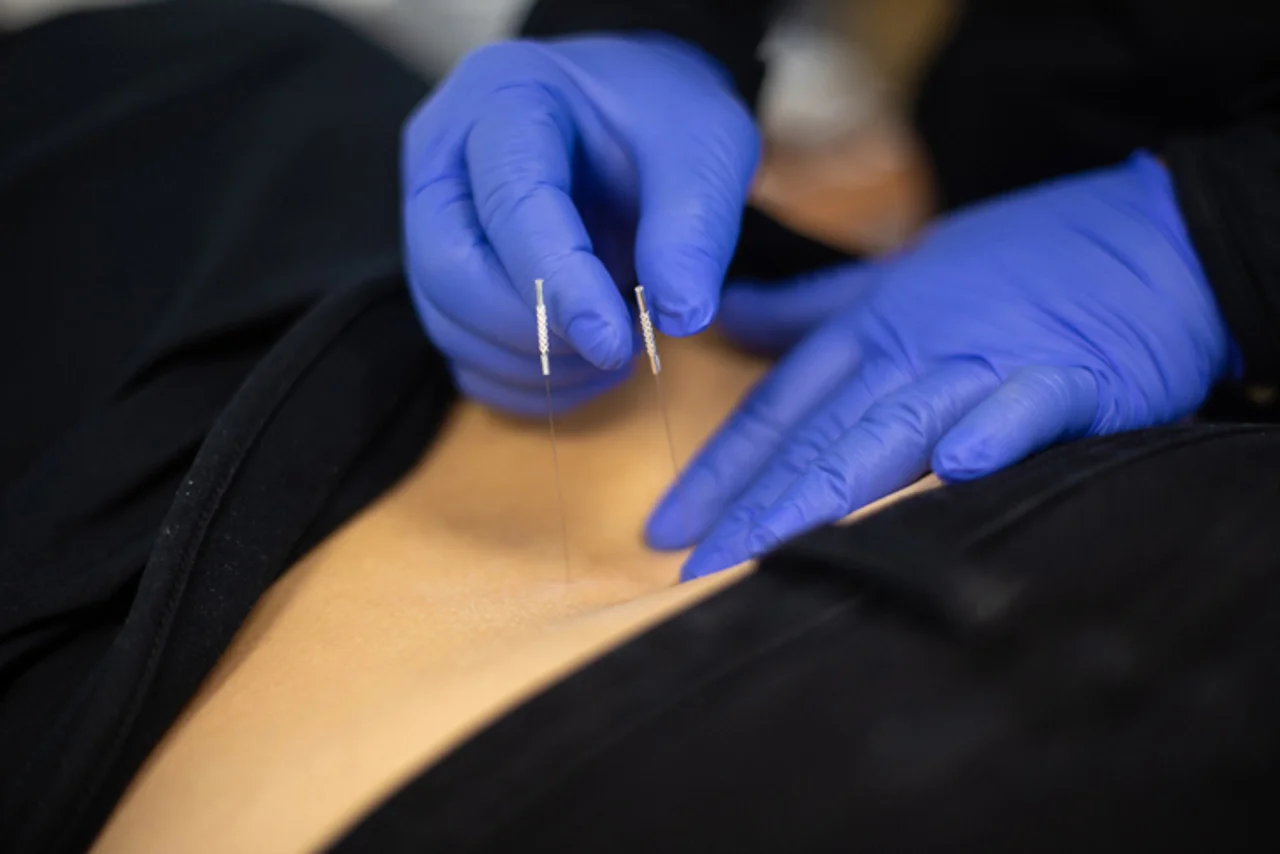
Acupuncture, moxibustion, cupping — calm inflammation and guarding, improve microcirculation.
Targeted herbal support — simple, individualized formulas when appropriate.
Micro-drills — 2–3 minute-long exercises that fit your day and protect gains.
This is our specialty: How Banpo Newborn Oriental Medical Clinic Treats Spinal Stenosis Without Surgery—patient-first, evidence-informed, and tuned to your pattern.
Step-by-step: your path to reversing early symptoms
1) Root-cause evaluation (your first visit)
We don’t guess—we measure:
Pelvis & sacroiliac joints: Is one side rotated or “stuck,” loading the lumbar facets?
Hips: Can you extend your hips, or is your low back doing the work?
Lumbar segments & nerves: Which levels are compressed? Any tension signs?
Rib cage & diaphragm: Are you bracing up top (a hidden stenosis amplifier)?
Gait & foot loading: Small foot biases twist the chain upstream.
Neck & TMJ: Forward head posture and TMJ Disorder/TMJ Syndrome can keep lumbar muscles in guard mode.
Bring imaging if you have it (MRI/X-ray for Disc Herniation/Herniated Disc/Slipped Disc, or stenosis reports). We interpret scans in the context of how you move.
2) SART: decompression without force
Refined by Dr. Ungjin Im, SART guides vertebrae and fascia toward neutral, restoring space for irritated nerves. Patients often describe SART as “light but powerful.” For early stenosis, SART aims to:
Reduce local compression at key segments.
Re-center the sacrum and ilia so each step loads evenly.
Quiet the protective spasm that keeps you “locked.”
3) Spatial spinal correction + Chuna
Alignment is 3-D. Our spatial spinal correction addresses front/back tilt, side shift, and rotation together so improvements survive real life—stairs, commuting, and sleep. We layer Chuna to restore joint play through the lumbar facets, sacroiliac joints, hips, and upper thoracic spine, allowing the rib cage to move (and your low back to relax).
4) Acupuncture, moxibustion, cupping
These tools calm inflammation and the overactive nervous system that magnifies pain. Many patients notice easier walking and less “nerve zing” after the first few sessions.
5) Two or three micro-drills you’ll actually do
Relief is step one; keeping it is the goal. We prescribe 2–3 drills (minutes total):
Micro-decompression breathing (60–90 sec): Exhale to soften the ribs; breathe quietly into the lower ribs—less lumbar guard.
Hip-hinge reset (5 slow reps): Move from the hips, not the low back, for bending and lifting.
Glute wake-up (gentle, pain-free): Stabilize the sacrum so each step is smoother.
Walk intervals: 6–12 minute bouts, rest, repeat—build capacity without provoking flares.
What “reversal” looks like in daily life (how we measure it)
We track simple markers so you can see progress:
Walking tolerance: from 5–8 minutes to 20–30+ minutes symptom-light.
Upright time: standing to cook, queue, or chat without the urge to bend forward.
Morning stiffness: shorter, softer.
The “shopping-cart sign”: no longer needed to lean for relief.
Confidence score: “I can go for a stroll after dinner” moves from anxious to easy.
Most patients notice earlier wins—lighter legs, calmer mornings, fewer sudden pinches—within the first few visits. Everyone heals at a different pace; we adjust the plan to your response.
Condition-specific guidance (because stenosis rarely travels alone)
If you also have a disc issue
Many early stenosis cases include Disc Herniation/Herniated Disc/Slipped Disc. We bias SART toward gentle decompression, keep twist + heavy flexion combos out of early rehab, and teach a clean log-roll to get in/out of bed.
If hip or pelvic symptoms dominate
Persistent hip pain, Pelvic pain, or Pelvic discomfort often means the sacroiliac joints are over-working. We correct pelvic rotation, pad the knees and ankles during side-sleeping, and prioritize glute activation over stretching.
If neck or jaw tension flares with walking
Forward head posture and TMJ clenching can limit rib motion and keep the low back braced. We decompress the upper cervical spine, add TMJ harmonization, and tweak screen height and pillow fit. Bonus: Headache/Chronic Headache and Tinnitus often calm as posture improves.
If you carry long-standing asymmetry
Scoliosis, mild Torticollis/Wry Neck, or Dystonia/Muscle Dystonia tendencies can make one side do all the work. Spatial correction and Chuna restore three-plane balance so the lumbar segments stop grinding.
Two real patient stories (names changed)
Case 1 — “I had to lean on the cart”
Mr. Park, 63, arrived with early Lumbar Spinal Stenosis, Lower back pain, and 7–8 minute walking tolerance—better when leaning forward. Exam showed right pelvic rotation, short stride, and rib-cage bracing.
Plan: Decompression-biased SART, spatial correction pelvis→thorax, Chuna for sacroiliac and upper thoracic glide, 8–10 minute walk intervals, micro-decompression breathing.
Result: At 3 weeks, he walked 18 minutes symptom-light; by week 8, he no longer leaned on a cart and described mornings as “looser and easier.”
Case 2 — Stenosis + small L4-L5 bulge
Yuri, 42, had a small Herniated Disc, heaviness after standing, and hip pain on the right. She feared flares at work.
Plan: SART to calm L4–L5, Chuna to free hip capsule and rib mobility, sleep setup with knee/ankle pillows, hinge training for daily tasks, short walk intervals.
Result: At 2 weeks, sit tolerance and lifting confidence improved; at 6 weeks, she managed 25-minute evening walks without a “pinch.”
Outcomes vary; matching care to the true driver makes the difference.
Do this tonight: small changes that protect your gains
Sleep neutral: Side-lying with a shoulder-height pillow; put pillows between knees and ankles to keep the pelvis level. Back sleepers: pillow under knees.
Stand-up breaks: Every 30–45 minutes, stand and exhale softly to un-brace the ribs; take 5 calm hip hinges.
Walk smart: Two short walks (8–12 min) beat one long flare.
Hinge, don’t fold: Keep the spine long when brushing teeth, picking up a bag, or loading laundry.
Heat before mobility: 10 minutes of gentle heat over the low back/hips, then easy mobility—not aggressive stretching into pain.
If self-care increases radiating pain or numbness, pause and let us tailor a gentler progression.
More Medical Articles
Continue reading clinical insights from Banpo Newborn Korean Medicine Clinic.

Why Seoul is the Global Hub for Minimally Invasive Vertigo Treatment
Dizziness and vertigo are among the most common reasons for hospital visits in South Korea, affecting nearly 16.7% of the adult population annually according to the Korea National Health and Nutrition Examination Survey (KNHANES).
Learn More

Tinnitus Relief in Seoul: Multidisciplinary Upper Cervical Care
For many, the sound of silence is replaced by a persistent ringing, buzzing, or hissing. In South Korea, this is more than an individual annoyance; it is a significant public health trend.
Learn More

Success Rates of SART for OPLL Compared to Standard Laminectomy in Korea
The prevalence of Ossification of the Posterior Longitudinal Ligament (OPLL) in East Asian populations, particularly in South Korea, is significantly higher than in Western countries, affecting approximately 2% to 4% of the population according to nationwide...
Learn More