SART Whole-Body Spinal Alignment, Chuna Therapy & International Patient Concierge
30+ Years Clinical Experience
en-US

Korean Medicine Guide
How Korean Medicine Supports Children with Mild Scoliosis
Discover how Korean medicine helps children with mild scoliosis through gentle, non-surgical treatments that improve posture, balance, and long-term spine health.
Schedule a ConsultationHow Korean Medicine Supports Children with Mild Scoliosis
By Banpo Newborn Korean Medicine Clinic, Banpo, Seoul
Have you noticed your child’s shoulders looking uneven? Or perhaps their school health check mentioned a slight spinal curvature? You’re not alone. In Korea, mild scoliosis is increasingly common among children and adolescents—often due to long study hours, heavy backpacks, and prolonged digital-device use. Many parents feel worried but unsure where to turn, especially when they want a solution that is safe, non-invasive, and focused on long-term balance rather than quick fixes.
As practitioners who have spent decades caring for growing bodies, we at Banpo Newborn Korean Medicine Clinic have seen how early spinal care can completely transform a child’s health trajectory. Mild scoliosis may sound minor, but the earlier we address it, the easier it is to guide a child’s spine back into proper alignment—gently, safely, and holistically.
In this article, we’ll explain how Korean medicine understands mild scoliosis, why early intervention matters, and how treatments such as Chuna therapy, spatial spinal correction, and SART (Spinal Alignment Restoration Therapy) provide children with lasting support.
Understanding Mild Scoliosis in Children
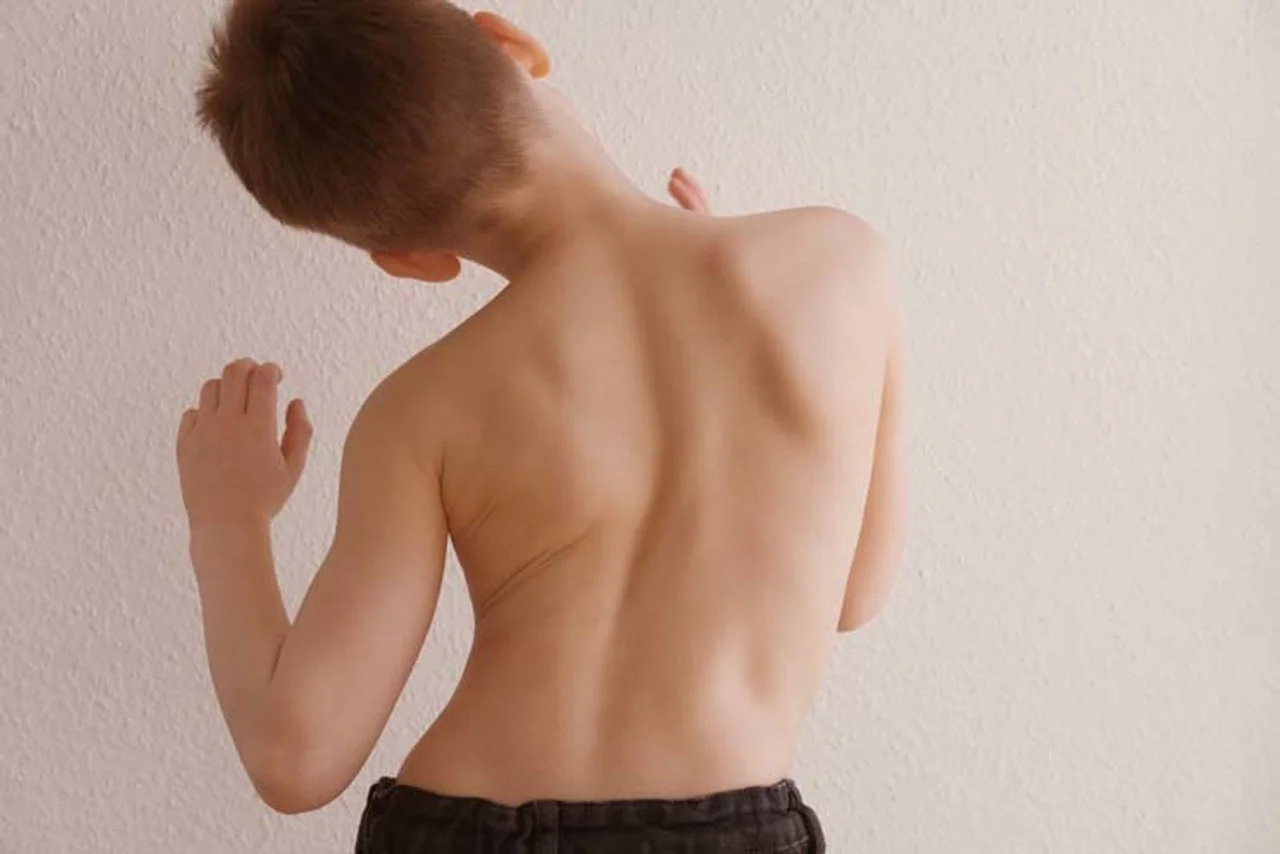
Mild scoliosis usually refers to a lateral spinal curvature under 20 degrees. While many children feel no obvious pain, the body silently works harder to compensate. This imbalance may show up as:
Uneven shoulders or hips
A slightly tilted head position
A prominence on one side of the ribs when bending forward
Fatigue during long periods of sitting
Restless sleep or difficulty finding comfortable positions
Many parents tell us, “To be honest, I didn’t realize anything was wrong until the school check-up.” This is common. Mild scoliosis is subtle but can gradually progress during growth spurts, especially in elementary and middle school years.
Why does this happen?
From the perspective of Korean medicine, the spine isn’t just a structural pillar—it’s also an energetic channel that affects organ function, muscle balance, and overall qi circulation. Poor posture, rapid growth, and muscle imbalances can disrupt the harmonious movement of qi, leading to asymmetry and uneven tension along the spine.
In modern anatomical terms, we often see:
Imbalanced paraspinal muscles
Tight hip flexors and weakened gluteal support
Forward head posture from device use
Asymmetric pelvis rotation
When these factors combine with a growing spine, curvature can appear and gradually worsen.
The good news? At the mild stage, scoliosis is incredibly responsive to the right interventions.
Why Early-Type Care Matters
One of the biggest misconceptions we encounter is the belief that monitoring alone is enough for mild scoliosis. Monitoring is important—but it is not treatment. The earlier we begin gentle correction, the higher the chance we can prevent progression and restore symmetry without braces or surgery.
In Korean medicine, early care is based on three core principles:
Guide the body before rigid patterns set in.
Children’s spines and muscles are adaptable. Early correction prevents the curvature from becoming structurally fixed.Address whole-body balance, not just the spine.
A child’s scoliosis is rarely a “spine-only” issue. Pelvic tilt, foot imbalance, and even jaw alignment can contribute.Support healthy growth, not forced correction.
The goal is not to straighten the child mechanically, but to help their body grow into a balanced, stable posture.
We’ve often seen mild 10-degree curves return to near-neutral when treated early with careful, individualized care.
How Korean Medicine Approaches Mild Scoliosis
1. Chuna Manual Therapy: Restoring Symmetry with Precision
At Banpo Newborn, Chuna therapy is one of our most essential tools for children with mild scoliosis. Unlike forceful manipulations found in some Western approaches, Korean Chuna focuses on gentle mobilization, soft-tissue balance, and joint alignment through tailored touch.
For children, the adjustments are exceptionally mild.
We work on:
Releasing tight muscles that pull the spine unevenly
Improving mobility where segments have become stiff
Aligning the pelvis and rib cage so the spine can settle into balance
Guiding the cervical spine (neck) to support proper posture
Parents often remark, “It looks so soft—can it really work?”
Yes. With children, subtlety is more effective than strength. Their bodies respond quickly to fine adjustments, much like guiding a young tree before it grows rigid.
2. Spatial Spinal Correction: Seeing the Body in Three Dimensions
One of the unique approaches at our clinic—developed through decades of clinical experience—is spatial spinal correction.
Most people think of scoliosis as a side-to-side (lateral) curve. But scoliosis is a three-dimensional condition involving rotation, tilt, and shifts in balance. Spatial correction analyzes:
How the spine rotates
How the hips compensate
How the rib cage changes shape
How weight shifts through the feet
Using this assessment, we provide correction not just on one plane, but on the entire 3D structure of the body.
For many children, this three-dimensional approach is the key that unlocks true improvement. A child might look like they have a problem in the upper back, for example, when the real issue lies in a rotated pelvis or tight hip joint.
Spatial correction helps us see the real picture—and treat it accurately.
3. SART (Spinal Alignment Restoration Therapy)
Developed through the clinical work of Dr. Ungjin Im, SART is a gentle but powerful method for restoring natural spinal alignment.
SART focuses on:
Rebalancing deep stabilizing muscles
Improving the spine’s natural curves
Teaching the body to maintain alignment without force
Enhancing coordinated movement patterns
Children especially benefit from SART because their neuromuscular systems are still developing. When we train proper movement early, the body remembers it—much like teaching a child the correct way to hold a pencil before bad habits form.
4. Pediatric Herbal Support for Muscles, Growth, and Balance
We do not rely heavily on herbal medicine for mild scoliosis, but it can play a helpful role. In Korean medicine, certain herbal formulas gently support:
Muscle relaxation (for children who are very tense or stiff)
Bone and tendon nourishment during rapid growth periods
Fatigue and weak digestion (often linked to poor posture and overall weakness)
Herbal care is always personalized. For example, some children with scoliosis show a pattern of “weak qi and muscle tension,” while others show “heat accumulation and tight tendons.” The formulas are chosen based on constitution, not diagnosis alone.
5. Corrective Exercises That Fit Children’s Bodies
We never overwhelm children with long exercise lists. Instead, we choose high-impact, easy-to-learn movements such as:
Pelvic leveling exercises
Breathing training to expand the concave side of the ribs
Shoulder balancing movements
Footwork to correct weight-bearing imbalance
Functional mobility patterns
When these exercises are practiced daily—even for just 5–10 minutes—they reinforce the corrections made during treatment.
At Banpo Newborn, we often teach parents how to help guide their children at home in gentle, non-invasive ways. Many families find that the routine strengthens relationships as well as posture.
What Parents Often Notice After Treatment Begins

Even when the curve is mild, parents frequently observe changes beyond posture:
1. Better concentration and study comfort
When the head and spine are aligned, children sit more comfortably for longer periods, reducing fidgeting and fatigue.
2. Improved sleep quality
Many mild scoliosis cases interfere with comfortable sleep. As tension eases, sleep becomes deeper and more restorative.
3. More symmetrical movement
Parents often say, “My child’s walking looks smoother,” or “Their shoulders look more even now.”
4. Increased confidence
Posture has a profound emotional effect on children. Standing tall helps them feel stronger and more self-assured.
A Story from Our Clinic
One mother brought in her 9-year-old daughter after a school screening showed a 12-degree curve. The girl was shy, small for her age, and often complained of fatigue even though she rarely expressed pain.
During our evaluation, we found:
A rotated pelvis
A tight right hip
Slight rib prominence on the left
A pattern of asymmetric breathing
Habitual leaning during homework
Over 8 months of gentle Chuna, spatial correction, and breathing exercises, her curve reduced to 5 degrees. But more importantly, her mother shared something unforgettable:
“She’s not just straighter—she’s brighter. She wakes up with energy now.”
This is what holistic scoliosis care looks like. It’s not simply about angles—it’s about helping a child grow into their full potential.
Frequently Asked Questions from Parents
1. Is Korean medicine safe for children?
Yes. Pediatric treatments are gentle, non-invasive, and customized to the child’s age, body type, and condition.
2. How early should we start treatment?
As soon as mild curvature is noticed. Early intervention prevents progression and often makes full correction possible.
3. How often do children need to come?
This varies. Many start with once-a-week sessions, then gradually decrease as symmetry returns.
4. Can mild scoliosis fully improve?
More Medical Articles
Continue reading clinical insights from Banpo Newborn Korean Medicine Clinic.

Why Seoul is the Global Hub for Minimally Invasive Vertigo Treatment
Dizziness and vertigo are among the most common reasons for hospital visits in South Korea, affecting nearly 16.7% of the adult population annually according to the Korea National Health and Nutrition Examination Survey (KNHANES).
Learn More

Tinnitus Relief in Seoul: Multidisciplinary Upper Cervical Care
For many, the sound of silence is replaced by a persistent ringing, buzzing, or hissing. In South Korea, this is more than an individual annoyance; it is a significant public health trend.
Learn More

Success Rates of SART for OPLL Compared to Standard Laminectomy in Korea
The prevalence of Ossification of the Posterior Longitudinal Ligament (OPLL) in East Asian populations, particularly in South Korea, is significantly higher than in Western countries, affecting approximately 2% to 4% of the population according to nationwide...
Learn More