SART Whole-Body Spinal Alignment, Chuna Therapy & International Patient Concierge
30+ Years Clinical Experience
en-US

Korean Medicine Guide
How Neck Ache Can Lead to TMJ Issues – And What to Do About It
Discover how neck pain can trigger TMJ issues and explore effective treatments to relieve jaw tension, headaches, and chronic discomfort.
Schedule a Consultation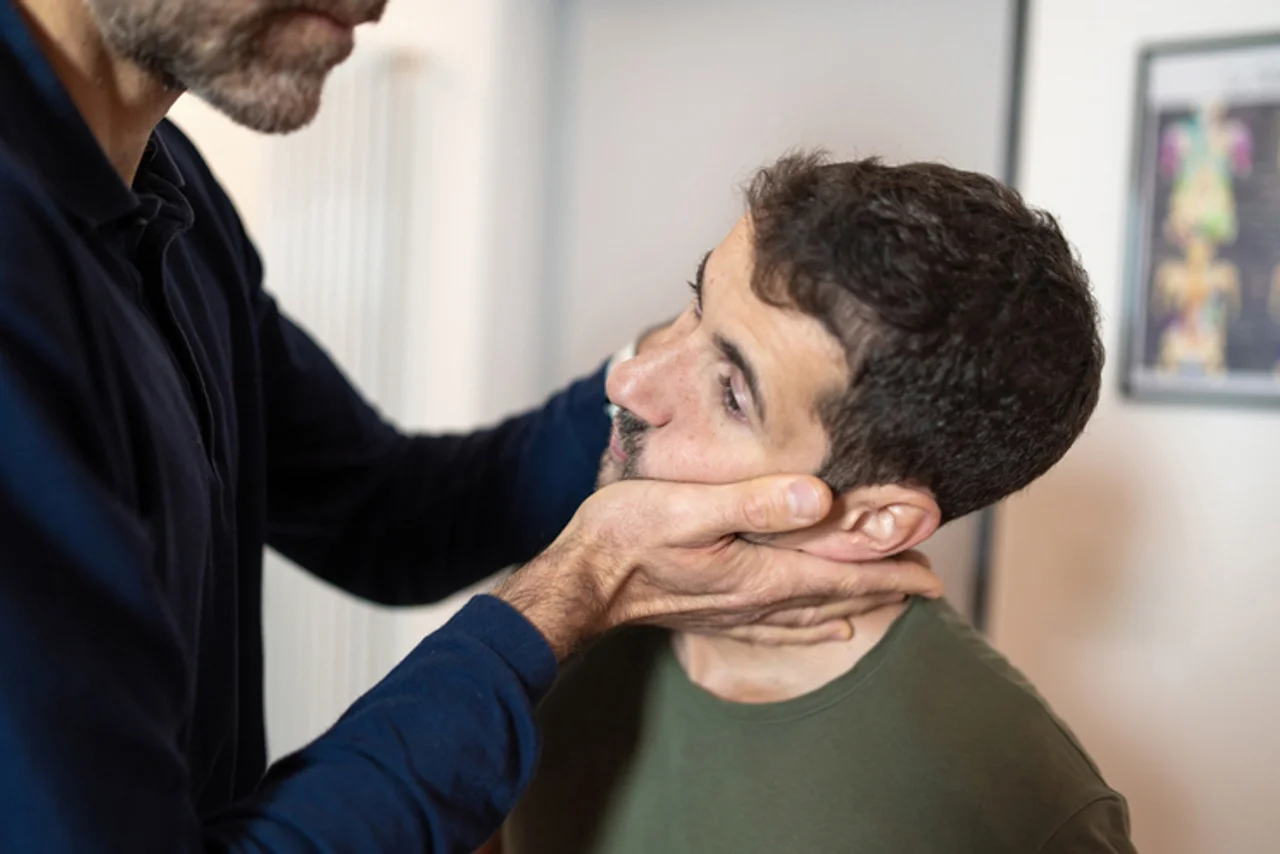
If you wake up with neck stiffness, a tight jaw, and maybe a dull headache that creeps toward your temples, you’re not alone. Many people who visit Banpo Newborn Oriental Medical Clinic describe a cycle: their neck ache worsens after a long day at the computer, then chewing becomes uncomfortable, the jaw clicks, and occasionally there’s tinnitus or facial tension. To be honest, most people don’t realize how much of their jaw discomfort begins in their cervical spine.
At our clinic in Banpo, Seoul, we see daily how subtle changes in neck posture, muscle tone, and spinal alignment can trigger or aggravate Temporomandibular Joint (TMJ) problems—often labeled TMJ Syndrome or TMJ Disorder. Led by Dr. Ungjin Im, we approach recovery through precise, non-invasive correction of the neck and spine, gentle TMJ mobilization, and personalized rehabilitation. If you’ve been living with pain for years, it might feel like you’re stuck. But you’re not alone, and healing is possible.
The Neck–Jaw Connection: Why Cervical Alignment Matters
Think of the spine as the foundation of a house. If the foundation tilts, doors and windows stick. In the body, when the upper cervical spine (C0–C3) tilts or rotates, the head position shifts and the TMJ adapts. Over time, that adaptation can become irritation.
Three key links explain this connection:
Neurological convergence: Sensory pathways from the jaw (trigeminal nerve) and upper neck (cervical nerves) meet in the brainstem. A sensitized neck can amplify facial and jaw pain—one reason chronic headache and TMJ symptoms often show up together.
Biomechanics of posture: A forward head posture shortens the suboccipital muscles, loads the masseter and temporalis, and alters the natural path of jaw opening. The result can be clicking, deviation on opening, or muscle fatigue during chewing.
Myofascial continuity: Fascial chains run from the shoulder girdle and neck into the mandible. Tightness or imbalance in the sternocleidomastoid, scalenes, or upper trapezius can tug on jaw mechanics, especially when there’s shoulder stiffness, frozen shoulder, or long-standing shoulder pain.
When these factors combine, a simple neck ache may evolve into a complex TMJ Disorder—with symptoms such as jaw pain, ear pressure, tinnitus, face or temple pain, chewing fatigue, and headache.
Symptoms That Often Travel Together
Patients rarely present with just one complaint. Because the spine and jaw are interdependent, we often hear clusters of symptoms:
Neck pain, neck stiffness, persistent neck ache
Jaw clicking, locking, or pain; sensitivity in the Temporomandibular Joint (TMJ)
Headache or chronic headache, facial pain, eye strain
Ear symptoms: fullness, tinnitus
Shoulder pain, shoulder stiffness, or frozen shoulder
Upper back backache, mid-back tension, or lower back pain and lumbar pain
Pelvic symptoms: pelvic discomfort, pelvic pain, and occasionally hip pain
It may seem surprising to connect pelvic pain or hip pain with jaw issues. Yet posture is a chain: pelvic tilt influences lumbar curvature; lumbar alignment shapes thoracic and cervical posture; the jaw adapts to head position. That’s why we treat the whole person—not just the jaw or the neck.
When a Neck Problem Isn’t “Just Muscular”
Not every neck issue is a simple strain. In Korea, we often see conditions like Torticollis (Wry Neck), Dystonia or Muscle Dystonia, Scoliosis, Disc Herniation (Herniated Disc / Slipped Disc), and Spinal Stenosis. These conditions change how you hold your head and how your jaw tracks.
Torticollis / Wry Neck: Rotational or side-bending bias in the neck can force the jaw to open on a diagonal, creating asymmetric loading on the TMJ.
Dystonia / Muscle Dystonia: Involuntary muscle contractions in the neck and face increase resting tone in the jaw, setting the stage for TMJ Syndrome.
Scoliosis: A curved spine often includes compensations in the ribcage and neck. A subtly tilted head posture is common, and the jaw frequently follows suit.
Disc Herniation / Herniated Disc / Slipped Disc: Cervical disc irritation may refer pain to the head or face and provoke protective jaw clenching.
Spinal Stenosis & Lumbar Spinal Stenosis: While commonly associated with lower back pain and leg symptoms, stenosis also affects the way you walk, breathe, and hold your head. Many patients develop a forward-leaning posture that overworks neck and jaw muscles.
When these patterns are present, treatment must be both precise and gentle, addressing structural alignment, muscular tone, and nervous system sensitivity.
Our Philosophy: Correct the Spine, Calm the Jaw, Restore the Whole System
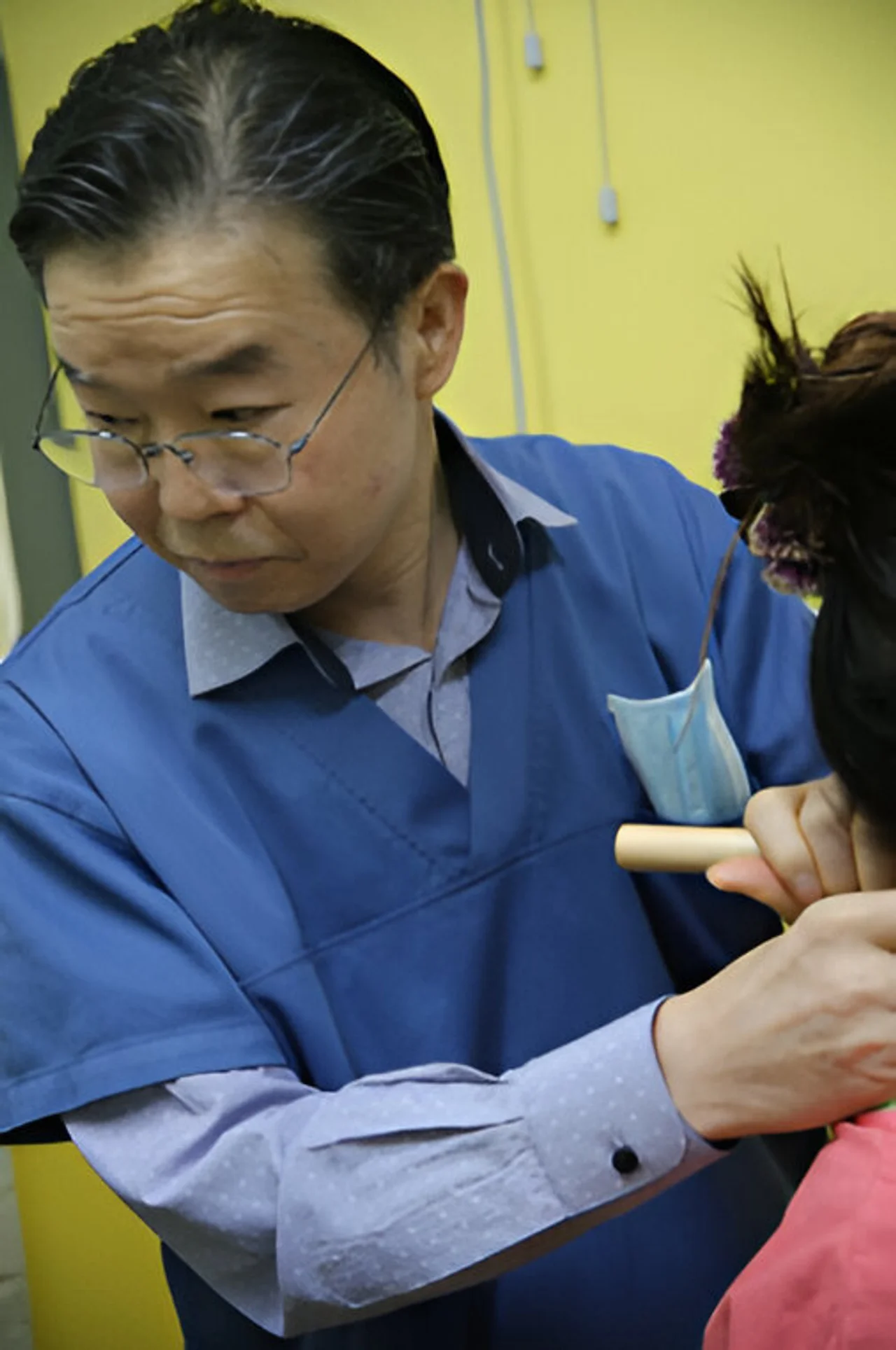
For over 30 years, Banpo Newborn Oriental Medical Clinic has emphasized non-surgical solutions with meticulous attention to detail. Under Dr. Ungjin Im, we use a blend of traditional Korean medicine and modern biomechanics to guide recovery. Two proprietary pillars inform our care:
1) Spinal Alignment Restoration Therapy (SART)
SART is our structured approach to restoring the spine’s neutral curves and spatial balance. Using careful palpation, motion testing, and imaging when needed, we identify the leading driver of your posture—often the upper cervical spine or pelvis—and apply targeted correction. SART sessions are comfortable and precise, aiming to reduce joint irritation, balance muscle tone, and normalize the reflexes that connect the neck and TMJ.
2) Spatial Spinal Correction
Spatial correction considers the body three-dimensionally: front-to-back, side-to-side, and rotational planes. Rather than “pushing where it hurts,” we correct along the axis that unlocks the whole chain. For example, restoring a subtle C1 rotation can release jaw deviation and reduce tinnitus-like ear pressure.
These pillars are supported by Chuna therapy (gentle manual correction), targeted acupuncture, instrument-assisted soft-tissue release, and individualized home training.
“We don’t chase symptoms. We correct the pattern that keeps recreating them,” explains Dr. Ungjin Im. “When the spine is centered, the jaw often quiets on its own.”
How We Evaluate Neck–Jaw Cases
A thorough assessment at our hospital name—Banpo Newborn Oriental Medical Clinic—typically includes:
History & symptom mapping: We chart your pain behavior, chewing triggers, sleep quality, and prior diagnoses such as TMJ Disorder, Scoliosis, or Lumbar Spinal Stenosis.
Posture & gait analysis: Subtle head-tilt, pelvic rotation, or ribcage asymmetry often predicts jaw tracking.
Cervical/TMJ motion testing: We examine C0–C3 mobility and TMJ opening/closing paths, listening for crepitus or deviation.
Muscle tone & trigger points: We assess the masseter, temporalis, lateral pterygoids, suboccipitals, SCM, and scalenes.
Functional screens: Shoulder and thoracic tests, because shoulder stiffness or thoracic rigidity can keep the neck from settling.
From this picture, we build a plan that fits your goals and schedule, whether your main complaint is neck pain, TMJ Disorder, back pain, or complex patterns like dystonia with tinnitus and headaches.
What Treatment Looks Like at Banpo Newborn Oriental Medical Clinic
Your plan is personalized, but it may combine several of the following service names:
Chuna Therapy (Manual Korean Medicine): Gentle joint mobilization and soft-tissue balancing for the upper cervical segments and jaw. Patients describe it as precise and relaxing.
SART (Spinal Alignment Restoration Therapy): Stepwise correction to re-center the head over the pelvis and decrease TMJ strain.
Spatial Spinal Correction: Three-dimensional corrections to unwind the chain from pelvis to jaw.
Targeted Acupuncture: To calm overactive muscles, reduce inflammation, and modulate the trigeminal–cervical system.
Myofascial Release & Instrument-Assisted Work: Focused relief for tight suboccipitals, SCM, scalenes, and the masseter/temporalis.
TMJ Mobilization & Neuromuscular Re-education: Gentle disc recapture strategies, controlled opening drills, and tongue posture training.
Core & Breath Integration: Diaphragmatic breathing, rib mobility, and pelvic alignment to stabilize results and reduce jaw clenching.
Lifestyle Coaching: Workstation setup, sleep position, and bite-friendly eating strategies during recovery.
Expected outcomes: Many patients report easier chewing, fewer headaches, less ear pressure or tinnitus, and smoother neck motion. For those with coexisting lower back pain, pelvic discomfort, or hip pain, aligning the spine often reduces strain throughout the body.
Specialty Spotlight: How Banpo Newborn Korean Medicine Clinic Treats Spinal Stenosis Without Surgery
A frequent question we hear is how our non-surgical methods for Spinal Stenosis, especially Lumbar Spinal Stenosis, relate to TMJ and neck care. The short answer: posture unites them.
How Banpo Newborn Oriental Medical Clinic Treats Spinal Stenosis Without Surgery (our specialty name) focuses on restoring space—both in the spinal canal and in movement patterns—by reducing segmental compression and improving muscular support. We utilize SART and spatial spinal correction to:
More Medical Articles
Continue reading clinical insights from Banpo Newborn Korean Medicine Clinic.

Why Seoul is the Global Hub for Minimally Invasive Vertigo Treatment
Dizziness and vertigo are among the most common reasons for hospital visits in South Korea, affecting nearly 16.7% of the adult population annually according to the Korea National Health and Nutrition Examination Survey (KNHANES).
Learn More

Tinnitus Relief in Seoul: Multidisciplinary Upper Cervical Care
For many, the sound of silence is replaced by a persistent ringing, buzzing, or hissing. In South Korea, this is more than an individual annoyance; it is a significant public health trend.
Learn More

Success Rates of SART for OPLL Compared to Standard Laminectomy in Korea
The prevalence of Ossification of the Posterior Longitudinal Ligament (OPLL) in East Asian populations, particularly in South Korea, is significantly higher than in Western countries, affecting approximately 2% to 4% of the population according to nationwide...
Learn More