SART Whole-Body Spinal Alignment, Chuna Therapy & International Patient Concierge
30+ Years Clinical Experience
en-US


Korean Medicine Guide
How Poor Sleep Posture Leads to Neck Stiffness and Headaches
Discover how poor sleep posture causes neck stiffness and headaches, and learn tips for better alignment and pain-free rest.
Schedule a Consultation
If you wake with neck stiffness, a dull headache, or a lingering neck ache that eases by midday, your sleep posture is likely part of the story. At Banpo Newborn Oriental Medical Clinic in Banpo, Seoul, we see this pattern daily. To be honest, many people blame their pillow—or buy several—without realizing that the position they sleep in, the way they breathe, and even the Temporomandibular Joint (TMJ) all shape the neck’s overnight workload.
This guide explains how poor sleep posture drives neck and head symptoms, what to change tonight, and how Dr. Ungjin Im’s gentle, non‑surgical approach—Spinal Alignment Restoration Therapy (SART), Chuna therapy, acupuncture, and TMJ‑aware care—helps you wake up comfortable again.
The Mechanics: How Sleep Positions Load the Cervical Spine
Your neck is a delicate stack balancing a heavy head. When that stack is misaligned for hours, tissues complain the next day.
1) Stomach (prone) sleeping
To breathe freely, most people rotate their head 60–90°. That prolonged twist jams upper cervical joints and strains suboccipitals—common triggers for morning headache and chronic headache. Prone sleeping can also compress the jaw, aggravating TMJ disorder/TMJ syndrome.
2) Side sleeping with the wrong pillow height
If your pillow is too low, the head droops; too high, it tilts up. Either way, the side‑bending load irritates facet joints, fuels neck pain, and can provoke shoulder stiffness. A sagging mattress worsens the tilt by dropping the shoulder.
3) Back (supine) sleeping without neck support
A flat pillow pushes the head into extension; a tall one forces flexion. Both alter airway dynamics and may trigger clenching and tinnitus or headaches in sensitive individuals.
4) Breathing & jaw mechanics
Mouth breathing, snoring, or clenching elevates baseline neck and jaw tone overnight. That’s why addressing the TMJ and rib‑cage mechanics often helps morning stiffness.
Not Just the Neck: Links With Shoulder, Back, and Pelvis
Nighttime posture doesn’t stop at the pillow. A rotated rib cage or tilted pelvis creates a chain reaction that lands in the neck by morning.
Shoulder pain / frozen shoulder – Side sleeping on a stiff shoulder compresses structures and shortens the pec minor, feeding shoulder stiffness and neck guarding.
Backache / lumbar pain – A sagging mattress increases lumbar extension; the neck compensates with extra flexion or rotation. People with disc herniation/herniated disc/slipped disc or lumbar spinal stenosis are particularly sensitive.
Pelvic pain / hip pain – A twisted side‑lying setup loads the SI joint and gluteal tendons; the neck takes the final twist to “balance” you.
Scoliosis – Curves make you favor one side; matching pillow height and rib support becomes essential.
Sometimes morning neck locking resembles torticollis (wry neck). In rare cases, heightened neuromuscular tone (dystonia/muscle dystonia) contributes. Careful assessment distinguishes these patterns.
Signs Your Sleep Posture Is the Culprit
Symptoms peak in the morning and improve with movement
You sleep best in one position and wake worse on the other side
New pillow helps for a week, then problems return
Bedtime phone use increases next‑day neck ache and headache
Partner notices snoring, mouth breathing, or jaw clenching
Red flags—fever, severe unrelenting pain, progressive arm weakness or numbness, sudden vision/speech changes—need urgent medical evaluation.
Our Assessment at Banpo Newborn (Precision Before Pressure)
Dr. Ungjin Im leads a calm, thorough evaluation:
History & habits – Sleep positions, pillow/mattress age, night‑time feeding for new parents, screen time in bed, morning symptom map.
Movement mapping – Cervical ROM, first‑rib mobility, scapular rhythm, rib‑cage expansion, pelvic tilt. We identify positions that instantly ease symptoms—your “resets.”
Jaw and airway screen – TMJ tenderness, clenching patterns, tongue posture, nasal airflow.
Selective imaging – When signs point to disc herniation, stenosis, or other structural issues, we review X‑ray/MRI from partner centers to guide care.
Our Non‑Surgical Plan: Gentle, Targeted, and Effective
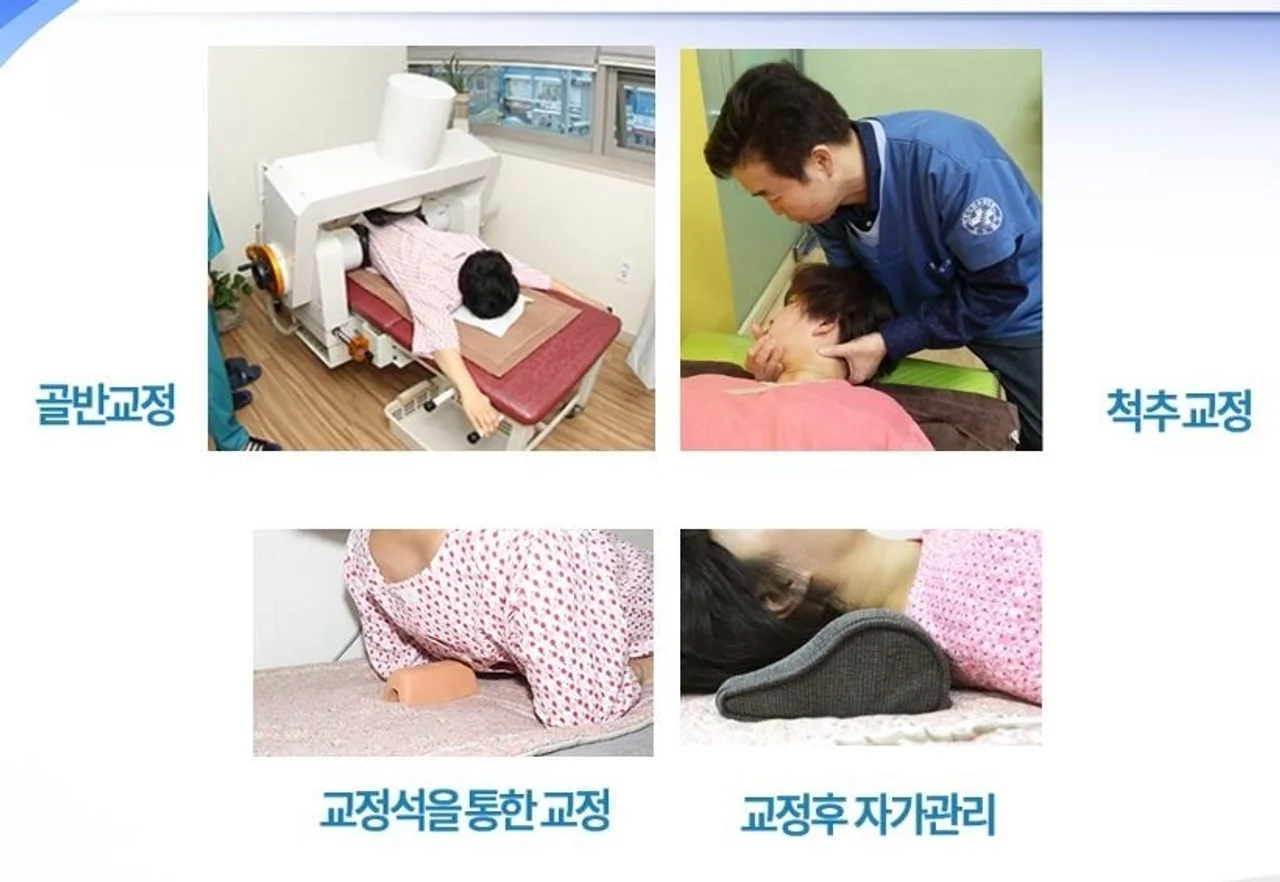
Spinal Alignment Restoration Therapy (SART)
Created by Dr. Ungjin Im, SART uses low‑force, vector‑specific corrections to level the pelvis, unlock the rib cage, and normalize upper‑cervical mechanics. Patients often describe feeling “longer” and clearer‑headed after sessions.
Chuna Therapy (Korean Manual Therapy)
Chuna therapy restores joint glide and calms protective muscle tone—without aggressive thrusts. We focus on first‑rib mobility, suboccipital decompression, and scapular setting for durable relief.
Acupuncture
Targeted acupuncture reduces nociceptive signaling, relaxes hypertonic bands, and improves sleep quality—a key factor for morning symptoms.
Herbal Medicine
Conservative, individualized formulas support circulation and stress regulation. For sensitive stomachs, we keep blends simple and well‑tolerated.
TMJ‑Aware Care
Jaw release, tongue‑posture training, and bite‑habit coaching reduce clenching and upper‑neck load, easing headache/chronic headache and neck stiffness.
Tonight: Fix Your Sleep Setup in 10 Minutes
If pain shoots into the arm with numbness/weakness or you’ve had recent trauma, seek evaluation before trying these tips.
For side sleepers
Pillow height: Measure from the mattress to the base of the neck with shoulder compressed—match pillow thickness to this number.
Shoulder pocket: Choose a pillow that lets the shoulder sink forward slightly or hug a second pillow to open space.
Knee support: A small pillow between knees levels the pelvis and reduces neck twist.
For back sleepers
Neck roll: Use a low pillow with a small cervical roll to support the curve without pushing the head forward.
Under‑knee bolster: A slim pillow under knees calms lumbar extension and eases neck tension.
For stomach sleepers
- Transition toward side sleeping using a body pillow. If you must stay prone, place a slim pillow under the chest and a low pillow under the forehead to reduce rotation.
Universal upgrades
Screen curfew: 45–60 minutes before bed, put the phone away or prop elbows if you must read.
3‑D rib breathing: 6–8 slow cycles while settled in bed—inhale into side/back ribs; long exhale.
TMJ rest: Tongue on the palate, lips closed, teeth slightly apart.
Five Micro‑Practices for Morning Relief (5–7 Minutes Total)
Decompression lean (60–90 sec) – Forearms on counter, hips back; breathe slowly.
First‑rib breath (6 cycles) – Strap across upper chest; gentle exhale and drop the rib.
Chin‑nod glide (8 reps) – Small nods without pushing; lengthen the back of the neck.
Scapular slides (8–10 reps) – Wall slides with soft ribs and relaxed jaw.
Thoracic open book (5 reps/side) – Side‑lying rotation; keep knees stacked to protect the pelvis.
Real‑World Cases From Our Clinic
Case 1 — The “new pillow every month” shopper
A 36‑year‑old marketer cycled through pillows for morning headaches and neck pain. SART + Chuna, a side‑sleep setup with the correct height, and TMJ coaching cut symptoms by 80% in three weeks.
Case 2 — Prone sleeper with wry mornings
A 28‑year‑old student woke with torticollis (wry neck) monthly. We phased to side sleeping using a body pillow, added first‑rib work and acupuncture. No recurrences for six months.
Case 3 — Neck‑head‑jaw triangle
A 44‑year‑old designer had TMJ disorder, chronic headache, and neck stiffness. Jaw release, tongue posture, and rib‑cage breathing plus SART resolved the morning pain and improved focus at work.
FAQs
Is my headache really from my neck?
Often, yes. Upper‑cervical joints and suboccipitals refer pain to the temples and behind the eyes, especially after poor sleep posture.
Could this be a cervical disc issue?
It can be. If there’s arm numbness/weakness or sharp radiating pain, we screen for disc herniation/herniated disc/slipped disc and coordinate imaging if indicated.
What about dizziness or tinnitus?
Neck and jaw tension can aggravate tinnitus or vestibular sensitivity. TMJ‑aware care often helps.
How long until I feel better?
Many notice change within 1–3 weeks once sleep setup and daytime micro‑practices are in place.
Can back or hip pain worsen neck problems?
Yes. Lower back pain/lumbar pain, pelvic discomfort, and hip pain shift the base; the neck compensates. We treat the whole chain.
When to Seek Urgent Care
Recent significant trauma to head/neck
Progressive weakness or numbness in the arms
Unrelenting night pain, fever, or unexplained weight loss
Acute severe headache with neurological changes
Safety first—then we personalize your plan.
Why Choose Banpo Newborn Korean Medicine Clinic (Banpo, Seoul)
More Medical Articles
Continue reading clinical insights from Banpo Newborn Korean Medicine Clinic.

Why Seoul is the Global Hub for Minimally Invasive Vertigo Treatment
Dizziness and vertigo are among the most common reasons for hospital visits in South Korea, affecting nearly 16.7% of the adult population annually according to the Korea National Health and Nutrition Examination Survey (KNHANES).
Learn More

Tinnitus Relief in Seoul: Multidisciplinary Upper Cervical Care
For many, the sound of silence is replaced by a persistent ringing, buzzing, or hissing. In South Korea, this is more than an individual annoyance; it is a significant public health trend.
Learn More

Success Rates of SART for OPLL Compared to Standard Laminectomy in Korea
The prevalence of Ossification of the Posterior Longitudinal Ligament (OPLL) in East Asian populations, particularly in South Korea, is significantly higher than in Western countries, affecting approximately 2% to 4% of the population according to nationwide...
Learn More