SART Whole-Body Spinal Alignment, Chuna Therapy & International Patient Concierge
30+ Years Clinical Experience
en-US


Korean Medicine Guide
Is Scoliosis Just a Posture Problem? What You Might Be Missing
Is scoliosis just poor posture? Discover hidden causes, symptoms, and treatment options beyond posture, and what most people overlook about scoliosis.
Schedule a ConsultationIs Scoliosis Just a Posture Problem? What You Might Be Missing

Have you ever been told, “Just sit up straight,” after someone noticed that your shoulders weren’t level or your back looked slightly curved? Many people living with scoliosis hear this kind of advice repeatedly. Over time, it’s easy to start believing that scoliosis is simply a posture issue—something caused by slouching too much at a desk or carrying a bag on one shoulder.
But to be honest, scoliosis is rarely just about posture.
At Banpo Newborn Korean Medicine Clinic, we’ve spent more than 30 years working closely with patients who thought the same thing. Some came in believing their curve was cosmetic. Others assumed that if they exercised more or “fixed their posture,” the problem would disappear. What they discovered instead was that scoliosis is a complex, whole-body condition that goes far deeper than how you sit or stand.
This article explores what scoliosis really is, why posture is only one small piece of the puzzle, and what many patients are missing when they focus on posture alone.
What Is Scoliosis, Really?
Scoliosis is defined as an abnormal three-dimensional curvature of the spine. While it’s often described as a sideways “S” or “C” curve when viewed from the back, that description doesn’t tell the full story.
From a clinical perspective, scoliosis involves:
Lateral (side-to-side) curvature
Rotational distortion of the vertebrae
Changes in spinal balance and weight distribution
Compensatory shifts throughout the pelvis, ribs, neck, and even the jaw
In other words, scoliosis is not just a bent spine—it’s a condition that alters how the entire body organizes itself in space.
This is why two people with the same degree of curvature on an X-ray can experience completely different symptoms. One may feel fine, while the other struggles with chronic pain, fatigue, headaches, or nerve-related symptoms.
Why Scoliosis Is Often Mistaken for a Posture Problem
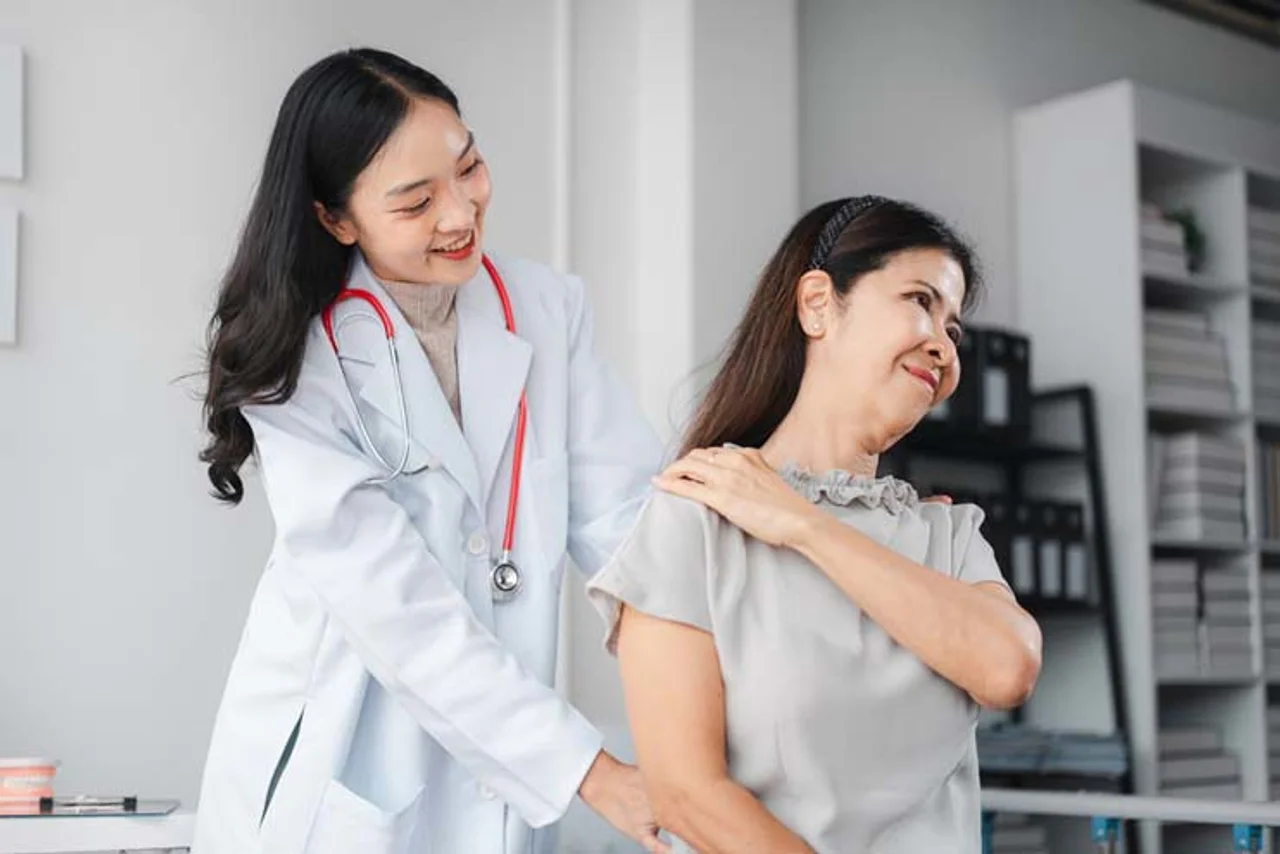
The confusion is understandable. Many of the visible signs of scoliosis look like poor posture:
Uneven shoulders
One hip higher than the other
A rib hump when bending forward
Head not centered over the body
Because these signs become more noticeable when standing or sitting, scoliosis is often grouped together with postural habits. In school health screenings, it’s sometimes described casually, reinforcing the idea that posture correction alone is enough.
But posture is not the cause of scoliosis—it is often the result.
Think of posture as the body’s adaptation. When the spine becomes imbalanced, the body adjusts to keep you upright and functional. These compensations may look like slouching or leaning, but they are survival strategies, not bad habits.
The Hidden Mechanics: Why Straightening Up Doesn’t Fix the Curve
One of the most common frustrations we hear from patients is this:
“I tried so hard to sit straight, but nothing changed.”
That’s because scoliosis is not a voluntary position you can simply correct with effort.
1. Structural Imbalance vs. Habitual Slouching
Posture problems like slouching are usually flexible. When someone reminds you to sit up, you can do it. Scoliosis, especially structural scoliosis, involves changes in the alignment and mobility of the vertebrae themselves.
Even if you “stand straight,” the underlying spinal imbalance remains.
2. Rotation Changes Everything
In scoliosis, the spine doesn’t just curve—it twists. This rotation affects:
Rib cage shape and breathing mechanics
Muscle length and tension on both sides of the body
Nerve pathways that influence sensation and strength
No amount of conscious posture correction can untwist a rotated spine. That requires precise, guided correction.
How Scoliosis Affects the Whole Body (Not Just the Back)
One of the most overlooked aspects of scoliosis is how far its influence extends beyond the spine.
At Banpo Newborn Korean Medicine Clinic, we often say: “The spine is the axis, but the symptoms can appear anywhere.”
Neck, Head, and TMJ Symptoms
When the spine curves and the pelvis tilts, the body often compensates by shifting the neck and head position. Over time, this can contribute to:
Chronic neck stiffness
Tension headaches
Jaw imbalance and TMJ disorders
Facial asymmetry
Many TMJ patients are surprised to learn that their jaw issues may be linked to spinal imbalance that began years earlier.
Lower Back and Pelvic Pain
Scoliosis changes how weight is distributed through the pelvis and legs. This can lead to:
Persistent lower back pain
Hip discomfort or uneven leg fatigue
One-sided muscle overuse
Even in mild scoliosis, these imbalances accumulate quietly until pain becomes unavoidable.
Breathing and Fatigue
In more progressed cases, rib cage distortion can affect breathing efficiency. Patients may notice:
Shallow breathing
Reduced stamina
Unexplained fatigue
This is not weakness—it’s mechanical restriction.
Why Exercise Alone Often Isn’t Enough
Exercise is important, and movement plays a key role in maintaining spinal health. However, many scoliosis patients feel discouraged when months of stretching, yoga, or strengthening bring little improvement.
The reason is simple: strengthening a misaligned structure without correcting alignment first can reinforce imbalance.
Imagine reinforcing the beams of a house whose foundation is tilted. The structure may become stronger, but it won’t become straighter—and stress may actually increase.
This is why at our clinic, we prioritize precise spinal alignment restoration before prescribing corrective movement.
A Korean Medicine Perspective: Seeing Scoliosis as a Systemic Condition
Traditional Korean medicine views the body as an interconnected system, where structure, function, and circulation are inseparable.
From this perspective, scoliosis is not just a skeletal issue but a condition involving:
Muscular imbalance
Altered joint mechanics
Nervous system adaptation
Disrupted circulation and energy flow
Dr. Ungjin Im, who leads Banpo Newborn Korean Medicine Clinic, often explains scoliosis using a simple analogy:
“If the trunk of a tree grows crooked, the branches don’t choose their direction—they adapt. Treatment must begin at the trunk.”
This philosophy underpins our approach to scoliosis care.
What Makes Scoliosis Progress Over Time?
Another common misconception is that scoliosis “stops mattering” after adolescence. While it’s true that growth-related progression slows in adulthood, scoliosis does not become irrelevant.
In fact, adults often experience functional progression, including:
Increasing stiffness
Degenerative disc changes
Worsening pain due to years of compensation
Without proper alignment support, the body continues to adapt—often in ways that create new problems.
Moving Beyond Posture: A More Complete Approach to Scoliosis
So if scoliosis isn’t just a posture problem, what does effective care involve?
At Banpo Newborn Korean Medicine Clinic, we focus on several key principles:
1. Individualized Structural Assessment
No two scoliosis patterns are the same. We carefully evaluate:
Spinal curves in multiple planes
Pelvic and leg alignment
Muscular asymmetry
Breathing and movement patterns
This allows us to understand not just the curve, but how your body is compensating.
2. Non-Surgical Spinal Alignment Restoration
Through techniques such as Spinal Alignment Restoration Therapy (SART) and advanced Chuna-based correction, we aim to gently guide the spine toward better balance without force or surgery.
The goal is not to “force straightness,” but to restore functional symmetry and reduce stress on the body.
3. Long-Term Stability, Not Temporary Correction
True improvement in scoliosis care means helping the body maintain alignment, not just achieve it briefly. This includes:
Targeted movement guidance
Lifestyle adjustments
Ongoing monitoring as the body adapts
When Should You Look Beyond Posture Advice?
You may want to consider a deeper evaluation if:
You’ve been told you have scoliosis but were given only posture advice
Pain or stiffness is increasing over time
You notice asymmetry that doesn’t change no matter how you sit or stand
You have unexplained neck, jaw, or hip symptoms
Ignoring scoliosis because it’s “just posture” can delay meaningful care.
A Final Thought: You’re Not Failing at Posture
If there’s one message we hope you take from this, it’s this:
Scoliosis is not a personal failure to sit or stand correctly.
It’s a complex structural condition that deserves understanding, precision, and compassion. Many patients feel relief simply learning that their discomfort isn’t due to laziness or poor habits—but to a misalignment that can be addressed with the right approach.
If you’ve been living with scoliosis and wondering why posture correction hasn’t helped, you’re not alone—and you’re not missing something obvious. You may simply need care that looks beyond posture and sees the whole body.
At Banpo Newborn Korean Medicine Clinic in Banpo, Seoul, we continue to support patients with scoliosis through personalized, non-invasive care rooted in decades of experience. Healing doesn’t begin with forcing yourself to sit straight—it begins with restoring balance where it truly matters.
More Medical Articles
Continue reading clinical insights from Banpo Newborn Korean Medicine Clinic.

Why Seoul is the Global Hub for Minimally Invasive Vertigo Treatment
Dizziness and vertigo are among the most common reasons for hospital visits in South Korea, affecting nearly 16.7% of the adult population annually according to the Korea National Health and Nutrition Examination Survey (KNHANES).
Learn More

Tinnitus Relief in Seoul: Multidisciplinary Upper Cervical Care
For many, the sound of silence is replaced by a persistent ringing, buzzing, or hissing. In South Korea, this is more than an individual annoyance; it is a significant public health trend.
Learn More

Success Rates of SART for OPLL Compared to Standard Laminectomy in Korea
The prevalence of Ossification of the Posterior Longitudinal Ligament (OPLL) in East Asian populations, particularly in South Korea, is significantly higher than in Western countries, affecting approximately 2% to 4% of the population according to nationwide...
Learn More