SART Whole-Body Spinal Alignment, Chuna Therapy & International Patient Concierge
30+ Years Clinical Experience
en-US


Korean Medicine Guide
Is Your Pelvic Discomfort Affecting Your Sleep? Get Back to Restful Nights
Pelvic discomfort disrupting your sleep? Learn causes, symptoms, and effective treatments to relieve pelvic pain and restore restful, uninterrupted nights.
Schedule a ConsultationIs Your Pelvic Discomfort Affecting Your Sleep? Get Back to Restful Nights

Have you ever gone to bed exhausted—only to lie awake, shifting positions, trying to find a way to ease the dull ache or pressure in your pelvis?
For many people, pelvic discomfort doesn’t just cause daytime inconvenience. It quietly steals something even more essential: deep, restorative sleep. Over time, poor sleep worsens pain, weakens recovery, and leaves the body stuck in a cycle of tension and fatigue.
At Banpo Newborn Korean Medicine Clinic, we often meet patients who say, “I didn’t realize my pelvic problem could affect my sleep this much.” To be honest, most people don’t. Pelvic imbalance is one of the most overlooked contributors to chronic sleep disruption—and it’s far more common than you might think.
Let’s talk about why pelvic discomfort interferes with sleep, what’s really happening inside your body, and—most importantly—how holistic spinal and pelvic correction can help you reclaim restful nights.
Why the Pelvis Matters More Than You Think
The pelvis is not just a “bone structure” at the bottom of the spine. It is the central foundation of your body.
Think of your pelvis as the keystone of a bridge. When it’s stable and balanced, everything above and below functions smoothly. When it tilts, rotates, or becomes misaligned, the effects ripple outward—to the spine, hips, nervous system, and even internal organs.
In Korean medicine, the pelvis is considered a critical meeting point of:
Structural alignment
Circulation of qi and blood
Neurological signaling
Muscular balance between the left and right sides
When pelvic alignment is disturbed, the body compensates constantly—often without you realizing it.
And at night, when your body should be repairing and resetting, those compensations don’t stop.
How Pelvic Discomfort Disrupts Sleep

1. Pain and Pressure Increase When You Lie Down
Many patients tell us their pelvic pain feels worse at night. This isn’t imagined.
When you lie down:
Muscle guarding around the pelvis relaxes unevenly
Compressed joints lose the “support” of gravity
Circulation shifts toward the core
If the pelvis is misaligned, this change can increase pressure on:
The sacroiliac joints
Hip sockets
Lumbar nerves
Pelvic floor muscles
The result? Aching, pulling, burning, or deep discomfort that makes it hard to fall—or stay—asleep.
2. Pelvic Imbalance Irritates the Nervous System
Sleep requires a calm nervous system. But pelvic misalignment sends constant stress signals to the brain.
The pelvis houses and influences:
The sacral nerves
Parasympathetic nervous system pathways
Pelvic autonomic regulation
When alignment is off, the nervous system remains on alert, even during rest. Patients often report:
Light, fragmented sleep
Frequent awakenings
Difficulty entering deep sleep stages
Waking up feeling unrefreshed
In other words, you may be “sleeping” but not truly resting.
3. Poor Sleep Increases Pelvic Pain (A Vicious Cycle)
Here’s the difficult truth: pain and poor sleep reinforce each other.
Lack of deep sleep:
Reduces tissue repair
Increases inflammation
Heightens pain sensitivity
Weakens postural stability
So pelvic discomfort worsens, which then further disrupts sleep. Many people feel trapped in this loop for years—treating sleep as the problem, when the pelvis is the root cause.
Common Signs Your Pelvic Discomfort Is Affecting Sleep
You don’t need severe pain to be affected. Subtle signs include:
Tossing and turning at night
Needing a specific sleeping position to feel “okay”
Lower back stiffness upon waking
Hip or groin discomfort at night
Pelvic heaviness or pressure when lying down
Sleep that feels shallow or unrestorative
If any of these sound familiar, your body may be telling you something important.
Why Pelvic Problems Are Often Missed
In modern care, pelvic discomfort is often fragmented into separate categories:
Gynecological
Urological
Orthopedic
Neurological
But the pelvis doesn’t work in isolation.
At Banpo Newborn Korean Medicine Clinic, we frequently see patients who have:
Normal imaging results
No “clear” diagnosis
Persistent symptoms despite treatment
That’s because structural alignment and spatial balance are rarely assessed in detail.
Dr. Ungjin Im often explains it this way:
“If you only look at the pain, you miss the pattern. The pelvis tells a story about how the whole body is compensating.”
The Pelvis, Spine, and Sleep Connection
The pelvis and spine function as one continuous system.
When the pelvis tilts:
Lumbar curvature changes
Thoracic posture compensates
Cervical alignment shifts
This chain reaction affects breathing, circulation, and nerve signaling—all essential for quality sleep.
Many patients come to us for neck or back pain, only to discover the root issue lies in the pelvis.
Once pelvic alignment improves, they often say:
“My sleep improved before my pain completely disappeared.”
That’s not a coincidence.
A Korean Medicine Perspective on Pelvic Discomfort and Sleep
In traditional Korean medicine, sleep disruption related to pelvic discomfort is often associated with:
Stagnation of qi and blood
Imbalance between yin (rest) and yang (activity)
Weak communication between the lower and upper body
Rather than suppressing symptoms, treatment focuses on:
Restoring flow
Correcting structure
Supporting the body’s natural healing rhythm
This integrated view allows us to address both pain and sleep together, not separately.
How Banpo Newborn Approaches Pelvic-Related Sleep Issues
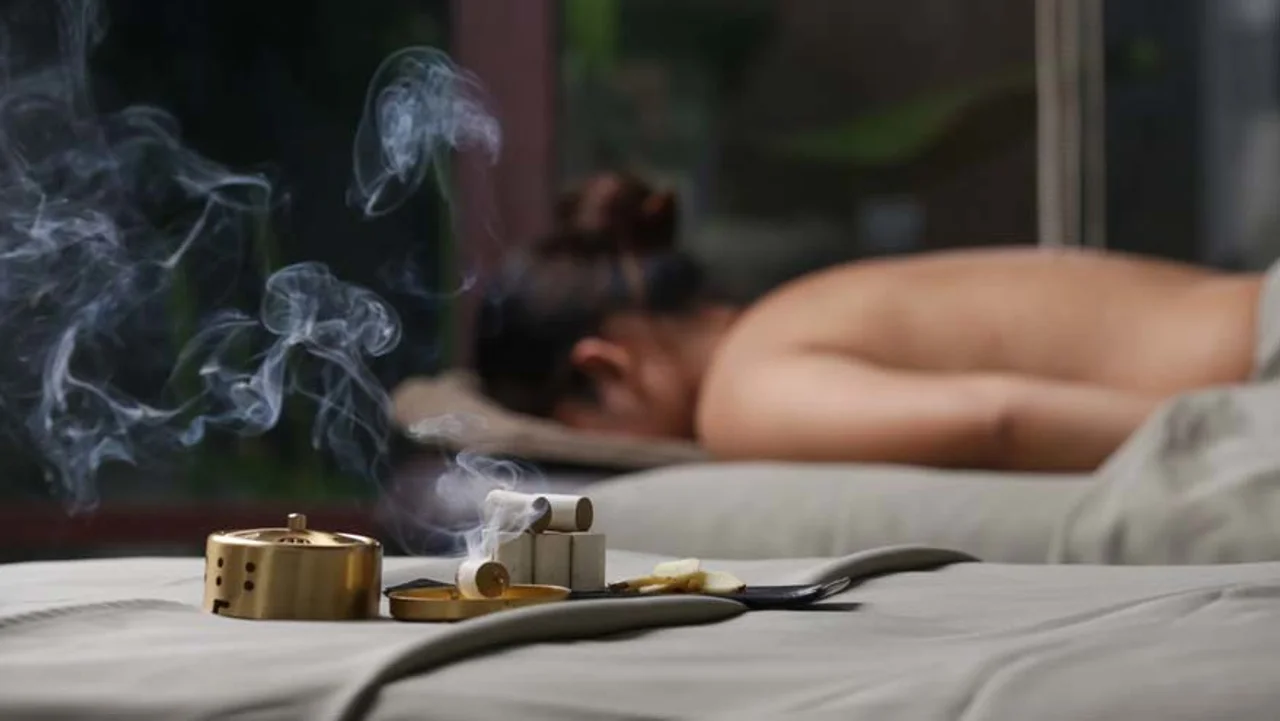
1. Comprehensive Structural Evaluation
We begin by assessing:
Pelvic tilt and rotation
Sacroiliac joint mobility
Spinal alignment in three dimensions
Weight distribution and posture
Breathing patterns
This reveals why your body is struggling at night—not just where it hurts.
2. Spinal Alignment Restoration Therapy (SART)
SART is Dr. Im’s proprietary method focusing on:
Precise, non-invasive alignment
Spatial correction of the pelvis and spine
Gentle, patient-specific adjustments
Rather than forceful manipulation, SART works with the body’s natural mechanics—making it especially effective for patients with sleep sensitivity or chronic tension.
3. Chuna Therapy for Pelvic Balance
Chuna therapy helps:
Release deep pelvic tension
Normalize joint movement
Restore muscular symmetry
Patients often describe feeling:
“Lighter” in the hips
More stable when lying down
Able to stay in one sleep position longer
These changes directly support deeper, uninterrupted sleep.
4. Nervous System Regulation
Through alignment and gentle manual therapy, we aim to:
Reduce nerve irritation
Activate parasympathetic (rest-and-repair) pathways
Lower nighttime muscle guarding
Many patients report improved sleep within the early stages of care—even before pain fully resolves.
Real Patient Reflections
One patient in her 40s shared:
“I came in because of pelvic discomfort, but what surprised me was my sleep. For the first time in years, I slept through the night without waking up in pain.”
Another patient said:
“I used to dread bedtime. Now, my body actually feels ready to rest.”
These experiences reflect what we see often: when the pelvis finds balance, the body remembers how to sleep.
What You Can Do Tonight (Simple Guidance)
While professional care is essential, small steps can help support your body:
Avoid sleeping on extremely soft mattresses
Place a pillow between the knees if side-sleeping
Practice slow abdominal breathing before bed
Avoid forcing painful positions
These won’t correct alignment—but they can reduce nighttime strain until proper evaluation is done.
Restful Sleep Is Not a Luxury—It’s a Signal of Balance
If you’ve been living with pelvic discomfort and poor sleep, it’s easy to normalize exhaustion. But your body is not meant to struggle through the night.
Sleep is when healing happens.
Alignment is what allows healing to begin.
At Banpo Newborn Korean Medicine Clinic, we believe that addressing the pelvis is not just about relieving pain—it’s about restoring your body’s ability to truly rest.
If you’re considering a deeper evaluation, a comprehensive pelvic and spinal assessment can be the first step toward nights that feel peaceful again.
Because restful sleep isn’t something you should chase.
It’s something your body naturally returns to—once balance is restored.
More Medical Articles
Continue reading clinical insights from Banpo Newborn Korean Medicine Clinic.

Why Seoul is the Global Hub for Minimally Invasive Vertigo Treatment
Dizziness and vertigo are among the most common reasons for hospital visits in South Korea, affecting nearly 16.7% of the adult population annually according to the Korea National Health and Nutrition Examination Survey (KNHANES).
Learn More

Tinnitus Relief in Seoul: Multidisciplinary Upper Cervical Care
For many, the sound of silence is replaced by a persistent ringing, buzzing, or hissing. In South Korea, this is more than an individual annoyance; it is a significant public health trend.
Learn More

Success Rates of SART for OPLL Compared to Standard Laminectomy in Korea
The prevalence of Ossification of the Posterior Longitudinal Ligament (OPLL) in East Asian populations, particularly in South Korea, is significantly higher than in Western countries, affecting approximately 2% to 4% of the population according to nationwide...
Learn More