SART Whole-Body Spinal Alignment, Chuna Therapy & International Patient Concierge
30+ Years Clinical Experience
en-US

Korean Medicine Guide
Korean Medicine Treatment for Scoliosis in Teens | Banpo Newborn
Discover how Korean medicine treatment for scoliosis offers a nonsurgical path for teenagers. Dr. Ungjin Im explains our holistic spinal restoration approach.
Schedule a ConsultationIntroduction
Discovering that your teenager has scoliosis often leads to a whirlwind of fear, especially when surgery or spinal fusion are mentioned. For parents in cities like New York or Los Angeles, finding a path that preserves a child mobility and avoids the trauma of the operating room is a top priority. Many parents are now exploring Korean medicine treatment for scoliosis as a gentle, noninvasive alternative to traditional methods.
Rachel, like many parents, is searching for a scientifically grounded, nonsurgical alternative that addresses the root cause of the curve. Traditional bracing can be emotionally difficult for adolescents, and many parents worry about the long term impact of metal rods in a growing spine. This guide provides a comprehensive look at how Eastern wisdom and modern structural science converge to help your child.
By the end of this guide, you will understand:
How Korean medicine treatment for scoliosis addresses spinal curvature without invasive hardware.
The specific nonsurgical modalities, including Space Spinal Correction, that help teenagers.
Why adolescent growth phases are the ideal time for Oriental medical intervention.
The safety profile and long term expectations for holistic spinal restoration.
Dr. Ungjin Im, Director of Banpo Newborn Korean Medicine Clinic, leverages over thirty years of clinical experience and treats over two hundred patient cases annually using specialized spinal restoration protocols. His approach focuses on the body innate ability to realign when the correct space and stimulus are provided.
Understanding Korean Medicine Treatment for Scoliosis in Adolescents
Korean medicine treatment for scoliosis is a comprehensive therapeutic approach that uses structural realignment, herbal support, and manual therapy to correct spinal curvature. This method helps teenagers by addressing the root musculoskeletal imbalances that cause the spine to bend, promoting natural growth and long term stability without the need for invasive surgical procedures.
Korean medicine treatment for scoliosis is a specialized clinical protocol that utilizes manual decompression and herbal medicine to restore spinal symmetry for growing children.
The Adolescent Spine: A Window of Opportunity
The teenage years represent a critical period for spinal development. During growth spurts, the bones are rapidly lengthening, but the muscles and ligaments often struggle to keep pace. This creates a window of vulnerability where a minor tilt can quickly progress into a significant curve. When parents seek Korean medicine treatment for scoliosis during this time, they are taking advantage of the spine high plasticity.
In cities like New York or Los Angeles, modern students often spend eight to ten hours a day hunched over laptops and tablets. This sedentary lifestyle, combined with the weight of heavy backpacks, creates a perfect storm for postural collapse. Early intervention with Korean medicine treatment for scoliosis is more effective than waiting because it allows the doctor to guide the bone growth rather than trying to move a fully hardened adult spine.
Beyond the Curve: The Holistic View of the Body
In the perspective of Eastern medicine, scoliosis is not just a bone issue. It is a complex neuromuscular and structural imbalance that affects the entire person. Korean medicine treatment for scoliosis looks beyond the X ray to see how the spine, the TMJ jaw joint, and the pelvis interact. If the foundation of the pelvis is tilted, the spine must curve to keep the head level.
Korean medicine pediatric scoliosis protocols also examine internal organ health and blood flow. A severely curved spine can compress the lungs and heart, leading to chronic fatigue. By improving the internal environment through herbal medicine and acupuncture, the body becomes more resilient. This holistic approach ensures that the treatment supports the whole child, not just the skeleton.
Common Symptoms Rachel Should Look For
Parents should remain vigilant for subtle signs of spinal misalignment. Common indicators include uneven shoulders where one side appears higher than the other. You might also notice that one hip seems more prominent or that the rib cage protrudes on one side when the child bends forward. These are classic signs that suggest a need for Korean medicine treatment for scoliosis.
Chronic fatigue and breathing issues are often linked to curvature because the rib cage cannot expand fully. If your teen complains of back pain after sitting at a desk or shows a persistent head tilt, a professional evaluation is necessary. Dr. Ungjin Im states that in adolescent scoliosis, we are not just fighting a curve, we are guiding a growing body back into its natural blueprint.
Scoliosis Korean Medicine Non-Surgical vs. Traditional Surgery
Scoliosis Korean medicine nonsurgical treatment offers a viable alternative to spinal fusion by focusing on manual realignment and muscle balancing. This approach avoids the risks of permanent spinal rigidity and hardware complications, allowing teenagers to maintain full mobility while the spine is gradually restored to its proper alignment through natural healing processes.
Scoliosis Korean medicine nonsurgical therapy is a restorative clinical system that employs Chuna and Space Spinal Correction to improve Cobb angles for adolescent patients.
The Limitations and Risks of Spinal Fusion
Conventional medicine often resorts to spinal fusion surgery for curves exceeding forty degrees. While surgery can straighten the spine, it comes with the permanent loss of spinal flexibility. The teenager will no longer be able to bend or twist the fused section of their back. This can be devastating for active teens who enjoy sports or dance.
There is also the potential for hardware complications such as rod breakage or infection. The emotional toll of such a major surgery on a teenager cannot be understated. Many parents choose Korean medicine treatment for scoliosis because they want to avoid the trauma of the operating room and the long recovery times associated with Western surgical interventions.
How Nonsurgical Restoration Works
The concept of Scoliosis Korean medicine nonsurgical restoration is based on the principle of structural decompression. Instead of forcing the spine straight with metal rods, this method creates space between the vertebrae. Once the pressure is relieved, the spine can be gently guided back to the midline using specialized manual techniques.
By avoiding the wait and see approach of conventional medicine, Korean medicine treatment for scoliosis takes proactive steps to stop the curve from progressing. This is particularly important for parents like Rachel who want to address the problem before it reaches the threshold for surgery. The goal is to restore the body innate symmetry and function.
Comparison Table: Surgery vs. Banpo Newborn Non-Surgical
Feature | Spinal Fusion Surgery | Banpo Newborn Korean Medicine |
|---|---|---|
Invasive Nature | Highly invasive with incisions | Noninvasive manual therapy |
Spinal Mobility | Permanent loss of flexibility | Preserves and improves mobility |
Recovery Time | Several months of restricted activity | No downtime required |
Hardware Used | Metal rods and screws | No permanent hardware |
Holistic Focus | Focus on the bone curve only | Focus on jaw, pelvis, and muscles |
Risk Profile | Infection, nerve damage, hardware failure | Minimal, focused on gentle alignment |
The Banpo Newborn Protocol: Space Spinal Correction and More
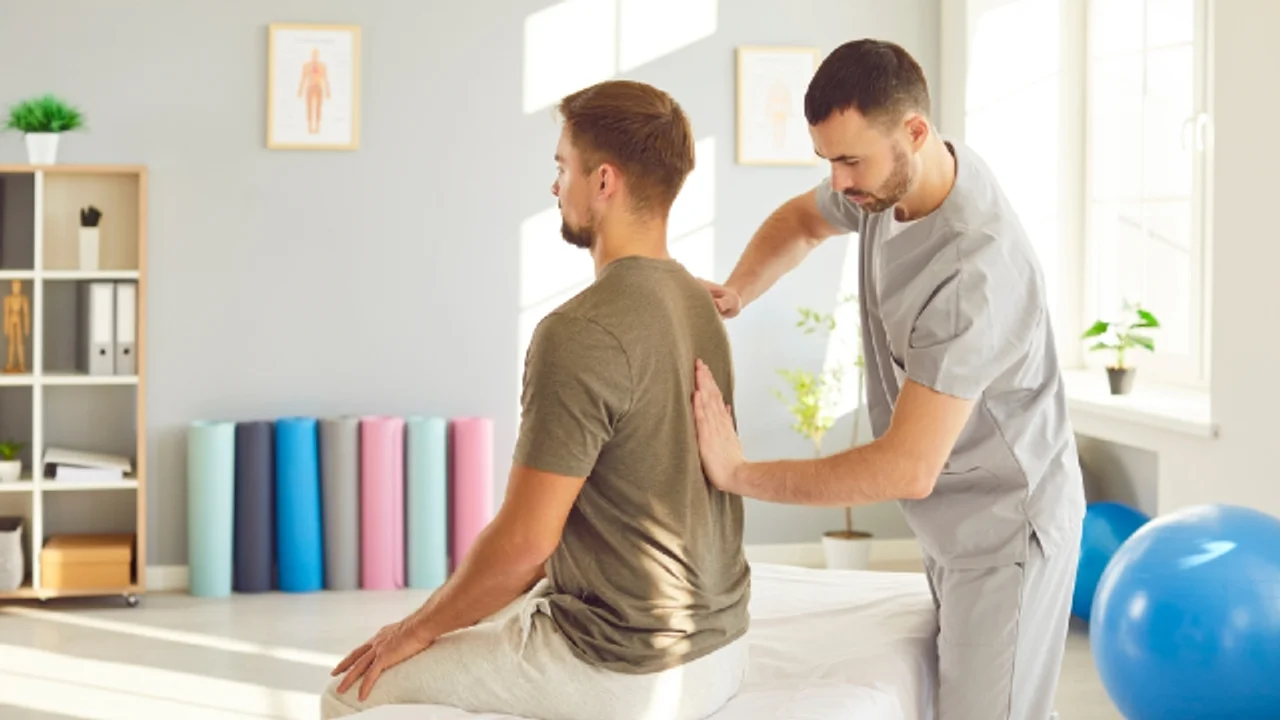
The Banpo Newborn Protocol is a specialized treatment system that combines Space Spinal Correction, Chuna manual therapy, and acupuncture to treat scoliosis. This protocol helps teenagers by creating vertical space in the spinal column, which allows the vertebrae to move back into alignment naturally without the need for high force adjustments or surgery.
Space Spinal Correction is a decompression technique that uses specialized tools to create vertical room between vertebrae for patients needing spinal realignment.
Space Spinal Correction Therapy: Creating Room for Alignment
More Medical Articles
Continue reading clinical insights from Banpo Newborn Korean Medicine Clinic.

Why Seoul is the Global Hub for Minimally Invasive Vertigo Treatment
Dizziness and vertigo are among the most common reasons for hospital visits in South Korea, affecting nearly 16.7% of the adult population annually according to the Korea National Health and Nutrition Examination Survey (KNHANES).
Learn More

Tinnitus Relief in Seoul: Multidisciplinary Upper Cervical Care
For many, the sound of silence is replaced by a persistent ringing, buzzing, or hissing. In South Korea, this is more than an individual annoyance; it is a significant public health trend.
Learn More

Success Rates of SART for OPLL Compared to Standard Laminectomy in Korea
The prevalence of Ossification of the Posterior Longitudinal Ligament (OPLL) in East Asian populations, particularly in South Korea, is significantly higher than in Western countries, affecting approximately 2% to 4% of the population according to nationwide...
Learn More