SART Whole-Body Spinal Alignment, Chuna Therapy & International Patient Concierge
30+ Years Clinical Experience
en-US


Korean Medicine Guide
Neck Stiffness Every Morning? Korean Medicine Can Help
Wake up with neck stiffness every morning? Learn how Korean Medicine relieves pain, improves mobility, and restores balance with natural, holistic treatments.
Schedule a ConsultationNeck Stiffness Every Morning? Korean Medicine Can Help

If you wake up every morning feeling like your neck simply refuses to move, you’re far from alone. At our clinic in Banpo, we often hear patients say things like, “I thought sleeping was supposed to make me feel better—so why does my neck hurt the most when I wake up?”
To be honest, many people don’t realize how much of their morning discomfort is connected to the condition of their spine. When the neck and upper back fall out of healthy alignment—whether from long hours at a computer, chronic stress, teeth grinding, poor sleeping posture, or old injuries—the body tries to compensate throughout the day. During sleep, those compensations relax, and the underlying imbalance finally reveals itself. The result is that familiar morning stiffness.
But here’s the reassuring part: neck stiffness in the morning is highly treatable, especially with the non-invasive, holistic tools of Korean medicine. At Banpo Newborn Korean Medicine Clinic, we’ve spent more than 30 years helping patients who felt “stuck” in daily pain rediscover what comfortable, natural movement feels like. With a precise blend of spinal alignment therapies, Chuna manipulation, and individualized rehabilitation, morning neck tension can improve—often much faster than patients expect.
In this article, we’ll explain why neck stiffness happens, how Korean medicine interprets the condition, and the practical ways our clinic helps restore balance and long-term relief.
Why Does Neck Stiffness Happen in the Morning?
1. Your Sleeping Posture Freezes Existing Misalignments
Think of your spine like the foundation of a house. When one corner sinks even slightly, everything above it must twist, bend, or compensate. The neck, being the most mobile and fragile part of the spine, tends to bear the brunt of these distortions.
During the day, you may unconsciously use your muscles to counteract this imbalance. But when you sleep, those protective muscles relax. If the spine is misaligned, the neck collapses into that imbalance, resulting in stiffness when you wake up.
2. Tight Muscles and Fascia Don’t Reset Overnight
In Korean medicine, the neck is viewed not just as a mechanical structure but as a crucial pathway for qi and blood circulation. When circulation is blocked—due to stress, muscle tension, or postural strain—the tissues cannot recover efficiently while you rest. Instead of waking refreshed, you wake with a sense of heaviness, rigidity, or even mild pain.
Many patients describe it as if “the neck forgot how to move.”
3. TMJ Disorders and Teeth Grinding Affect the Neck
A surprisingly large number of people with morning neck stiffness also struggle with jaw tension. Clenching or grinding during sleep pulls the muscles of the jaw, neck, and upper back into chronic contraction. Dr. Ungjin Im often reminds patients that “the jaw is the front door to the neck.” If the TMJ is misaligned or stressed, the cervical spine follows suit.
4. Poor Pillow or Mattress Support
While the pillow isn’t the root cause of most chronic neck issues, it can certainly trigger symptoms if the neck is already compromised. Patients with spinal misalignment are often sensitive to even small variations in their sleeping environment.
How Korean Medicine Understands Morning Neck Stiffness

Korean medicine approaches neck stiffness as a whole-body imbalance, not a localized problem.
The neck is influenced by:
Spinal alignment (especially C1–C7)
Circulation of qi and blood along meridians
Balance of muscles and ligaments
Stress patterns in the autonomic nervous system
Jaw movement and cranial alignment
Morning stiffness is interpreted as a sign that the body is struggling to reset itself during sleep. Instead of recovery, the tissues remain congested.
Three Core Patterns We Frequently See
1. Cervical Misalignment with Muscle Guarding
The cervical vertebrae shift forward, causing overwork in the posterior neck muscles. Patients often describe tightness at the base of the skull or between the shoulder blades.
2. Qi Stagnation from Stress and Poor Circulation
This pattern often appears in people who work long hours at desks or who hold emotional stress in their shoulders. The neck feels hard or “blocked,” especially in the morning.
3. TMJ-Related Cervical Dysfunction
Jaw tension, grinding, or asymmetrical chewing causes rotational stress on the upper cervical spine. These patients frequently experience headaches in addition to stiffness.
How Korean Medicine Can Help: A Holistic, Precise Approach
At Banpo Newborn Korean Medicine Clinic, we focus on restoring the body’s structural and functional harmony. Instead of temporarily loosening tight muscles, we aim to correct the underlying misalignment so the body can heal naturally.
Below are the key treatment approaches we use to help patients with recurring morning neck stiffness.
1. Spatial Spinal Correction: Restoring the Neck’s Natural Pathway
One of the clinic’s core strengths is our unique approach to spatial spinal correction, developed and refined over decades of practice.
Most people think of the spine only in terms of forward or backward bending. But the spine also rotates, shifts laterally, and adjusts in three-dimensional space. Even small deviations in this spatial pattern can lead to significant neck strain.
Our correction techniques assess:
The position of the cervical vertebrae
The relationship between the neck and thoracic spine
Patterns of muscular compensation
Jaw influence on the cranial-cervical junction
By precisely guiding the spine back to its optimal axis, patients often experience immediate relief—sometimes describing it as if a “weight” was lifted off their neck.
One long-time patient, a violinist, once told us, “I didn’t realize how much of my morning stiffness was from years of playing with my head slightly turned. After treatment, I could finally breathe through my neck again.”
2. Spinal Alignment Restoration Therapy (SART)
SART is a proprietary therapeutic approach developed by Dr. Ungjin Im to restore the natural alignment and function of the spine. It is particularly effective for chronic neck tightness that recurs each morning.
SART combines:
Gentle mobilization of the cervical spine
Muscle balancing techniques
Soft tissue release
Postural re-education
Nervous system calming through meridian-based therapy
The goal is not only to correct misalignment but also to teach the body to maintain alignment without effort. Patients often report that after several sessions, their neck feels “lighter” and more flexible upon waking.
3. Chuna Therapy for Neck and Upper Back Integration
Chuna therapy, a traditional Korean manual therapy, helps restore proper movement in joints and soft tissues. When applied skillfully, it can release restrictions in the neck, shoulders, rib cage, and upper back that contribute to morning stiffness.
At our clinic, Chuna therapy is always customized. Some patients need gentle cranial release, while others benefit from rib mobility work to take pressure off the cervical spine.
Because Chuna addresses the body as an interconnected system, it is particularly helpful for people whose stiffness has multiple contributing factors—posture, stress, jaw issues, and spinal imbalance.
4. TMJ and Jaw Alignment Care
Since jaw tension is strongly linked with neck stiffness, we carefully evaluate the TMJ in most patients who come to us with morning discomfort.
Common signs of TMJ-related neck stiffness include:
Clicking or tightness in the jaw
Head heaviness or morning headaches
Neck tightness that improves after yawning or massaging the jaw
Clenching or grinding during sleep
Our jaw alignment treatments combine manual correction, internal and external muscle work, and specialized techniques from Korean medicine to normalize cranial-cervical function.
When the jaw relaxes, the neck often follows.
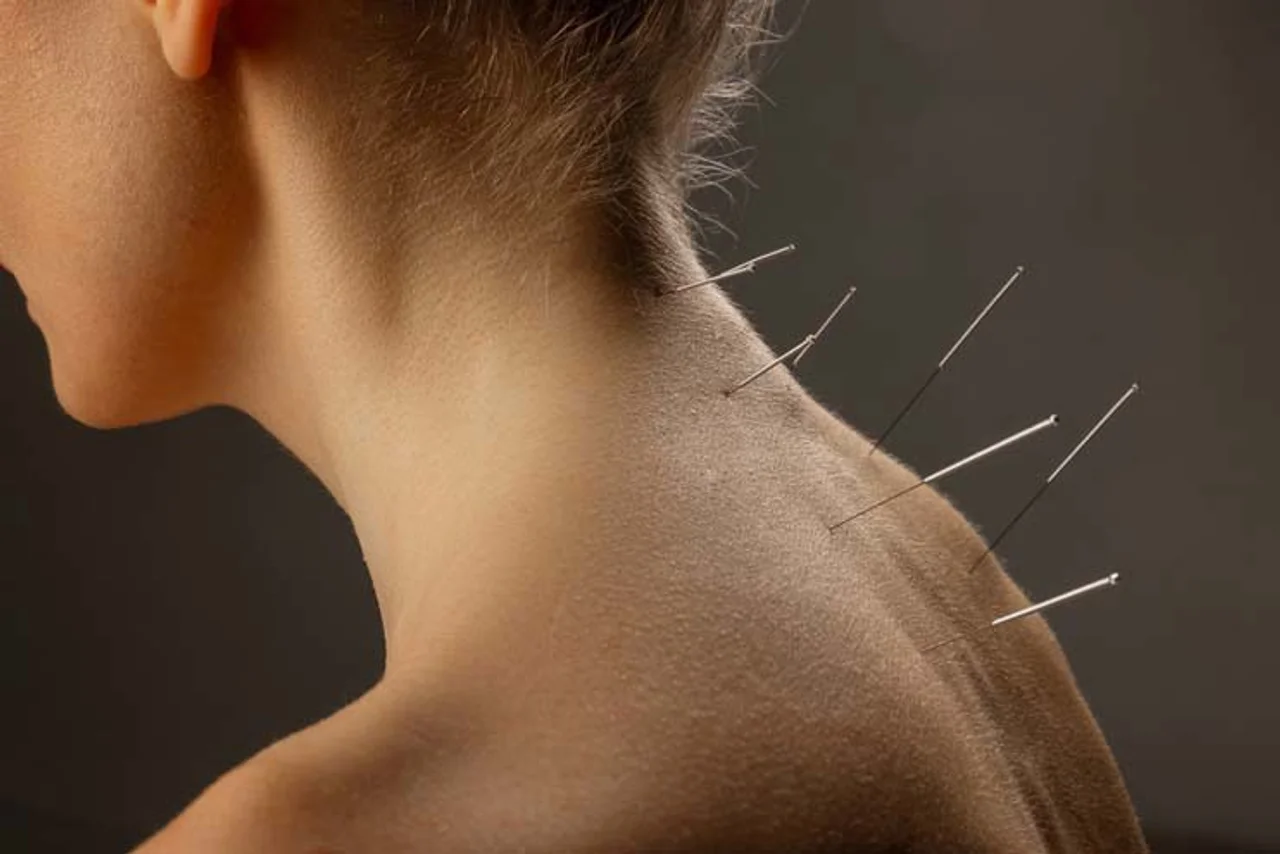
5. Acupuncture for Circulation and Muscle Relaxation
High-quality acupuncture is one of the fastest ways to restore circulation and reduce inflammation in the neck. Many patients experience noticeable improvement even after one session.
For chronic morning stiffness, acupuncture helps by:
Releasing deep muscular knots
Improving blood flow to stiff tissues
Calming the nervous system
Reducing stress-induced guarding
At Banpo Newborn, we integrate acupuncture into a broader structural treatment plan—not as a stand-alone therapy—so the results are stable and lasting.
6. Personalized Rehabilitation and Sleep Care Guidance
Treatments alone are not enough if patients return to the habits that cause misalignment. That’s why we emphasize customized self-care instruction.
We offer guidance on:
Ideal pillow height and mattress selection
Gentle morning mobility routines
Evening neck relaxation exercises
Workplace posture habits
Breathing training for neck and jaw relaxation
Small daily adjustments can significantly enhance recovery.
One working mother told us, “Changing one simple habit—how I position my head when I sleep—reduced my morning stiffness by half.” When paired with professional care, such improvements multiply.
Why Korean Medicine Works So Well for Morning Neck Stiffness
1. It Targets Structural and Functional Causes
We don’t simply loosen tight muscles. We adjust the deeper mechanical and circulatory imbalances that cause the stiffness.
2. It Treats the Body as an Integrated System
Neck stiffness is rarely isolated. Korean medicine’s holistic lens ensures that related systems—jaw, upper back, autonomic nerves—are addressed together.
More Medical Articles
Continue reading clinical insights from Banpo Newborn Korean Medicine Clinic.

Why Seoul is the Global Hub for Minimally Invasive Vertigo Treatment
Dizziness and vertigo are among the most common reasons for hospital visits in South Korea, affecting nearly 16.7% of the adult population annually according to the Korea National Health and Nutrition Examination Survey (KNHANES).
Learn More

Tinnitus Relief in Seoul: Multidisciplinary Upper Cervical Care
For many, the sound of silence is replaced by a persistent ringing, buzzing, or hissing. In South Korea, this is more than an individual annoyance; it is a significant public health trend.
Learn More

Success Rates of SART for OPLL Compared to Standard Laminectomy in Korea
The prevalence of Ossification of the Posterior Longitudinal Ligament (OPLL) in East Asian populations, particularly in South Korea, is significantly higher than in Western countries, affecting approximately 2% to 4% of the population according to nationwide...
Learn More