SART Whole-Body Spinal Alignment, Chuna Therapy & International Patient Concierge
30+ Years Clinical Experience
en-US


Korean Medicine Guide
Slipped Disc Recovery Without Surgery — Is It Really Possible?
Discover effective slipped disc recovery without surgery. Learn proven non-surgical treatments, recovery tips, and pain relief options.
Schedule a Consultation
If you’ve been told you have a Slipped Disc—also called a Herniated Disc or Disc Herniation—you might feel like surgery is inevitable. To be honest, many people think that after they see an MRI. But for a large portion of patients, non-surgical recovery is not only possible—it’s practical when the plan is precise, gentle, and matched to your body’s mechanics.
At Banpo Newborn Oriental Medical Clinic in Banpo, Seoul, Dr. Ungjin Im and our team help patients return to walking, sleeping, and working without fear using an integrated, conservative strategy. Below, we’ll explain what a “slipped disc” really is, why symptoms can mislead you, and how our non-surgical Korean medicine approach—Spinal Alignment Restoration Therapy (SART), spatial spinal correction, Chuna manual therapy, acupuncture, herbal support, and simple home training—can guide you toward lasting relief.
What is a Slipped Disc?
Between each vertebra is a disc: a tough outer ring (annulus) wrapped around a gel-like center (nucleus). With repetitive stress, prolonged sitting, or a single awkward lift, the outer ring can bulge or tear. The inner material may press or inflame a nearby nerve, producing:
Lower back pain/Lumbar pain or sharp Back pain/Backache
Radiating leg symptoms—numbness, tingling, or “electric” pain
Pelvic pain, Pelvic discomfort, or hip pain with certain movements
Pain with coughing/sneezing or bending, and morning stiffness
Two important truths:
Imaging ≠ destiny. Many people have disc changes on MRI and no symptoms; others have intense pain with modest imaging.
The nervous system adapts. With space restored and inflammation calmed, nerves often settle, and movement becomes comfortable again—without surgery when appropriate.
“The body often wants to heal. Our role is to remove barriers—compression, poor load-sharing, and protective guarding—so healing has room to show up.” — Dr. Ungjin Im
Why non-surgical recovery is often realistic
Discs have blood supply at the outer layers, lymphatic support from surrounding tissues, and a powerful ally: better mechanics. When we reduce segmental compression and help the pelvis–spine–rib cage share load, nerve irritation eases. Add targeted manual therapy, acupuncture to calm guarding, and two or three small daily drills—and the cycle can shift from flare to recovery.
Surgery is crucial for emergencies (we’ll outline red flags below). But for many patients—especially those without progressive neurological loss—a carefully designed, non-invasive plan is the safer first step.
Our non-surgical roadmap at Banpo Newborn Oriental Medical Clinic
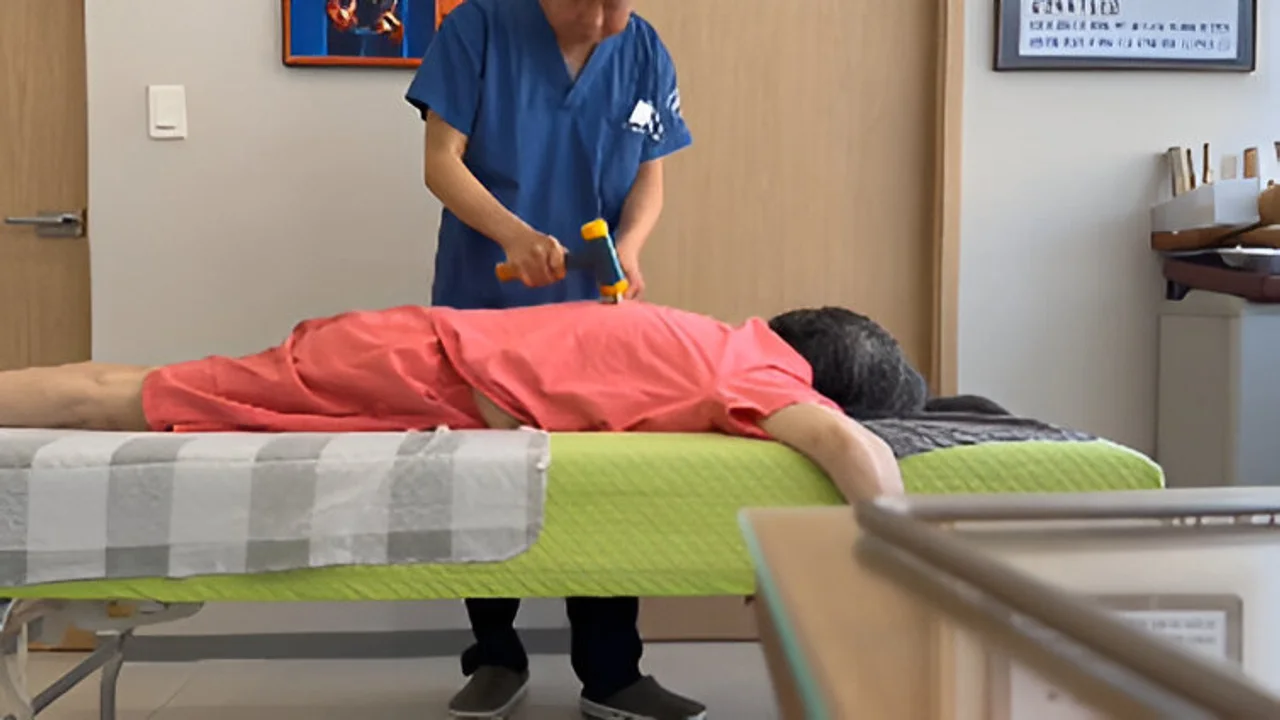
1) Whole-body evaluation
We map how you move and why the disc is irritated:
Pelvis & sacroiliac joints: rotation/tilt that overloads the lumbar segments
Hips: limited extension often forces the lower back to bend instead of hinge
Lumbar spine: which segments are compressed; nerve tension signs
Rib cage & diaphragm: shallow breathing and a stiff thorax increase lumbar load
Gait & foot loading: small foot biases twist the chain upstream
Neck & jaw (TMJ): bracing above can lock the low back below
Bring your imaging if you have it. We interpret scans in context with your mechanics.
2) Spinal Alignment Restoration Therapy (SART)
Refined in our clinic, SART is a gentle, precise method to restore space at irritated segments—like guiding a stuck drawer back on track. With disc pain, SART aims to:
Reduce segmental compression and calm irritated nerve roots
Re-center the sacrum and ilia so gait loads evenly
Down-regulate protective muscle spasm that keeps you “locked”
Patients often describe SART as “light but powerful”—no forceful thrusts.
3) Spatial spinal correction + Chuna manual therapy
Alignment is three-dimensional. Spatial spinal correction addresses front/back tilt, side shift, and rotation together so changes hold when you stand, walk, and sit. Chuna manual therapy restores joint play and soft-tissue glide around lumbar facets, sacroiliac joints, and hips—key for reducing that “pinch” on certain moves.
4) Acupuncture, moxibustion, and cupping
These Korean medicine tools reduce local inflammation, improve microcirculation, and calm the nervous system. For many with acute Herniated Disc flares, acupuncture loosens guarding so alignment work can “take.”
5) Personalized herbal support (when appropriate)
Targeted herbal formulas may support circulation and recovery. We keep prescriptions simple and adapt as your symptoms change.
6) Neuromuscular re-training you’ll actually do
Relief is step one; keeping it is the goal. We teach 2–3 micro-drills that fit your real day:
Micro-decompression breathing to stack the rib cage over the pelvis
Hip-hinge reset so you load the hips (not the low back) in daily tasks
Glute activation for sacral stability
Walk intervals matched to your tolerance (better than one long flare-inducing walk)
Your first three visits: what to expect
Visit 1 — Map & Decompress
Detailed history and movement exam
SART + spatial correction + Chuna therapy (as indicated)
Acupuncture for guarding or high pain states
One or two home drills and clear metrics: sit tolerance, stride confidence, morning stiffness, and a simple pain map
Visit 2 — Stabilize & Teach the Body
Re-test markers and refine the diagnosis
Progress manual care; adjust drills (quality over quantity)
Ergonomics for your actual day—desk, commute, childcare, lifting
Visit 3 — Make It Stick
Build endurance: walk intervals, hinge practice in real tasks
Gentle core and glute work to protect alignment
Decide the right cadence (weekly/biweekly) based on objective change
Most patients notice early changes within a few sessions—easier sitting, quieter “nerve zing,” and less morning stiffness. Everyone heals at a different pace; our job is to keep you progressing safely.
When a slipped disc overlaps with stenosis
Many patients carry both Slipped Disc and some degree of Spinal Stenosis/Lumbar Spinal Stenosis. Stenosis often shortens stride, encourages a forward-bent posture, and increases pelvic bracing—piling stress onto the disc. Because our clinic specializes in non-surgical stenosis care, we combine decompression-biased SART, spatial correction, and carefully dosed walk intervals to improve walking capacity and calm disc-related pain at the same time.
Look out for the classic pattern: walking upright hurts, leaning forward over a cart helps (the “shopping-cart relief” sign). This often points to stenosis mechanics that we can treat conservatively when appropriate.
Two short patient stories
Case 1: Teacher who feared every sneeze
Yuri, 41, presented with acute Lower back pain and calf tingling after lifting luggage. MRI: “L5–S1 Herniated Disc.” Sitting beyond 10 minutes felt impossible. We used SART for gentle decompression, Chuna to restore facet glide, acupuncture to reduce spasm, and two drills: hinge resets and micro-decompression breathing. After two weeks, sit tolerance tripled; at six weeks, she returned to full classes without flare.
Case 2: Walker with stenosis overlap
Mr. Kim, 64, had Lumbar Spinal Stenosis with a small L4–L5 bulge, reporting hip pain and a pulling ache into the pelvis when walking upright—better when leaning forward. We applied decompression-biased SART, spatial correction to re-stack the rib cage over the pelvis, and 8–10 minute walk intervals. One month later, he doubled his symptom-free walking window and climbed stairs with more confidence.
Results vary; matching treatment to the true driver is what moves the needle.
Home strategies that help
Hinge, don’t fold. Keep the spine long and bend from the hips when lifting, brushing teeth, or picking up bags.
Micro-breaks. Every 30–45 minutes, stand, exhale gently to soften the ribs, and reset weight evenly through both feet.
Heat before mobility. Ten minutes of warmth over the lower back/hips, then easy mobility—avoid aggressive stretching into pain.
Walk smart. Short, frequent walks beat one long, exhausting walk—especially when stenosis co-exists.
Sleep neutral. Side sleepers: fill the shoulder gap with your pillow. Back sleepers: small towel under knees to reduce lumbar tension.
If any self-care increases pain or causes radiating symptoms, ease off and let us tailor a progression.
Red flags: when to seek urgent evaluation
While most disc-related pain improves with conservative care, please seek prompt medical attention if you notice:
Progressive leg weakness or foot drop
Loss of bladder/bowel control, or saddle numbness
Fever, unexplained weight loss, cancer history with new severe back pain
Significant trauma or rapidly worsening neurological signs
Your safety comes first. If surgery or medical care is the smarter path, we’ll explain why and coordinate referrals quickly.
Frequently asked questions
Is recovery without surgery really possible for my age?
Often, yes. We see improvement across ages when care is precise and dosed to your capacity. The goal is steady, sustainable change, not heroic workouts.
Will you “crack” my back?
Our default is gentle. SART and spatial spinal correction rely on precise, guided releases. Some Chuna techniques create joint release, but aggressive thrusting is not our baseline.
How many sessions will I need?
It depends on duration and severity. Many patients notice early shifts within a few visits. We track sit tolerance, walking intervals, and morning stiffness so progress is visible.
More Medical Articles
Continue reading clinical insights from Banpo Newborn Korean Medicine Clinic.

Why Seoul is the Global Hub for Minimally Invasive Vertigo Treatment
Dizziness and vertigo are among the most common reasons for hospital visits in South Korea, affecting nearly 16.7% of the adult population annually according to the Korea National Health and Nutrition Examination Survey (KNHANES).
Learn More

Tinnitus Relief in Seoul: Multidisciplinary Upper Cervical Care
For many, the sound of silence is replaced by a persistent ringing, buzzing, or hissing. In South Korea, this is more than an individual annoyance; it is a significant public health trend.
Learn More

Success Rates of SART for OPLL Compared to Standard Laminectomy in Korea
The prevalence of Ossification of the Posterior Longitudinal Ligament (OPLL) in East Asian populations, particularly in South Korea, is significantly higher than in Western countries, affecting approximately 2% to 4% of the population according to nationwide...
Learn More