SART Whole-Body Spinal Alignment, Chuna Therapy & International Patient Concierge
30+ Years Clinical Experience
en-US

Korean Medicine Guide
Think Your Baby Has Torticollis? Early Action Makes All the Difference
Worried your baby has torticollis? Discover early signs, effective treatments, and how quick action supports healthy neck development.
Schedule a ConsultationThink Your Baby Has Torticollis? Early Action Makes All the Difference
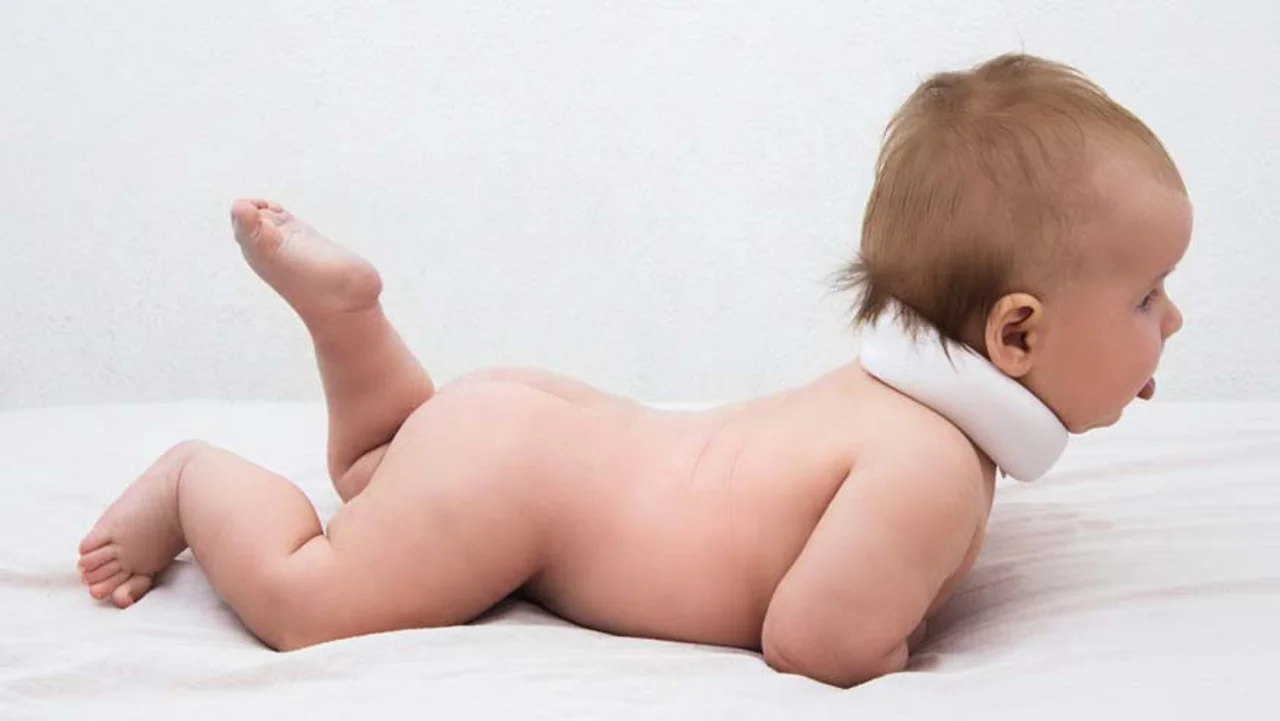
If you’re reading this because you’ve noticed your baby tilting their head to one side, struggling to turn their neck evenly, or favoring a particular nursing position, you’re not alone. At Banpo Newborn Korean Medicine Clinic here in Seoul, we meet many parents who share the same concerns—usually accompanied by worry, guilt, or confusion about whether something is “wrong.”
To be honest, most parents don’t realize their baby has torticollis until small patterns begin to show: a persistent head tilt, a flat spot developing on one side of the skull, difficulty tracking objects symmetrically, or fussiness when turning their head in a particular direction. These early signs matter, not because they signal something severe, but because early action is truly what makes the biggest difference in outcomes.
Torticollis is extremely treatable—especially in infants. And the earlier we address it, the faster and more completely babies recover.
At Banpo Newborn, where we have supported families for more than 30 years, we focus deeply on gentle, non-invasive techniques rooted in Korean medicine, pediatric Chuna therapy, and our clinic’s spatial alignment principles. With the right interventions, babies not only regain balanced mobility but also develop healthier posture and neurological patterns that support their growth long into childhood.
What Exactly Is Infant Torticollis?
Infant torticollis, also called congenital muscular torticollis, usually develops when one of the neck muscles—most often the sternocleidomastoid—is shortened or tense, causing the baby’s head to tilt to one side while rotating to the opposite direction. Some babies develop torticollis after birth due to preferred sleeping positions or limited tummy time; others experience it from birth due to in-utero positioning or a difficult delivery.
What many parents don’t immediately realize is that this gentle neck tilt can subtly influence a baby’s overall development—affecting head shape (plagiocephaly), feeding habits, vision tracking, and even early motor milestones.
From a Korean medicine perspective, we view torticollis not simply as a mechanical issue but as a whole-body pattern. When the neck muscles tighten, surrounding fascia, shoulder mobility, and even spinal alignment compensate. This is why comprehensive evaluation is essential—not just correcting the tight muscle but supporting the baby’s entire musculoskeletal balance.
Early Detection: The Signs Parents Should Watch For

Babies can’t tell us when something feels uncomfortable, but their bodies often show us. Common signs of torticollis include:
Consistent head tilt to the same side
Preference for turning the head to one direction only
Difficulty breastfeeding on one side
Frustration during tummy time
Flat spots on the head, often due to favoring one position
Asymmetrical facial features developing over time
Uneven rolling or delayed motor skills
At our clinic, Dr. Ungjin Im often reminds parents:
“A baby’s musculoskeletal system is incredibly adaptable. We have a meaningful window in early infancy where gentle guidance can reset their alignment completely.”
That window—usually within the first 3 to 6 months—is where early action has the greatest impact.
Why Early Action Matters: The Developmental Ripple Effect
When torticollis is left unaddressed, babies may unconsciously compensate with the rest of their body. Over time, this may influence:
1. Head Shape (Plagiocephaly or Brachycephaly)
Because babies spend so much time lying down, a preference for one head position can lead to flattening on one side. Once this flattening becomes pronounced, it takes longer to correct.
2. Motor Skill Development
A limited ability to rotate or lift the head can delay rolling, crawling, or hand-eye coordination. Babies build their neurological pathways through repetitive, symmetrical movement.
3. Overall Posture
Even into childhood, untreated torticollis may contribute to shoulder imbalance, scoliosis patterns, or TMJ tension—an area in which our clinic specializes.
4. Feeding Challenges
Infants often struggle to nurse comfortably on one side if their neck rotation is restricted, causing stress for both baby and parents.
The good news? When addressed early, nearly all of these effects can be prevented or reversed.
At Banpo Newborn, we consistently see infants make significant improvements within weeks—not months—when intervention begins early.
How Korean Medicine Approaches Infant Torticollis
Many parents are surprised by how gentle pediatric treatments are. There is no “cracking,” no forceful stretching, and no discomfort for the baby. Instead, we rely on precise alignment techniques, soft-tissue release, and subtle mobilization developed through decades of clinical practice.
1. Pediatric Chuna Therapy
Chuna therapy for infants is subtle and soothing—more like guided movement than manipulation. We use micro-adjustments to release tension in the neck, shoulder girdle, and upper spine.
Parents often comment that they are surprised by how peaceful their child is during treatment. Babies frequently fall asleep mid-session.
2. Spatial Spinal & Cranial Alignment
One of the aspects unique to our clinic is our spatial correction philosophy, pioneered by Dr. Im. Instead of treating the neck in isolation, we evaluate how the baby’s cranial shape, spinal curves, and even pelvis alignment interact.
For example, a tight SCM muscle may be connected to subtle fascial tension extending down the torso. By addressing the whole-body pattern, babies achieve more complete, lasting correction.
3. Gentle Manual Release of Neck and Facial Tissues
The connective tissue around the jaw and neck can contribute to restricted movement. Gentle release helps improve breastfeeding ability and head mobility.
4. Supportive Herbal Compresses (When Appropriate)
Warm herbal compresses may be used to relax superficial tension and support circulation. Only very mild formulations appropriate for infants are used, and only when necessary.
5. Parent Education
Almost every family we work with emphasizes how empowering the education piece is. We guide parents on:
safe and effective stretching
proper positioning during feeding
tummy time variations to encourage symmetry
how to hold or carry the baby to promote balanced development
Parents become active partners in the healing process—which accelerates recovery tremendously.
What a Typical Treatment Journey Looks Like at Banpo Newborn

No two babies are the same, but most families follow a general progression:
Step 1: Comprehensive Assessment
We evaluate:
head and neck range of motion
symmetry of facial and cranial features
spinal and shoulder alignment
muscle tone
feeding behavior
developmental milestones
This gives us a complete picture—not just the visible tilt.
Step 2: Weekly or Bi-Weekly Gentle Treatments
Because infants respond quickly, treatment sessions are short but highly specialized. Many babies need only 4–8 sessions for noticeable improvement, though more complex cases may require longer care.
Step 3: Home Care Guidance
We provide individualized routines that integrate into daily life:
how to encourage turning toward the non-preferred side
ways to support balanced tummy time
how to adjust sleeping and play positions
feeding strategies for symmetry
We keep instructions simple so parents feel confident rather than overwhelmed.
Step 4: Monitoring Growth & Development
As the baby’s mobility and posture improve, we adjust the treatment plan. In many cases, once balance is restored, only periodic check-ins are needed to support growth spurts or prevent recurrence.
A Real Story from Our Clinic: “His Tilt Disappeared in Weeks”
One mother who visited us shared that she had noticed her son always slept with his head turned to the right. She assumed it was simply a preference—until she started seeing flattening on the right side of his head.
During her consultation at Banpo Newborn, we confirmed mild torticollis and asymmetrical muscle tension. With just a handful of gentle pediatric Chuna sessions, along with daily home exercises, her son began turning freely to both sides. The flat spot gradually rounded out, and his head tilt disappeared entirely.
Her biggest regret, she said, was waiting as long as she did before seeking help—something we hear often.
This is why early action matters so deeply.
Evidence That Early Intervention Works
Multiple clinical studies and pediatric guidelines emphasize the importance of early treatment for torticollis. Research consistently shows:
Babies treated before 3 months of age recover significantly faster.
Early therapy reduces the need for helmet therapy for flat head syndrome.
Motor development improves when symmetry is restored early.
Delayed treatment is associated with longer rehabilitation and higher risk of persistent imbalance.
Our 30 years of clinical experience at Banpo Newborn align with these findings: the earlier we begin, the quicker and more complete the improvement.
How Parents Can Help at Home
Here are gentle, practical steps that support your baby’s healing:
1. Encourage Turning Toward the Non-Preferred Side
Place toys, lights, or yourself on the side the baby avoids. Even small visual cues help retrain neck mobility.
2. Increase Tummy Time
This strengthens neck, shoulder, and core muscles, promoting balanced development. Even short, frequent sessions matter.
3. Alternate Feeding Positions
Whether breastfeeding or bottle-feeding, switch sides to prevent one-sided neck preference.
More Medical Articles
Continue reading clinical insights from Banpo Newborn Korean Medicine Clinic.

Why Seoul is the Global Hub for Minimally Invasive Vertigo Treatment
Dizziness and vertigo are among the most common reasons for hospital visits in South Korea, affecting nearly 16.7% of the adult population annually according to the Korea National Health and Nutrition Examination Survey (KNHANES).
Learn More

Tinnitus Relief in Seoul: Multidisciplinary Upper Cervical Care
For many, the sound of silence is replaced by a persistent ringing, buzzing, or hissing. In South Korea, this is more than an individual annoyance; it is a significant public health trend.
Learn More

Success Rates of SART for OPLL Compared to Standard Laminectomy in Korea
The prevalence of Ossification of the Posterior Longitudinal Ligament (OPLL) in East Asian populations, particularly in South Korea, is significantly higher than in Western countries, affecting approximately 2% to 4% of the population according to nationwide...
Learn More