SART Whole-Body Spinal Alignment, Chuna Therapy & International Patient Concierge
30+ Years Clinical Experience
en-US

Korean Medicine Guide
TMJ Disorder in Teens: Early Signs & Natural Interventions
TMJ disorder in teens explained—early warning signs, causes, and natural, non-invasive interventions to prevent long-term jaw pain and dysfunction.
Schedule a ConsultationTMJ Disorder in Teens: Early Signs & Natural Interventions
By Banpo Newborn Korean Medicine Clinic, Seoul
Have you ever noticed a teenager frequently rubbing their jaw, complaining of headaches, or avoiding certain foods because “it hurts to chew”? To be honest, many parents and even teens themselves dismiss these signs as temporary stress or growing pains. But in our clinical experience at Banpo Newborn Korean Medicine Clinic, these can be early signals of TMJ disorder—a condition that is increasingly common among adolescents.
TMJ disorder is often thought of as an adult problem, linked to work stress or long hours at a desk. However, over the past decade, we have seen a steady rise in teenage patients struggling with jaw pain, clicking sounds, facial asymmetry, and even chronic neck and shoulder tension. The good news is this: when TMJ disorder is recognized early in teens, natural and non-invasive interventions can be remarkably effective.
This article explores what TMJ disorder looks like in teenagers, why it develops during this critical growth period, and how holistic Korean medicine approaches can support long-term healing—without surgery or aggressive treatments.
What Is TMJ Disorder, and Why Does It Affect Teens?
The temporomandibular joint (TMJ) connects the jawbone to the skull, working like a complex hinge that allows us to talk, chew, yawn, and express emotions. When this joint and the surrounding muscles fall out of balance, it leads to temporomandibular joint disorder (TMD).
In teens, TMJ disorder often develops quietly. Unlike adults, adolescents may not describe pain clearly. Instead, the condition shows up as discomfort, fatigue, or behavioral changes.
Why adolescence is a vulnerable period
Teenage years are marked by rapid physical and neurological development. During this time:
The jaw, facial bones, and spine are still growing
Hormonal changes affect muscle tone and ligament flexibility
Academic pressure and smartphone use increase jaw clenching and forward-head posture
If the jaw develops on top of a misaligned cervical spine or uneven posture, the TMJ must compensate. Over time, this compensation leads to dysfunction.
At Banpo Newborn, we often explain it this way:
The jaw does not exist in isolation. It sits on the spine, and the spine shapes how the jaw functions.
Early Signs of TMJ Disorder in Teens (Often Overlooked)
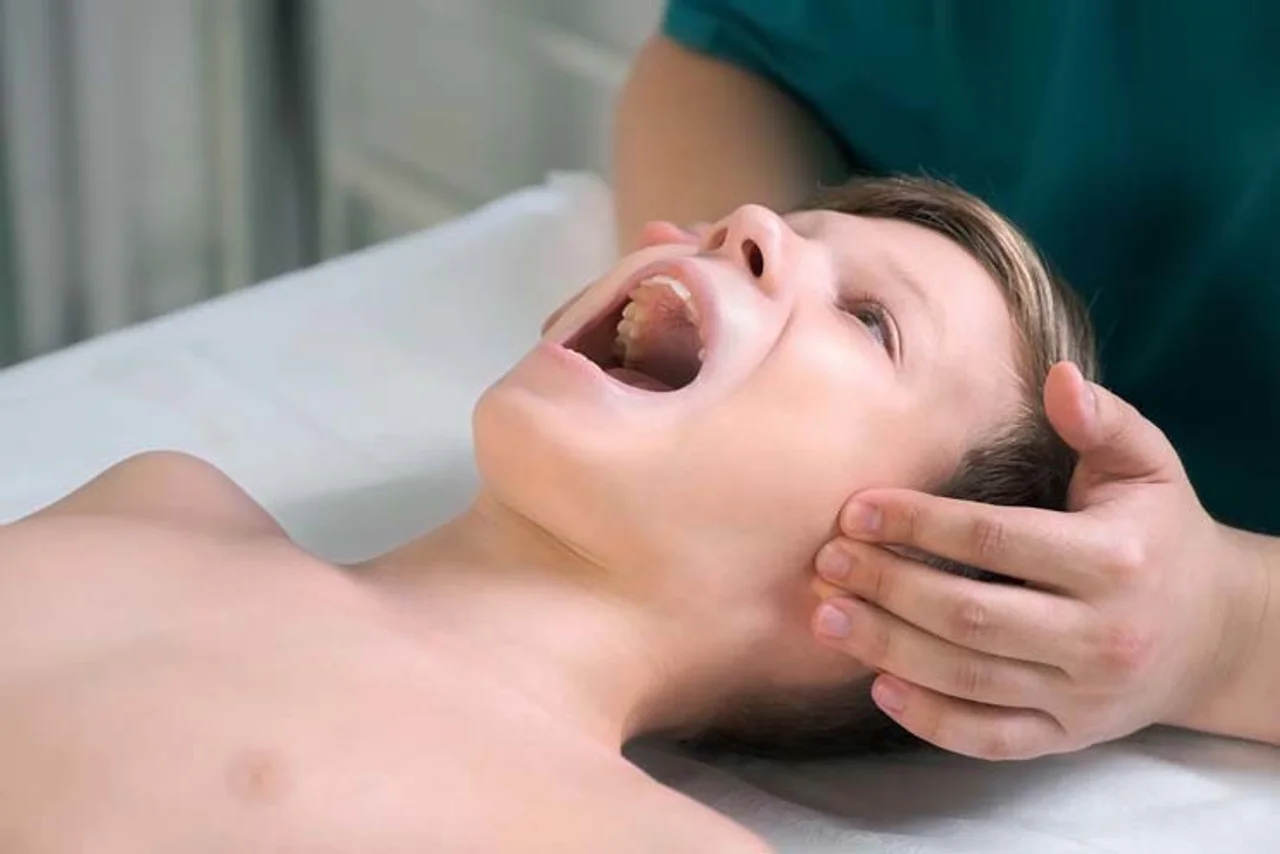
One of the biggest challenges with TMJ disorder in adolescents is that the early signs are subtle. Parents frequently tell us, “We thought it was just stress from studying.”
Here are some warning signs to watch for:
1. Jaw sounds or limited movement
Clicking, popping, or grinding sounds when opening the mouth
Difficulty opening wide, especially in the morning
Jaw deviation to one side when opening
These sounds are not “normal growing noises.” They indicate disc displacement or muscular imbalance around the TMJ.
2. Frequent headaches or facial pain
Many teens with TMJ disorder complain of:
Tension headaches around the temples
Pain behind the eyes
A dull ache in the cheeks or jawline
Because these symptoms mimic migraines or eye strain, TMJ is often missed.
3. Neck, shoulder, and upper back tension
The jaw and neck are neurologically connected. When the TMJ is strained, the cervical spine compensates. This often appears as:
Stiff neck
Rounded shoulders
Habitual stretching or cracking of the neck
4. Changes in posture or facial symmetry
Parents may notice:
One shoulder sitting higher than the other
Head tilting slightly to one side
Subtle facial asymmetry developing over time
In teens, these changes are especially important because posture patterns can become permanent if not corrected early.
5. Stress-related habits
Common teenage behaviors that aggravate TMJ include:
Teeth clenching during exams
Nail biting
Excessive gum chewing
Prolonged smartphone use with a forward head posture
On their own, these habits seem harmless. Combined with growth-related instability, they can trigger TMJ disorder.
The Hidden Connection: TMJ, Spine, and the Nervous System
One of the most misunderstood aspects of TMJ disorder is that it is not just a jaw problem.
At Banpo Newborn Korean Medicine Clinic, led by Dr. Ungjin Im, we approach TMJ as part of the body’s structural and neurological network. Through decades of clinical experience, Dr. Im has observed that most TMJ disorders—especially in teens—are linked to spinal misalignment, particularly in the upper cervical region.
Why the spine matters
The TMJ shares muscular and neurological pathways with:
The cervical spine (C1–C3)
The trigeminal nerve
The autonomic nervous system
When spinal alignment is off, the body adapts by altering jaw position. Over time, this leads to muscle overuse, disc stress, and pain.
Think of it like a camera tripod:
If one leg is shorter, the camera tilts. Adjusting only the camera head (the jaw) won’t fix the imbalance. You must correct the base (the spine).
Why Early Intervention Is Crucial for Teens
TMJ disorder in teens is not something to “wait and see.” Unlike adults, adolescents have a powerful advantage: plasticity. Their bones, muscles, and nervous systems are still adaptable.
Early, natural intervention can:
Prevent chronic pain in adulthood
Reduce the need for orthodontic or surgical procedures later
Support balanced facial and spinal development
Improve concentration, sleep quality, and emotional well-being
We have seen many teenage patients regain normal jaw function within months when care is started early—often avoiding years of discomfort.
Natural Interventions for TMJ Disorder in Teens

At Banpo Newborn Korean Medicine Clinic, we prioritize non-invasive, personalized care. Every teenage patient receives a thorough evaluation, not just of the jaw, but of posture, spinal alignment, breathing patterns, and lifestyle habits.
1. Spinal Alignment Restoration Therapy (SART)
SART is a core treatment developed through Dr. Im’s clinical philosophy. Rather than forceful manipulation, it focuses on:
Gentle correction of spinal misalignments
Restoring balance between the spine and jaw
Allowing the TMJ to settle into its natural position
For teens, this approach is especially safe and effective because it works with the body’s growth process, not against it.
2. TMJ-focused Chuna Therapy
Chuna therapy is a traditional Korean manual therapy adapted with modern anatomical understanding. For TMJ disorder, it helps by:
Releasing tight jaw and neck muscles
Improving joint mobility
Enhancing blood and nerve flow to the face and head
Treatment is always adjusted to the teen’s age and sensitivity level.
3. Postural and habit correction
Natural intervention doesn’t stop at the clinic. We guide teens and parents on:
Proper smartphone and study posture
Reducing jaw-clenching habits
Simple breathing techniques to calm the nervous system
Small daily changes can dramatically reduce TMJ strain.
4. Nervous system regulation
Many teens with TMJ disorder live under constant stress—academic pressure, social expectations, lack of rest. Korean medicine views this as a systemic imbalance, not a personal weakness.
By supporting spinal alignment and muscular relaxation, the nervous system can shift out of chronic “fight or flight,” allowing the jaw to heal.
Real-Life Insight from Clinical Experience
Over the years, we’ve treated many teenage patients who arrived feeling frustrated or misunderstood. One common story goes like this: a student with chronic headaches, told everything “looks normal” on scans, yet pain persists.
What changes their trajectory is not aggressive treatment, but being seen as a whole person—body, posture, habits, and emotions included.
As Dr. Im often says:
“When alignment is restored, the body remembers how to heal itself.”
When Should Parents Seek Help?
If a teen experiences jaw discomfort lasting more than a few weeks, or if symptoms seem to worsen during stressful periods, it’s time for a proper evaluation.
Early assessment doesn’t mean committing to long-term treatment. It simply means understanding what the body is signaling—before the condition becomes chronic.
A Gentle Path Forward
TMJ disorder in teens is more common than many realize, but it doesn’t have to define their future health. With early recognition and natural, spine-centered care, adolescents can recover fully and continue growing without pain.
At Banpo Newborn Korean Medicine Clinic, we believe in empowering young patients with safe, evidence-informed, and compassionate care. If you’re considering a holistic approach to TMJ discomfort—one that respects the body’s natural intelligence—we’re here to help.
Healing is possible, especially when it begins early.
More Medical Articles
Continue reading clinical insights from Banpo Newborn Korean Medicine Clinic.

Why Seoul is the Global Hub for Minimally Invasive Vertigo Treatment
Dizziness and vertigo are among the most common reasons for hospital visits in South Korea, affecting nearly 16.7% of the adult population annually according to the Korea National Health and Nutrition Examination Survey (KNHANES).
Learn More

Tinnitus Relief in Seoul: Multidisciplinary Upper Cervical Care
For many, the sound of silence is replaced by a persistent ringing, buzzing, or hissing. In South Korea, this is more than an individual annoyance; it is a significant public health trend.
Learn More

Success Rates of SART for OPLL Compared to Standard Laminectomy in Korea
The prevalence of Ossification of the Posterior Longitudinal Ligament (OPLL) in East Asian populations, particularly in South Korea, is significantly higher than in Western countries, affecting approximately 2% to 4% of the population according to nationwide...
Learn More