SART Whole-Body Spinal Alignment, Chuna Therapy & International Patient Concierge
30+ Years Clinical Experience
en-US

Korean Medicine Guide
TMJ Disorder vs. TMJ Syndrome: What’s Causing Your Jaw Pain?
TMJ disorder vs. TMJ syndrome explained—learn key differences, causes of jaw pain, symptoms, diagnosis, and effective treatment options.
Schedule a ConsultationTMJ Disorder vs. TMJ Syndrome: What’s Causing Your Jaw Pain?
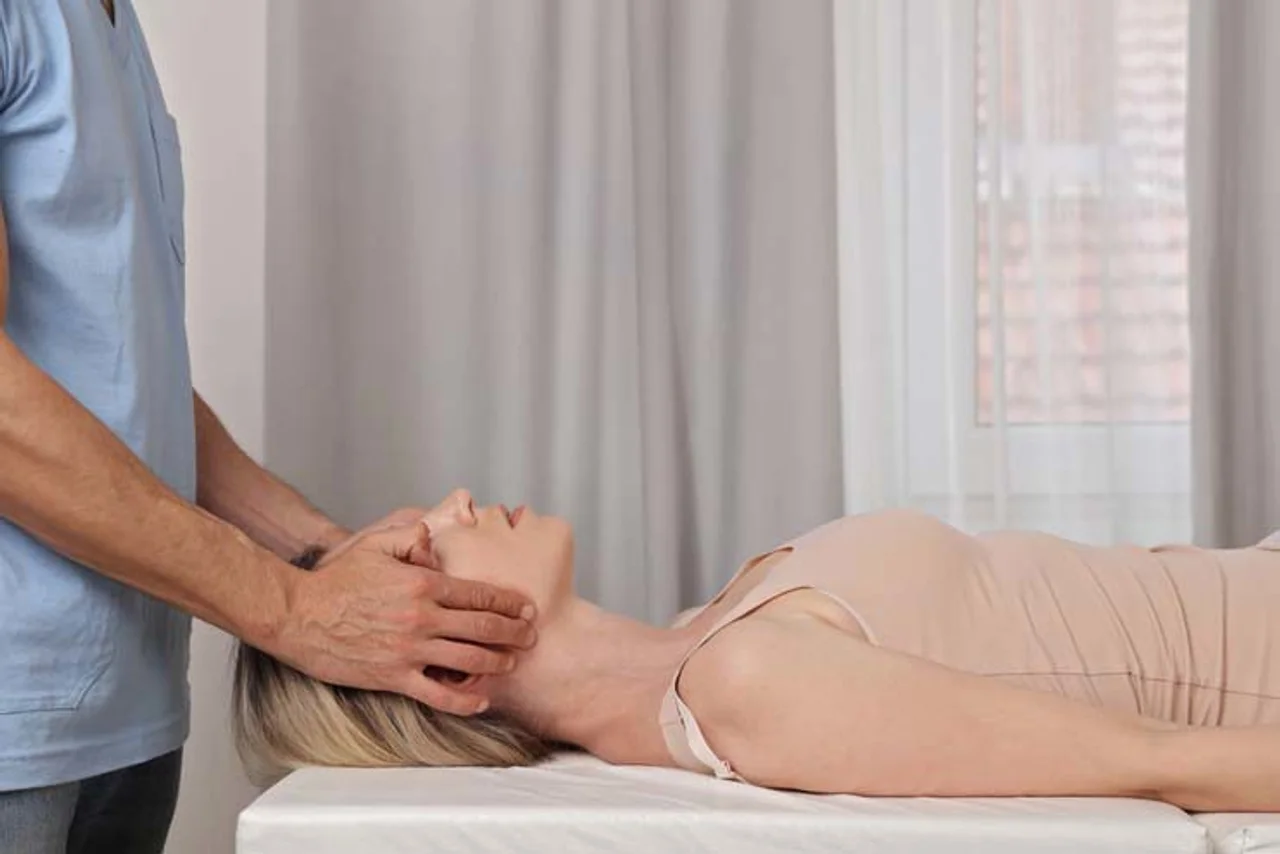
Have you ever noticed a dull ache near your ear when you chew, or felt a clicking sound in your jaw every time you open your mouth? Maybe you wake up with jaw stiffness, headaches, or unexplained neck and shoulder pain. Many people live with these symptoms for years, assuming they’re just part of stress or aging. In reality, these signs often point to a problem with the temporomandibular joint—commonly referred to as TMJ.
At Banpo Newborn Korean Medicine Clinic, we meet patients every week who say, “I’ve been told I have TMJ, but no one explained what that really means.” Some were diagnosed with TMJ disorder, others with TMJ syndrome, and many are confused about whether these are the same thing—or if the difference even matters.
To be honest, it does matter. Understanding the distinction can be the first step toward effective, lasting relief.
In this article, we’ll break down TMJ disorder vs. TMJ syndrome, explain what’s actually causing your jaw pain, and share how a holistic, non-invasive approach rooted in Korean medicine can address not just your jaw, but your entire body.
Understanding the TMJ: A Small Joint With a Big Role
The temporomandibular joint (TMJ) connects your lower jaw (mandible) to your skull, right in front of your ears. It’s one of the most complex joints in the human body, allowing you to talk, chew, yawn, and express emotion.
Unlike simpler hinge joints, the TMJ combines hinge and sliding motions, coordinated by muscles, ligaments, discs, and nerves. This complexity makes it highly functional—but also vulnerable.
When something disrupts this delicate balance, pain and dysfunction can quickly spread beyond the jaw.
TMJ Disorder vs. TMJ Syndrome: Are They the Same?
The Short Answer: Not Exactly
Although the terms are often used interchangeably, TMJ disorder and TMJ syndrome describe slightly different concepts.
TMJ Disorder (TMD) refers to a specific structural or functional problem affecting the temporomandibular joint or surrounding muscles.
TMJ Syndrome describes a collection of symptoms associated with jaw dysfunction, often involving multiple systems such as the neck, spine, and nervous system.
Think of it this way:
TMJ disorder is about what’s wrong.
TMJ syndrome is about how it shows up in your life.
Understanding this difference helps explain why some treatments fail when they focus only on the jaw itself.
What Is TMJ Disorder?
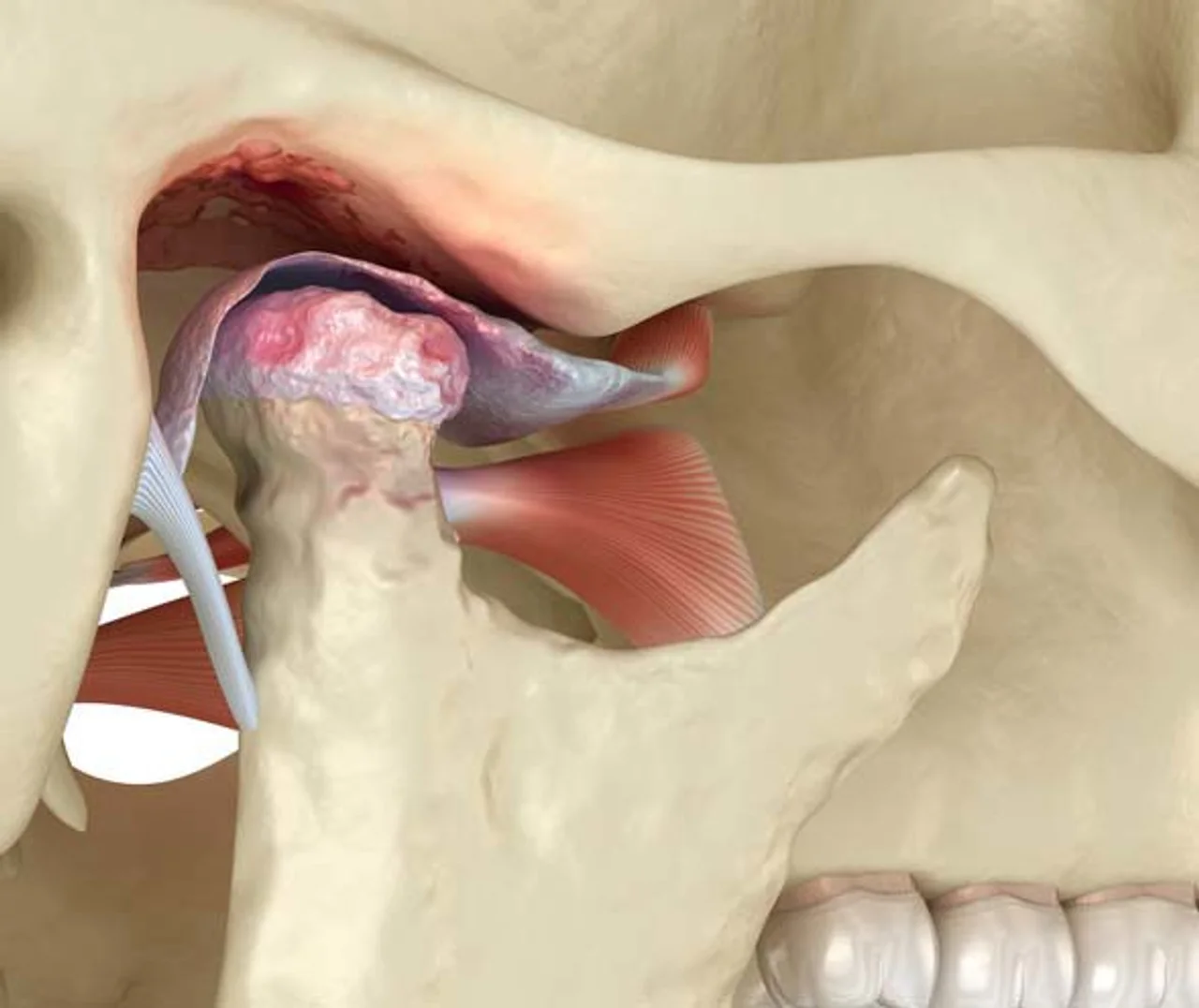
TMJ disorder is a clinical diagnosis that points to identifiable dysfunction in the jaw joint or muscles. Common causes include:
1. Disc Displacement
The TMJ contains a small cartilage disc that cushions movement. If this disc slips out of position, it can cause clicking, locking, or pain.
2. Degenerative Joint Changes
Arthritis or chronic wear-and-tear can damage joint surfaces, leading to inflammation and stiffness.
3. Muscle Imbalance or Overuse
Chronic clenching, grinding (bruxism), or excessive jaw tension can overwork the muscles that control jaw movement.
4. Trauma
Accidents, dental procedures, or even long-term poor posture can disrupt jaw alignment.
Patients with TMJ disorder often experience:
Localized jaw pain
Clicking or popping sounds
Difficulty opening the mouth fully
Pain when chewing
However, many patients are surprised to learn that jaw structure alone rarely tells the full story.
What Is TMJ Syndrome?
TMJ syndrome refers to the broader pattern of symptoms that arise when jaw dysfunction affects the entire body.
At Banpo Newborn, we often describe TMJ syndrome as a whole-body condition with the jaw at its center.
Symptoms may include:
Chronic headaches or migraines
Neck and shoulder stiffness
Facial pain or pressure
Ear fullness, tinnitus, or dizziness
Upper back pain
Even lower back or hip imbalance
In these cases, the jaw pain is only one piece of a larger puzzle.
Why Jaw Problems Rarely Stay in the Jaw
One of the most overlooked facts about TMJ issues is this:
The jaw does not function independently.
The TMJ is neurologically and structurally connected to:
The cervical spine (neck)
The cranial nerves
The posture of the shoulders and pelvis
Dr. Ungjin Im often explains it this way:
“When the jaw is misaligned, the body adapts. But adaptation over time becomes compensation—and compensation eventually becomes pain.”
If your jaw sits even a few millimeters off balance, the neck muscles adjust. Then the shoulders shift. The spine rotates. Over time, this chain reaction creates widespread discomfort that no mouthguard alone can fix.
TMJ Disorder vs. TMJ Syndrome: A Practical Comparison
Aspect | TMJ Disorder | TMJ Syndrome |
|---|---|---|
Focus | Jaw joint or muscles | Whole-body symptoms |
Cause | Structural or functional issue | Systemic imbalance |
Symptoms | Local jaw pain, clicking | Headaches, neck, back pain |
Treatment | Often localized | Requires holistic approach |
This is why many patients feel frustrated after years of limited improvement—they were treated for TMJ disorder, but they were living with TMJ syndrome.
Common Triggers That Lead to TMJ Syndrome
1. Poor Posture
Smartphone use, desk work, and forward head posture are major contributors in modern life. In Korea especially, long hours of study or work often lead to neck and jaw tension.
2. Chronic Stress
Stress causes unconscious clenching. Over time, this strains jaw muscles and alters alignment.
3. Spinal Misalignment
The cervical spine directly influences jaw position. Even subtle spinal imbalances can trigger TMJ symptoms.
4. Unbalanced Dental Interventions
While dental treatments are sometimes necessary, they can unintentionally alter bite alignment if not coordinated with musculoskeletal care.
Why Conventional Treatments Often Fall Short
Many TMJ patients are offered:
Painkillers
Muscle relaxants
Mouthguards
In severe cases, surgery
These approaches may reduce symptoms temporarily, but they often fail to address the root cause—especially in TMJ syndrome.
To be honest, we see many patients who say, “My scans looked normal, but I’m still in pain.” That’s because imaging alone doesn’t reveal functional imbalance across the spine and nervous system.
A Korean Medicine Perspective: Treating the Whole System

At Banpo Newborn Korean Medicine Clinic, we approach TMJ pain through the lens of structural balance and functional harmony.
Rather than isolating the jaw, we evaluate:
Cervical and thoracic spine alignment
Pelvic balance
Muscular tension patterns
Nervous system regulation
This is where our specialized therapies come into play.
TMJ Care Through Spinal Alignment Restoration Therapy (SART)
One of Dr. Im’s pioneering methods, Spinal Alignment Restoration Therapy (SART), focuses on restoring the body’s natural alignment from the spine outward.
When spinal balance improves:
Jaw tension decreases
Nerve irritation is reduced
Blood flow and muscle coordination normalize
Many TMJ patients report improvement in headaches and neck pain even before jaw symptoms fully resolve—a sign that the body is recalibrating as a whole.
Chuna Therapy for TMJ Syndrome
Chuna therapy, a form of manual Korean medicine, is particularly effective for TMJ syndrome.
Using gentle, precise techniques, Chuna therapy:
Releases deep muscular tension
Corrects joint misalignments
Encourages natural self-healing
Unlike aggressive manipulation, Chuna is designed to work with the body, making it safe and suitable even for chronic or sensitive patients.
Real Patient Experiences: More Than Jaw Relief
One patient in her 40s came to our clinic after years of jaw pain and migraines. She had tried mouthguards, physical therapy, and medication with limited success.
After a comprehensive evaluation, we discovered significant cervical spine misalignment. Through coordinated TMJ-focused Chuna therapy and spinal correction, her headaches reduced dramatically within weeks—and her jaw pain followed.
She later said, “For the first time, I felt like someone was treating the cause, not just the pain.”
How to Know Which One You Have
If you’re wondering whether you’re dealing with TMJ disorder or TMJ syndrome, consider these questions:
More Medical Articles
Continue reading clinical insights from Banpo Newborn Korean Medicine Clinic.

Why Seoul is the Global Hub for Minimally Invasive Vertigo Treatment
Dizziness and vertigo are among the most common reasons for hospital visits in South Korea, affecting nearly 16.7% of the adult population annually according to the Korea National Health and Nutrition Examination Survey (KNHANES).
Learn More

Tinnitus Relief in Seoul: Multidisciplinary Upper Cervical Care
For many, the sound of silence is replaced by a persistent ringing, buzzing, or hissing. In South Korea, this is more than an individual annoyance; it is a significant public health trend.
Learn More

Success Rates of SART for OPLL Compared to Standard Laminectomy in Korea
The prevalence of Ossification of the Posterior Longitudinal Ligament (OPLL) in East Asian populations, particularly in South Korea, is significantly higher than in Western countries, affecting approximately 2% to 4% of the population according to nationwide...
Learn More