SART Whole-Body Spinal Alignment, Chuna Therapy & International Patient Concierge
30+ Years Clinical Experience
en-US


Korean Medicine Guide
TMJ Is Only Caused by Chewing Habits – True or False?
TMJ isn’t just from chewing habits. Learn the real causes, signs, and proven treatment options for TMJ disorder.
Schedule a ConsultationTMJ Is Only Caused by Chewing Habits – True or False?

If you’ve ever experienced jaw pain, clicking sounds when you open your mouth, or a stiff feeling around your face and neck, you’ve probably wondered: “Is this because I chew too much on one side? Did I cause this myself?”
At our clinic in Banpo, we hear this concern almost every day. Many patients walk in believing their long-standing TMJ discomfort began simply because they chewed gum excessively or always favored one side when eating.
To be honest, chewing habits can influence TMJ (temporomandibular joint) function, but the idea that they are the only cause is far from the truth. TMJ disorders are far more complex—often involving the spine, posture, muscular imbalances, stress patterns, and even neurological responses.
The jaw is not an isolated structure floating freely on the face; it is intimately connected to the cervical spine, the pelvis, the cranial system, and the body’s overall alignment. In Korean medicine, we have long understood this interconnectedness. Over the past 30+ years at Banpo Newborn Korean Medicine Clinic, we’ve treated thousands of patients with TMJ issues, and one consistent pattern emerges: TMJ disorders rarely originate from a single cause.
In this article, we’ll explore what truly causes TMJ disorders, why chewing habits get more attention than they deserve, and how whole-body treatments—especially non-surgical, alignment-focused approaches—can restore comfort and function.
Understanding the TMJ: Far More Than a “Jaw Problem”
The temporomandibular joint is one of the most complex joints in the human body. It acts as a hinge, a slider, and a stabilizer—all at the same time. Every time you speak, yawn, bite, or swallow, the TMJ coordinates movement across multiple muscles, nerves, and bones.
What many people don’t realize is that the TMJ connects directly to:
The cervical spine (neck vertebrae)
The cranial bones and facial structure
The upper back and shoulder girdle
Neuromuscular pathways that affect posture and tension patterns
When one part of this system becomes misaligned, the jaw compensates—often resulting in pain, clicking, deviation, or muscle fatigue.
This is why TMJ pain cannot be explained by chewing habits alone. Chewing may aggravate an existing imbalance, but it is rarely the root cause.
Why Chewing Habits Became the “Blamed Culprit”

Before modern imaging, motion analysis, and alignment-based diagnostics, it was easy to attribute TMJ problems to something visible and simple: chewing.
“You chew gum too much.”
“You only chew on one side.”
“You grind your teeth at night.”
These explanations became popular because they were intuitive and easy for patients to understand. And while they’re not wrong, they’re incomplete.
Chewing habits can worsen TMJ symptoms in two main ways:
Overuse of certain muscles, leading to tension and imbalance.
Repetitive asymmetrical movement, which stresses an already misaligned jaw.
But here’s the key point:
For chewing habits to actually cause TMJ disorder on their own, the jaw and spine would have to be perfectly aligned beforehand—and very few people have perfect alignment.
At Banpo Newborn, when we examine patients who believe their TMJ was caused by chewing, we almost always find deeper underlying structural issues.
The Real Causes of TMJ Disorders: A Whole-Body Perspective
Based on decades of clinical experience and the principles of Korean medicine, TMJ disorders typically arise from a combination of factors. Let’s look at the most common ones.
1. Cervical Spine Misalignment (Neck Alignment Issues)
One of the most overlooked causes is atlas (C1) and axis (C2) misalignment.
Because the TMJ is so closely connected to the upper cervical region, even small shifts or rotations in the neck can create tension patterns that radiate into the jaw.
Patients often describe symptoms such as:
Ear fullness
Dizziness
Neck stiffness
Jaw deviation when opening
Facial tightness
In fact, Dr. Ungjin Im often explains to patients that the TMJ cannot stabilize properly if the cervical spine is tilted or rotated, just as a door cannot close correctly if its frame is crooked.
2. Postural Imbalances (Forward Head Posture and Pelvic Tilt)
Modern lifestyle habits—smartphone use, long hours at desks, and sedentary routines—have dramatically increased TMJ issues.
When the head leans forward, the jaw pushes backward to compensate. This strains the joint and forces surrounding muscles to work excessively.
At our clinic, we commonly find:
Rounded shoulders
Pelvic tilt
Asymmetrical hip positioning
These contribute to a chain reaction throughout the body, eventually reaching the jaw.
It’s like a tree whose trunk begins to tilt—eventually, the branches (the jaw) must adapt, even if the problem started much lower.
3. Stress and Clenching Patterns
Stress affects the jaw more than most people realize.
Under emotional or physical stress, many people unconsciously clench or grind their teeth. This is called bruxism, and while it’s often lumped together with “chewing habits,” it’s fundamentally different.
Bruxism is a neurological and emotional response, not a behavioral habit like gum chewing.
Signs include:
Worn-down teeth
Morning jaw fatigue
Headaches
TMJ clicking or popping
When the nervous system remains in a stressed state, the jaw stays in a defensive muscular pattern, making symptoms chronic.
4. Previous Injuries (Whiplash, Sports Trauma, Facial Impact)
Many TMJ patients have experienced:
Car accidents
Sports injuries
Falls
Dental procedures requiring prolonged mouth opening
Even if these incidents happened years ago, they can leave residual imbalances in the spine or jaw that surface much later.
One of our patients at Banpo Newborn described her TMJ pain as “mysterious and sudden.” Only after careful examination did we find that an old whiplash injury had subtly rotated her cervical vertebrae. Once corrected, her jaw pain gradually resolved.
5. Breathing Pattern Disorders (Mouth Breathing)
Chronic mouth breathing shifts the jaw downward and backward, altering its resting position. Over time, this can destabilize the TMJ and affect facial development in younger patients.
We often find mouth breathing linked to:
Allergies
Sinus issues
Poor tongue posture
This is especially important to address early in adolescents.
6. Structural Imbalances of the Skull and Face
Some individuals naturally have:
Asymmetrical cheekbones
Uneven jaw angles
Different left/right muscle tone
In Korean medicine, we consider these part of the person’s constitutional pattern. Spatial spinal correction and SART (Spinal Alignment Restoration Therapy) help the body reorganize around these innate traits, allowing the jaw to function more comfortably.
So, Is TMJ Ever Caused Only by Chewing Habits?
In rare cases, yes—but only when all other factors are stable and healthy.
For example:
Someone with a naturally well-balanced spine
Good posture
No history of stress-related clenching
Strong and symmetrical facial muscles
If such a person suddenly begins chewing excessive gum or heavily favoring one side, TMJ irritation could develop.
But for most people, chewing habits trigger or worsen an existing imbalance rather than creating TMJ dysfunction from scratch.
How We Treat TMJ at Banpo Newborn Korean Medicine Clinic
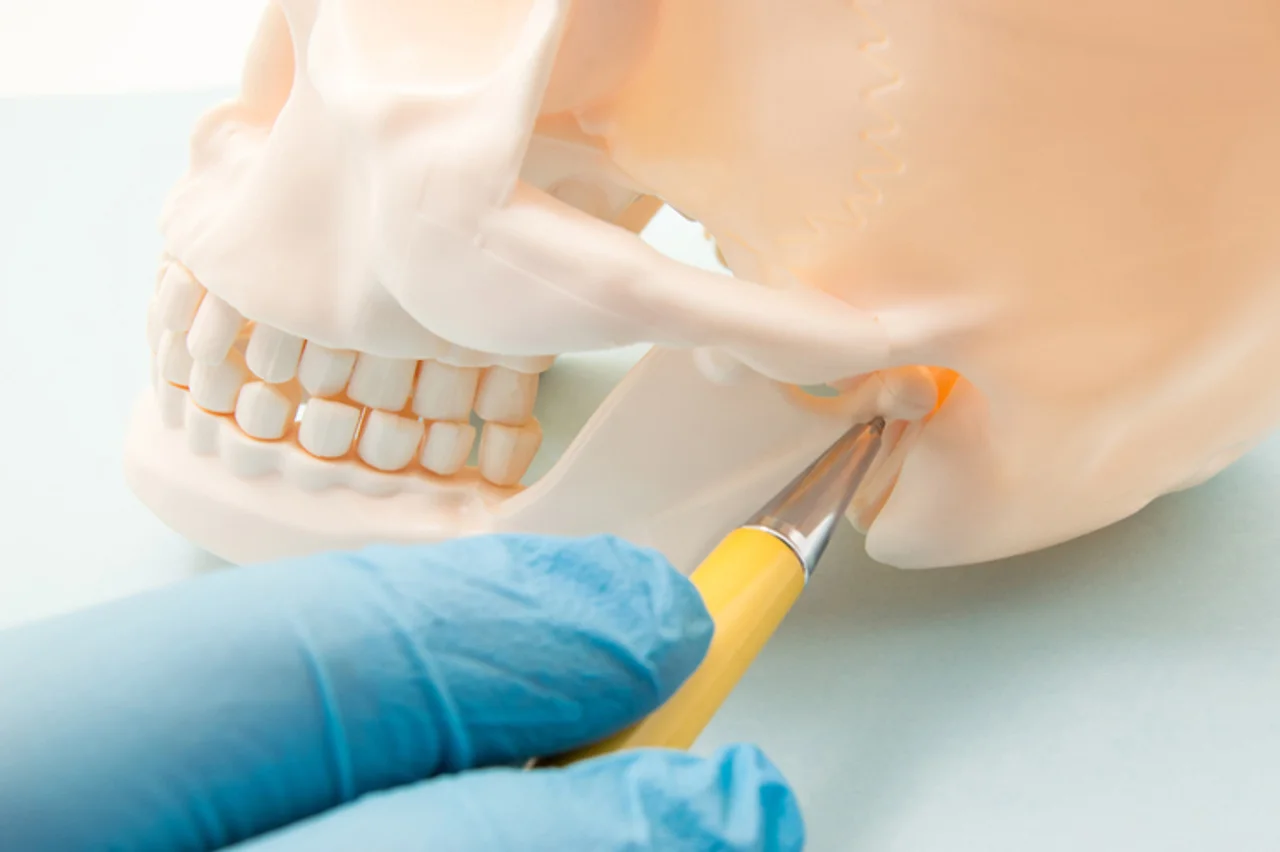
Our approach is holistic, precise, and gentle—reflecting over 30 years of clinical experience.
Rather than simply treating the jaw, we identify and correct the underlying structural and neurological patterns that keep causing the TMJ to flare up.
1. Spatial Spinal Alignment Correction
This technique evaluates how the spine sits and moves in three-dimensional space. Even slight rotations in the neck or upper back can shift the jaw’s position.
By restoring proper alignment, the TMJ can move naturally again—often reducing symptoms without directly manipulating the jaw.
2. SART (Spinal Alignment Restoration Therapy)
Developed and refined by Dr. Ungjin Im, SART focuses on:
Rebalancing muscle tension
Correcting micro-misalignments
Improving neuromuscular pathways
Many patients describe immediate relief and a sense of “lightness” after sessions.
3. Chuna Manual Therapy
Chuna helps relax deep facial and neck muscles while improving joint motion. It’s particularly effective for patients with:
Jaw clicking
Restricted opening
Facial asymmetry
Neck stiffness
4. TMJ-Focused Acupuncture
By targeting specific meridians and muscular trigger points, acupuncture reduces inflammation and restores smooth jaw movement.
5. Posture and Breathing Rehabilitation
We guide patients through:
Proper tongue placement
Functional breathing patterns
Everyday posture corrections
These subtle adjustments often produce long-term improvements.
A Real Patient Story: When Chewing Wasn’t the Real Problem
One patient, a 32-year-old woman, came to us certain she had “ruined” her jaw by chewing gum too much during work. Her jaw clicked loudly when she opened her mouth, and she had tension headaches almost daily.
But during her assessment, we found something more significant:
Her cervical spine was rotated due to years of leaning into her laptop with her head forward. Her pelvis was also slightly tilted from a previous ankle sprain.
Within a few weeks of spatial spinal correction and SART therapy, her jaw clicking reduced by 80%—even though we hadn’t treated the jaw directly in the early sessions.
More Medical Articles
Continue reading clinical insights from Banpo Newborn Korean Medicine Clinic.

Why Seoul is the Global Hub for Minimally Invasive Vertigo Treatment
Dizziness and vertigo are among the most common reasons for hospital visits in South Korea, affecting nearly 16.7% of the adult population annually according to the Korea National Health and Nutrition Examination Survey (KNHANES).
Learn More

Tinnitus Relief in Seoul: Multidisciplinary Upper Cervical Care
For many, the sound of silence is replaced by a persistent ringing, buzzing, or hissing. In South Korea, this is more than an individual annoyance; it is a significant public health trend.
Learn More

Success Rates of SART for OPLL Compared to Standard Laminectomy in Korea
The prevalence of Ossification of the Posterior Longitudinal Ligament (OPLL) in East Asian populations, particularly in South Korea, is significantly higher than in Western countries, affecting approximately 2% to 4% of the population according to nationwide...
Learn More