SART Whole-Body Spinal Alignment, Chuna Therapy & International Patient Concierge
30+ Years Clinical Experience
en-US


Korean Medicine Guide
Torticollis in Babies: Why Early Treatment Matters for Healthy Growth
Torticollis in babies can affect posture and development. Learn why early treatment is essential for healthy growth and long-term outcomes.
Schedule a ConsultationTorticollis in Babies: Why Early Treatment Matters for Healthy Growth

Have you ever noticed a baby who always tilts their head to one side, or seems uncomfortable turning their neck in a certain direction? Many parents assume it’s just a habit or something the child will “grow out of.” To be honest, this is one of the most common misconceptions we see in the clinic. In many cases, this pattern is a condition called torticollis, and when left unaddressed, it can quietly influence a child’s physical development far beyond the neck.
At Banpo Newborn Korean Medicine Clinic, we have spent over 30 years caring for infants and children with musculoskeletal imbalances. Under the guidance of Dr. Ungjin Im, our clinic has treated countless babies with torticollis using gentle, non-invasive approaches rooted in Korean medicine and precise spinal alignment. What we’ve learned is simple but critical: early treatment truly matters—not only for posture, but for a child’s long-term growth, neurological balance, and overall well-being.
What Is Torticollis in Babies?
Torticollis, often called wry neck, is a condition in which a baby’s neck muscles—most commonly the sternocleidomastoid (SCM) muscle—are tight or shortened on one side. This causes the baby’s head to tilt toward one shoulder while rotating toward the opposite side.
In infants, torticollis is usually classified as:
Congenital muscular torticollis: Present at or shortly after birth, often related to positioning in the womb or birth-related strain.
Postural torticollis: Develops after birth due to habitual positioning, such as always sleeping or feeding in the same direction.
Secondary torticollis: Linked to underlying spinal, neurological, or structural imbalances.
From a Korean medicine perspective, torticollis is not just a “neck muscle problem.” It reflects imbalance within the body’s structural and energetic system, particularly involving the cervical spine, cranial alignment, and nervous system pathways.
Why Does Torticollis Happen?
Parents often ask, “Did I do something wrong?” The answer is almost always no. Torticollis can develop for several reasons, many of which are outside parental control:
Limited space or fixed positioning in the womb
Prolonged or difficult labor
Assisted delivery (forceps or vacuum)
Birth trauma affecting the neck or upper spine
Consistent head positioning during sleep or feeding
In Korea, where postnatal care (산후조리) is deeply valued, we are becoming increasingly aware that birth itself places significant physical stress on an infant’s spine and neck, even in seemingly smooth deliveries. A baby’s bones are soft, and subtle misalignments can easily occur.
Early Signs Parents Should Watch For
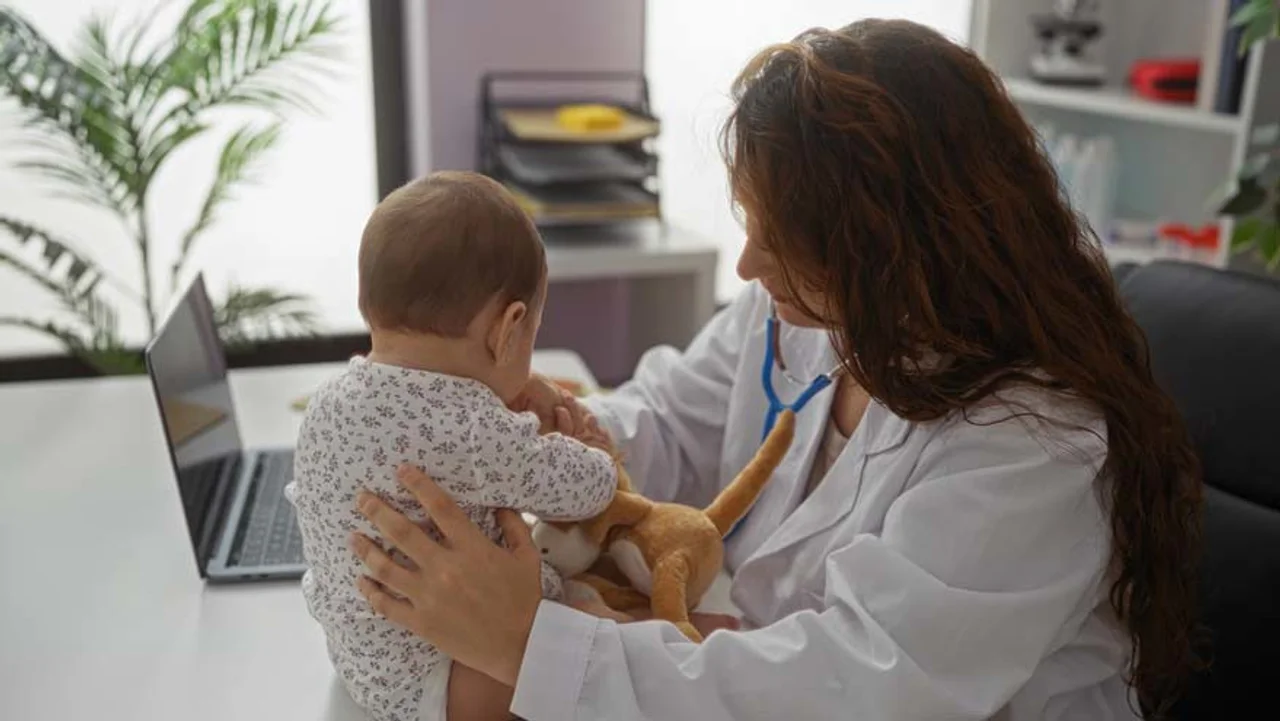
One challenge with torticollis is that it can be easy to miss in the early weeks. Babies can’t tell us they feel tight or uncomfortable, so we must rely on observation.
Common signs include:
Head consistently tilted to one side
Preference for turning the head only one direction
Difficulty during breastfeeding on one side
Flattening of the head (plagiocephaly)
Uneven facial features over time
Delayed head control or rolling
If you’ve ever felt that something looks “a little off” but couldn’t quite explain it, trust that instinct. Parents are often the first to notice subtle asymmetries.
Why Early Treatment Is So Important
1. The Spine Is the Foundation of Growth
We often explain this to parents using a simple metaphor: the spine is like the foundation of a house. If the foundation tilts, everything built on top adjusts—walls, doors, even the roof.
In babies, a persistent neck tilt can gradually affect:
Cervical spine alignment
Shoulder and rib cage symmetry
Pelvic balance
Leg length development
By the time a child begins sitting, crawling, and walking, these compensations can become deeply ingrained.
2. Preventing Facial and Cranial Asymmetry
One of the most visible consequences of untreated torticollis is facial asymmetry. Because a baby’s skull is soft, constant pressure on one side can lead to flattening of the head and uneven facial development.
Early correction of neck alignment reduces prolonged pressure, allowing the skull and face to grow more symmetrically—often without the need for helmets or invasive interventions.
3. Supporting Neurological Development
From a Korean medicine and modern anatomical standpoint, the upper cervical spine plays a crucial role in nervous system regulation. When neck alignment is restricted, it can subtly influence:
Sensory integration
Balance and coordination
Muscle tone regulation
We’ve seen babies who were unusually irritable, sensitive to stimulation, or slow to reach motor milestones show noticeable improvement once neck and spinal balance were restored.
4. Avoiding Long-Term Postural Problems
Many adults we treat for chronic neck pain, TMJ disorders, scoliosis, or headaches are surprised to learn that their issues may trace back to early childhood asymmetry.
Torticollis that is not addressed in infancy can contribute to:
Forward head posture
Uneven shoulder height
Jaw misalignment (TMJ issues)
Functional scoliosis
Early treatment is not just corrective—it is preventive care for life.
How Torticollis Is Approached at Banpo Newborn Korean Medicine Clinic
At our clinic, we do not believe in forceful manipulation, especially for infants. Babies require precision, gentleness, and deep respect for their developing bodies.
Comprehensive Assessment
Every baby receives a one-on-one evaluation that looks at:
Neck muscle tone and range of motion
Cervical and upper thoracic spinal alignment
Cranial symmetry
Feeding posture and movement patterns
Dr. Im often emphasizes that what matters is not just where the head tilts, but why the body is holding it that way.
Gentle Spinal Alignment Restoration Therapy (SART)
Our proprietary Spinal Alignment Restoration Therapy (SART) is adapted specifically for infants. Using light, precise touch, we guide the spine and surrounding tissues back toward natural alignment—without cracking, force, or discomfort.
Parents are often surprised to see babies relax, yawn, or even fall asleep during treatment. This response tells us the nervous system is calming and rebalancing.
Integrative Korean Medicine Techniques
Depending on the child’s needs, treatment may also include:
Gentle Chuna-based techniques
Soft tissue release for neck and shoulder muscles
Guidance on positioning, feeding angles, and daily handling
We also educate parents, because healing doesn’t stop when you leave the clinic. Small adjustments at home can make a big difference.
When Is the Best Time to Start Treatment?

The short answer: as early as possible.
The ideal window is within the first 3–6 months of life, when the baby’s musculoskeletal system is most adaptable. However, we successfully treat older infants and toddlers as well—it may simply require more time and consistency.
If you’re unsure whether your baby’s head tilt is “serious enough,” it’s always better to check. A gentle evaluation can provide peace of mind or early guidance.
A Message to Parents: You’re Not Overreacting
Many parents hesitate to seek care because they’re told, “They’ll grow out of it.” Sometimes that happens—but often, the body adapts rather than heals.
If you’ve been feeling worried, tired of second-guessing yourself, or unsure who to trust, know this: early attention is an act of care, not fear.
At Banpo Newborn Korean Medicine Clinic, we see each baby not as a diagnosis, but as a growing human being with immense potential. Our role is to remove obstacles so that growth can unfold naturally.
Final Thoughts: Small Corrections, Lifelong Impact
Torticollis in babies may look minor, but its effects can ripple through posture, movement, and comfort for years to come. The good news is that with early, gentle, and precise treatment, most babies respond beautifully.
Healthy growth doesn’t require aggressive intervention—just timely, thoughtful care.
If you’re considering a spinal or postural check-up for your baby, Banpo Newborn Korean Medicine Clinic offers comprehensive evaluations and personalized, non-invasive treatment designed to support your child’s healthiest start in life.
More Medical Articles
Continue reading clinical insights from Banpo Newborn Korean Medicine Clinic.

Why Seoul is the Global Hub for Minimally Invasive Vertigo Treatment
Dizziness and vertigo are among the most common reasons for hospital visits in South Korea, affecting nearly 16.7% of the adult population annually according to the Korea National Health and Nutrition Examination Survey (KNHANES).
Learn More

Tinnitus Relief in Seoul: Multidisciplinary Upper Cervical Care
For many, the sound of silence is replaced by a persistent ringing, buzzing, or hissing. In South Korea, this is more than an individual annoyance; it is a significant public health trend.
Learn More

Success Rates of SART for OPLL Compared to Standard Laminectomy in Korea
The prevalence of Ossification of the Posterior Longitudinal Ligament (OPLL) in East Asian populations, particularly in South Korea, is significantly higher than in Western countries, affecting approximately 2% to 4% of the population according to nationwide...
Learn More