SART Whole-Body Spinal Alignment, Chuna Therapy & International Patient Concierge
30+ Years Clinical Experience
en-US

Korean Medicine Guide
Treating TMJ Naturally at Banpo Newborn Korean Medicine Clinic
Discover natural TMJ treatment at Banpo Newborn Korean Medicine Clinic using Korean medicine to relieve jaw pain and restore healthy alignment.
Schedule a ConsultationTreating TMJ Naturally at Banpo Newborn Korean Medicine Clinic
A Whole-Body, Non-Surgical Approach to Jaw Pain and Balance
Have you ever noticed how jaw pain rarely comes alone?
For many of our patients, temporomandibular joint disorder—commonly known as TMJ or TMD—shows up alongside headaches, neck stiffness, shoulder tension, dizziness, ear fullness, or even chronic fatigue. Some people come to us after years of wearing mouth guards, taking painkillers, or being told that surgery is the “next step.” Others don’t even realize their jaw could be the root of their discomfort.
To be honest, this is one of the most misunderstood conditions we see.
At Banpo Newborn Korean Medicine Clinic, we approach TMJ not as an isolated jaw problem, but as a structural and neurological imbalance involving the spine, posture, and nervous system. With over 30 years of experience in non-surgical musculoskeletal care, led by Dr. Ungjin Im, we focus on restoring balance—naturally, safely, and precisely.
This is how we treat TMJ differently.
Understanding TMJ: More Than Just Jaw Pain
The temporomandibular joint is one of the most complex joints in the human body. It connects your jaw to your skull and coordinates with muscles, ligaments, nerves, and even your cervical spine.
When this system is disrupted, symptoms can appear far beyond the jaw itself.
Common TMJ Symptoms We See
Jaw pain or stiffness
Clicking, popping, or locking of the jaw
Headaches or migraines
Neck and shoulder tension
Ear pain, tinnitus, or a feeling of fullness
Facial asymmetry
Difficulty chewing or opening the mouth fully
Dizziness or poor concentration
Many patients are surprised to learn that these symptoms often do not originate in the jaw alone.
In Korean medicine and advanced spinal biomechanics, TMJ dysfunction is frequently linked to cervical misalignment, postural imbalance, and asymmetric muscle tension throughout the body.
Why Conventional TMJ Treatments Often Fall Short

Conventional approaches typically focus on managing symptoms:
Pain medication
Anti-inflammatory drugs
Night guards or splints
Botox injections
Surgical intervention (in severe cases)
While these methods may offer temporary relief, they often fail to address why the jaw is under strain in the first place.
From our clinical experience, TMJ problems often persist because:
The cervical spine is misaligned
The head posture is forward or rotated
One side of the body is bearing more load than the other
The nervous system is stuck in a chronic stress pattern
If the foundation remains unstable, the jaw continues to compensate.
The Banpo Newborn Philosophy: Treat the Structure, Not Just the Symptom
At Banpo Newborn Korean Medicine Clinic, TMJ treatment begins with a simple but powerful question:
“What is the body compensating for?”
Dr. Im often explains TMJ dysfunction using a metaphor familiar to many patients:
“If the foundation of a house tilts, the doors and windows will jam. Fixing the door alone doesn’t solve the problem—you must correct the foundation.”
In the human body, the spine is that foundation.
The Hidden Link Between TMJ and the Spine
The jaw does not float independently. It is biomechanically and neurologically connected to:
The cervical spine (C1–C3 in particular)
The skull base
The shoulder girdle
The pelvis and overall posture
When the spine is misaligned—especially in the upper cervical region—the jaw muscles compensate to maintain balance. Over time, this compensation leads to inflammation, joint stress, and chronic pain.
This is why many TMJ patients also report:
Long hours at a desk
Smartphone or laptop overuse
Old whiplash injuries
Scoliosis or pelvic imbalance
Uneven chewing habits
TMJ, in many cases, is the end result of long-standing postural stress.
Natural TMJ Treatment at Banpo Newborn Korean Medicine Clinic
Our TMJ care is built around non-invasive, whole-body correction, combining traditional Korean medicine principles with modern biomechanical precision.
1. Comprehensive TMJ and Postural Assessment
Every TMJ patient begins with an in-depth evaluation, including:
Jaw movement and alignment analysis
Cervical spine mobility assessment
Facial and postural symmetry observation
Muscle tension and trigger point evaluation
Functional movement patterns
We do not rely on generic protocols. Each patient’s TMJ pattern is different, and treatment must reflect that individuality.
2. Spinal Alignment Restoration Therapy (SART)
One of Banpo Newborn’s most distinctive approaches is Spinal Alignment Restoration Therapy (SART)—a precise, hands-on method developed and refined by Dr. Im.
For TMJ patients, SART focuses on:
Restoring upper cervical alignment
Reducing asymmetric muscle pull on the jaw
Improving nerve communication between brain and body
Rebalancing head-neck posture
Unlike forceful manipulation, SART is gentle, controlled, and deeply corrective. Many patients report feeling lighter, more balanced, and noticeably less jaw tension after just a few sessions.
3. Spatial Spinal Correction for Facial Balance
TMJ dysfunction often presents with subtle facial asymmetry:
One jaw side tighter than the other
Uneven bite pressure
One shoulder or hip higher
Spatial spinal correction addresses these three-dimensional imbalances by:
Correcting rotational spinal patterns
Balancing left-right muscle coordination
Reducing chronic compensation pathways
As posture improves, the jaw no longer needs to “work overtime” to stabilize the head.
4. Chuna Therapy for TMJ and Cervical Muscles
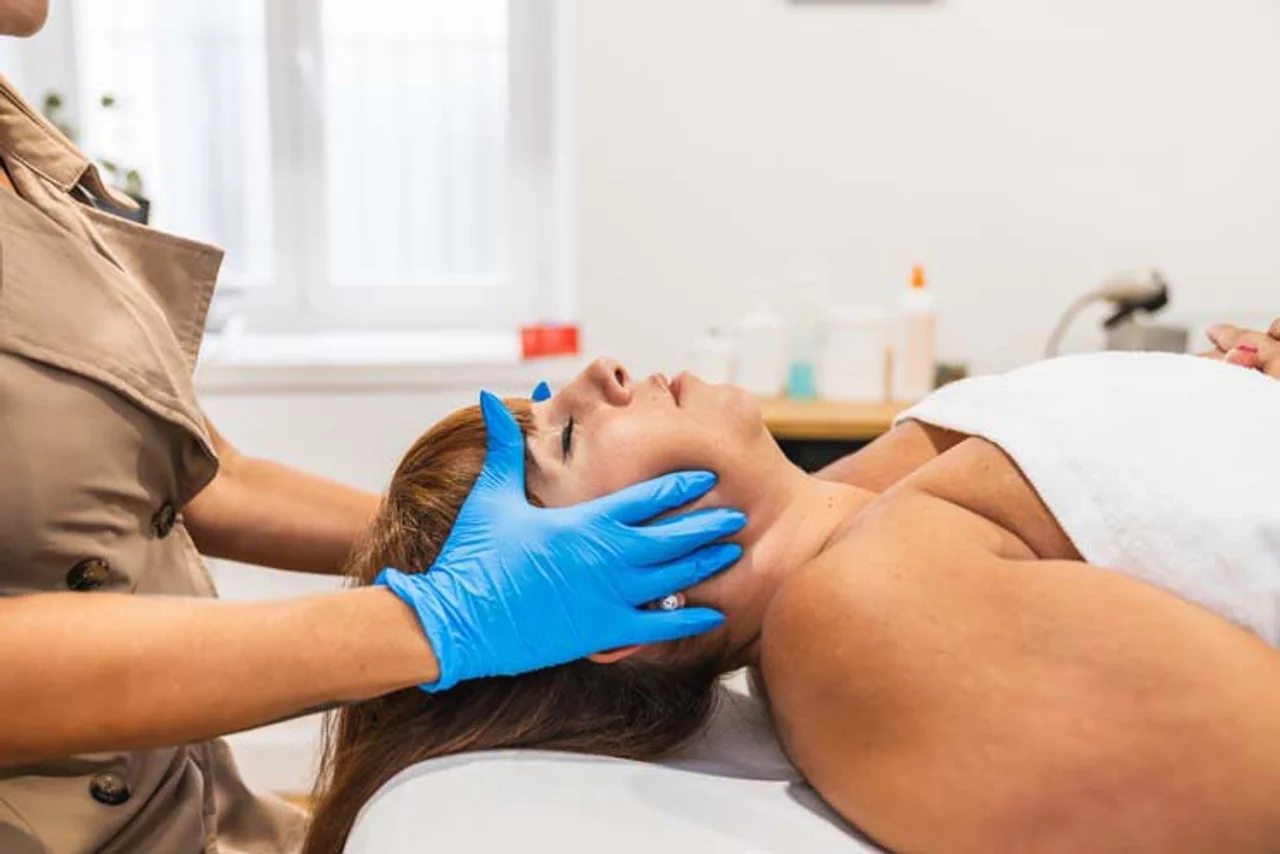
Chuna therapy, a traditional Korean manual treatment, plays a key role in TMJ care.
For TMJ patients, Chuna is used to:
Release deep jaw and neck muscle tension
Improve joint mobility
Calm the nervous system
Enhance circulation and healing
Patients often describe Chuna sessions as both therapeutic and grounding—relieving pain while restoring a sense of bodily ease.
5. Acupuncture for Pain Relief and Nervous System Regulation
Acupuncture complements structural correction by:
Reducing inflammation around the TMJ
Calming overactive muscles
Regulating stress-related jaw clenching
Improving sleep quality
In Korean medicine, TMJ pain is often associated with liver qi stagnation and stress accumulation. Acupuncture helps reset these patterns, allowing the jaw to relax naturally.
Real-World Healing: What Patients Often Experience
Many TMJ patients come to Banpo Newborn feeling frustrated and discouraged. Some have lived with pain for years.
Common changes patients report during treatment include:
Reduced jaw clicking and pain
Easier mouth opening
Fewer headaches and neck aches
Improved posture and breathing
Better sleep and concentration
A sense of overall balance returning
Healing is not instant—but it is progressive and sustainable.
Why Natural, Non-Surgical TMJ Care Matters

Surgery and invasive procedures carry risks, especially when the underlying cause is structural imbalance rather than joint degeneration.
Natural TMJ treatment:
Preserves joint integrity
Avoids unnecessary procedures
Addresses root causes, not symptoms
Supports long-term musculoskeletal health
At Banpo Newborn, our goal is not just to stop pain—but to help your body function as it was designed to.
Who Can Benefit Most From This Approach?
Our TMJ treatment is especially effective for:
Chronic TMJ sufferers
Patients with neck-related jaw pain
Desk workers with postural strain
Individuals with headaches and jaw tension
Patients seeking non-surgical solutions
Those who have not improved with mouth guards alone
Even long-standing TMJ cases can improve when the body is given the right structural support.
A Message from Dr. Ungjin Im
Dr. Im often reminds patients:
“The jaw reflects the balance of the entire body. When we restore alignment and harmony, the jaw naturally follows.”
This philosophy has guided Banpo Newborn Korean Medicine Clinic for over three decades—and continues to help patients rediscover comfort, balance, and confidence in their bodies.
Considering TMJ Treatment in Seoul?
If you’ve been living with jaw pain, headaches, or unexplained tension, it may be time to look beyond symptom-based care.
Banpo Newborn Korean Medicine Clinic offers:
Personalized TMJ evaluation
Non-invasive spinal and jaw correction
Holistic Korean medicine treatments
One-on-one care rooted in experience and trust
Healing TMJ naturally is possible—and you don’t have to navigate it alone.
More Medical Articles
Continue reading clinical insights from Banpo Newborn Korean Medicine Clinic.

Why Seoul is the Global Hub for Minimally Invasive Vertigo Treatment
Dizziness and vertigo are among the most common reasons for hospital visits in South Korea, affecting nearly 16.7% of the adult population annually according to the Korea National Health and Nutrition Examination Survey (KNHANES).
Learn More

Tinnitus Relief in Seoul: Multidisciplinary Upper Cervical Care
For many, the sound of silence is replaced by a persistent ringing, buzzing, or hissing. In South Korea, this is more than an individual annoyance; it is a significant public health trend.
Learn More

Success Rates of SART for OPLL Compared to Standard Laminectomy in Korea
The prevalence of Ossification of the Posterior Longitudinal Ligament (OPLL) in East Asian populations, particularly in South Korea, is significantly higher than in Western countries, affecting approximately 2% to 4% of the population according to nationwide...
Learn More