SART Whole-Body Spinal Alignment, Chuna Therapy & International Patient Concierge
30+ Years Clinical Experience
en-US


Korean Medicine Guide
Your Personalized Path to Pelvic Pain Relief at Banpo Newborn Korean Medicine Clinic
Discover holistic Korean medicine solutions at Banpo Newborn Clinic for lasting pelvic pain relief with personalized, natural treatments.
Schedule a Consultation
Pelvic pain has a way of shrinking your world. Sitting through a meeting, getting out of the car, tying your shoes—tasks that used to feel automatic now demand strategy. If you’ve been telling yourself to “wait it out,” you’re not alone. To be honest, many people don’t realize how closely pelvic discomfort, hip pain, and Lower back pain are tied to alignment of the spine, rib cage, and even the jaw. At Banpo Newborn Oriental Medical Clinic in Banpo, Seoul, we specialize in unraveling those connections and building a plan that actually fits your life.
This comprehensive guide outlines how we personalize care—from your first conversation with Dr. Ungjin Im to the step-by-step plan designed to reduce pelvic pain safely and sustainably. If you’ve been searching for relief without surgery, you’re in the right place.
Why Pelvic Pain Is So Stubborn
Your pelvis is the body’s load-transfer hub. Every step, sit, and breath involves it. When the pelvis rotates or tilts, the lumbar spine compensates, the rib cage stiffens, and the neck may tighten to keep you upright. Over time you might notice:
Pelvic discomfort or pressure after sitting or driving
Hip pain with stairs or getting out of the car
Backache, Lumbar pain, or Lower back pain that “pulls” into the groin or tailbone
Guarding through the shoulders and neck—Neck pain, Neck ache, Neck stiffness, Shoulder pain, Shoulder stiffness, or even Frozen shoulder
Head and jaw symptoms like Headache, Chronic Headache, Tinnitus, and Temporomandibular Joint (TMJ) issues including TMJ Syndrome and TMJ Disorder
The good news? When we restore alignment and load sharing, these downstream symptoms often ease together. That’s the essence of our approach at Banpo Newborn Oriental Medical Clinic.
Meet Your Team: Experience That Listens
For more than 30 years, Dr. Ungjin Im has helped patients recover from complex musculoskeletal problems through non-surgical Korean medicine. Our clinic is known for precise manual care, careful diagnostics, and one-to-one guidance. We’re also recognized for treating spine-related conditions—Spinal Stenosis, Lumbar Spinal Stenosis, Disc Herniation/Herniated Disc/Slipped Disc—without surgery when conservative care is appropriate. That same whole-body logic drives our pelvic protocols.
The Banpo Newborn Method for Pelvic Pain: Step by Step
1) A Conversation That Finds the Pattern
Your first session starts with listening. We map your pain story: When did pelvic pain begin? Is it worse after sitting or walking? Do you also notice hip pain, Back pain, or jaw tension? Do headaches flare during stressful weeks? These details reveal patterns—whether your pelvis rotates with each step or your rib cage locks down at a desk.
2) Whole-Body Alignment Assessment
We don’t treat the pelvis in isolation. We evaluate:
Pelvic orientation (tilt, shift, rotation) and sacroiliac joint behavior
Hip mobility and how your hips “share” extension with the lumbar spine
Lumbar mechanics—which segments are overloaded, a key factor in Lumbar pain and Lower back pain
Rib cage and diaphragm function (vital for pressure management and deep core support)
Gait and foot loading—small foot biases can twist the pelvis upstream
Cervical and TMJ screening when symptoms suggest an upper-chain contribution
If you have imaging—X-ray or MRI showing Herniated Disc, Slipped Disc, or Lumbar Spinal Stenosis—bring it. We interpret findings in the context of how you move, not just how you look on a scan.
3) A Clear, Written Plan
Before we begin, you’ll understand your primary driver (for example, right anterior pelvic rotation with limited left hip extension), what that means for pain, and how we’ll correct it. We set simple metrics—sitting tolerance, stride confidence, morning stiffness—so you can see progress.
Our Core Techniques—Gentle, Accurate, and Integrated
Spinal Alignment Restoration Therapy (SART)
Refined by Dr. Ungjin Im, SART is a gentle, precise method for restoring space and balance around irritated segments. For pelvic cases, SART aims to:
Re-center the sacrum and ilia so each step loads evenly
Decompress overloaded lumbar segments contributing to Backache and Lower back pain
Calm protective muscles that keep you stuck in a painful holding pattern
Patients often describe SART as “light but powerful”—no forceful thrusting, just accurate corrections that feel safe.
Spatial Spinal Correction
Alignment is three-dimensional. We correct front-back tilt, side shift, and rotation together so changes “hold” when you stand, walk, and live. Spatial correction coordinates the pelvis with the rib cage and hips, which is why many people feel freer with walking right away.
Chuna Manual Therapy
Chuna is a cornerstone of Korean manual medicine. We use it to restore joint play, reduce fascial tension, and normalize glide through the sacroiliac joints, hip capsule, and lower spine. Chuna pairs seamlessly with SART and spatial correction.
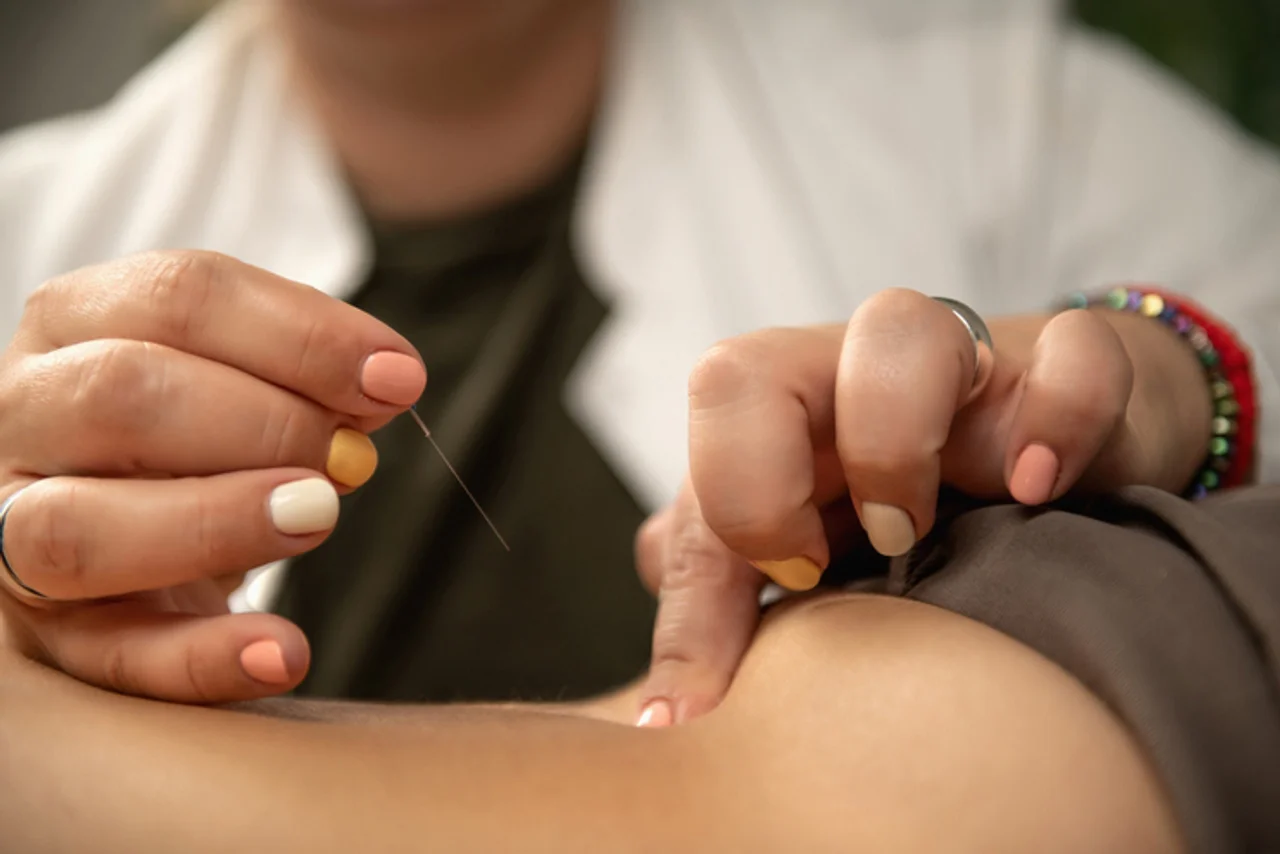
Acupuncture, Moxibustion, and Cupping
These time-tested methods reduce local inflammation, improve micro-circulation, and downshift the nervous system. For deep, hard-to-reach pelvic ache, acupuncture often releases the guarding that blocks progress.
Personalized Herbal Support
When appropriate, targeted herbal prescriptions support circulation and recovery. We keep formulas simple, monitor closely, and adapt as your symptoms change.
Neuromuscular Re-Training You’ll Actually Do
Keeping relief is the goal. Your home plan includes 2–3 precise drills that take minutes, not hours:
Micro-decompression breathing to align the rib cage over the pelvis
Hip hinge reset so you load the hips (not the lumbar spine) during daily tasks
Glute activation to stabilize the sacrum and reduce repeat irritation
Walk intervals tailored to your tolerance—far better than one long, flaring walk
Why We Screen the Neck and Jaw for Pelvic Problems
It may sound surprising, but chronic pelvic imbalance often travels upward. The body braces through the ribs, shoulders, and neck; the head migrates forward; the jaw clenches to “hold” posture. That’s why some patients with pelvic issues also report Neck pain, Headache, Chronic Headache, Tinnitus, and TMJ Disorder/TMJ Syndrome. If your pattern suggests it, we’ll treat the Temporomandibular Joint (TMJ) and upper cervical spine so your pelvis can stabilize without “help” from above.
We also assess for protective patterns like Torticollis/Wry Neck and Dystonia/Muscle Dystonia tendencies, particularly when asymmetries persist despite standard care. Addressing these patterns can be the missing piece in stubborn pelvic pain.
Conditions We Frequently Co-Manage
Pelvic pain and Pelvic discomfort (postural, postpartum, sport-related)
Hip pain (impingement-like patterns, gluteal tendinopathy, capsular restriction)
Lower back pain/Lumbar pain/Backache linked to pelvic rotation or sacroiliac irritation
Disc Herniation/Herniated Disc/Slipped Disc with referred pelvic symptoms
Spinal Stenosis/Lumbar Spinal Stenosis affecting walking tolerance and posture
Upper-chain consequences: Neck ache, Neck stiffness, Shoulder stiffness, Frozen shoulder
Head and jaw complaints: Headache, Chronic Headache, Tinnitus, TMJ Disorder/TMJ Syndrome
Complex alignment: Scoliosis with pelvic obliquity
When conservative care is appropriate, we pursue it diligently. If we see red flags—progressive neurologic deficit, significant trauma, unexplained fever or weight loss—we coordinate immediate medical evaluation. Your safety comes first.
Your First Three Visits: What to Expect
Visit 1 — Discover & Decompress
Deep dive conversation, whole-body assessment, and targeted testing
First round of SART + spatial correction + Chuna therapy
One or two drills (under 3 minutes total) and a simple daily checklist
Metrics set: sitting tolerance, gait confidence, morning stiffness, pain map
Visit 2 — Stabilize & Teach the Body
Re-assessment of your metrics and movement
Progressed manual care, acupuncture as appropriate
Add one drill or refine the cue (quality over quantity)
Ergonomics and micro-break plan for your actual day (desk, commute, childcare)
Visit 3 — Make It Stick
Build endurance with walk intervals and hip-hinge practice in real tasks
Layer gentle core and glute work to protect alignment
Decide the right cadence for the next phase (weekly/biweekly), based on objective change
Most patients notice early gains in sitting comfort and stride smoothness within the first few sessions. Everyone heals at a different pace; the key is matching care to your pattern and tracking real-world markers.
Two Short Patient Stories
Ji-eun, 34 — Postpartum Pelvic Discomfort
After her second child, Ji-eun developed pelvic discomfort and hip pain getting out of the car. Exam showed left pelvic posterior tilt and limited right hip extension, with rib cage stiffness from shallow breathing. Three sessions of SART, Chuna, and breathing drills reduced sitting pain; by week six she walked 30 minutes comfortably and slept without night aches.
Mr. Han, 61 — Stenosis with Pelvic Pull
Mr. Han had Lumbar Spinal Stenosis and felt a pulling ache across the pelvis during upright walking, relieved by leaning forward (classic “shopping cart relief”). We focused on decompression-biased SART, spatial correction, and short walk intervals. In a month, he doubled his symptom-free walking window and reported far less Lower back pain after errands.
More Medical Articles
Continue reading clinical insights from Banpo Newborn Korean Medicine Clinic.

Why Seoul is the Global Hub for Minimally Invasive Vertigo Treatment
Dizziness and vertigo are among the most common reasons for hospital visits in South Korea, affecting nearly 16.7% of the adult population annually according to the Korea National Health and Nutrition Examination Survey (KNHANES).
Learn More

Tinnitus Relief in Seoul: Multidisciplinary Upper Cervical Care
For many, the sound of silence is replaced by a persistent ringing, buzzing, or hissing. In South Korea, this is more than an individual annoyance; it is a significant public health trend.
Learn More

Success Rates of SART for OPLL Compared to Standard Laminectomy in Korea
The prevalence of Ossification of the Posterior Longitudinal Ligament (OPLL) in East Asian populations, particularly in South Korea, is significantly higher than in Western countries, affecting approximately 2% to 4% of the population according to nationwide...
Learn More